Key selection criteria
UFC-Que Choisir identifies four types of machine: capsules, soft pods, portafilter and bean-to-cup grinders. Start with the coffee you want to prepare, then check the space, consumables and maintenance your household will realistically accept every day.
| Priority |
What to check |
Requirement |
| Ease of preparation |
Compare pre-dosed capsules or pods with the dosing and cleaning required by a portafilter. Check the available volumes, along with the capacity of the water tank and waste container. |
I want to prepare my daily coffee without weighing, tamping or emptying a portafilter after every drink. |
| Consumables |
Compare the price per capsule or pod with the price per kilogram for ground coffee or whole beans. Add the machine, water, energy, filters, descaler and wastage separately to your own calculation. |
I want to compare the cost of coffee per drink using my actual dose, rather than assuming that one system is always cheaper. |
| Maintenance |
Check the descaling light or programme, and access to the coffee-grounds container, drip tray and brewing unit where the model has one. Follow the frequency stated in the manual, which also depends on the water and how the machine is used. |
The cleaning routine and time needed for descaling must remain realistic for my daily coffees. |
| Capsule waste |
Identify the capsule material and check your local recycling instructions. ADEME states that aluminium or plastic capsules go in the paper and packaging recycling stream in France. |
If I choose capsules, I want to know how to dispose of used capsules in my local area. |
Joybuy options
Joybuy options for daily coffee at home, including automatic machines with grinders and capsule machines for households that prioritise simplicity or using whole beans.
 Image unavailable
Philips EP2230/10 Series 2200 LatteGo
For households wanting to prepare coffee from whole beans with adjustable grind, strength and volume settings.
Advertised features include a 1,8 L tank, 275 g bean container, 12 grind settings and two-cup preparation. Check the space required: 246 × 371 × 433 mm. The AquaClean filter is compatible but not included.
Joybuy
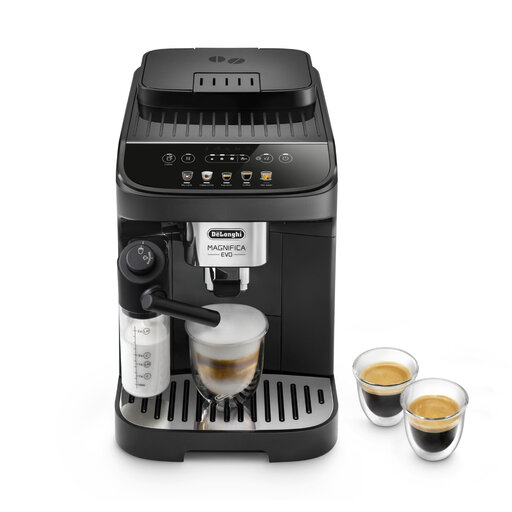 Image unavailable
De’Longhi Magnifica Evo ECAM290.61.B LatteCrema
For short coffees, coffee and milk-based drinks at home, with an integrated grinder and advertised one-touch selection.
Advertised features include a 1,8 L tank, 250 g hopper, 13 grind settings and a grounds container holding 14 cups. Measure your worktop: 240 × 440 × 360 mm. Clean the milk system after preparing milk-based drinks.
Joybuy
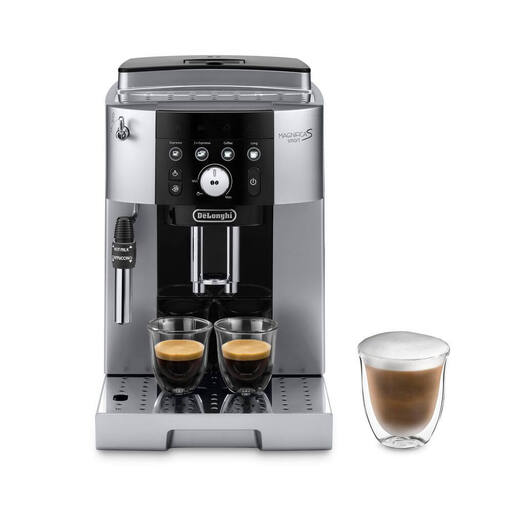 Image unavailable
De’Longhi Magnifica S Smart ECAM250.23.SB
For households that alternate between short and long coffees made from whole beans while wanting to customise the settings.
Advertised features include four direct recipes, a grinder with 13 levels, a 1,8 L tank, 250 g hopper and a grounds container holding 14 cups. Advertised dimensions: 240 × 440 × 360 mm. The steam wand must be cleaned after use.
Joybuy
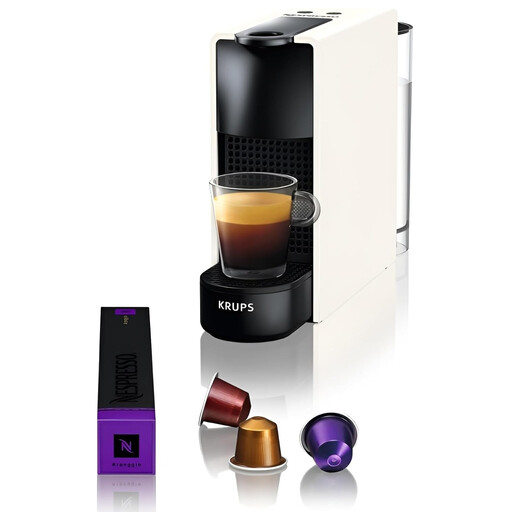 Image unavailable
KRUPS Nespresso Essenza Mini 0.6 L white
For a small kitchen and pre-dosed espresso or lungo, with simple controls.
Advertised dimensions are 8,4 × 33 × 20,4 cm, with a removable 0,6 L tank, a stated 25-second heat-up time and programmable Espresso 40 ml and Lungo 110 ml volumes. Check the availability of compatible Nespresso Original capsules.
Joybuy
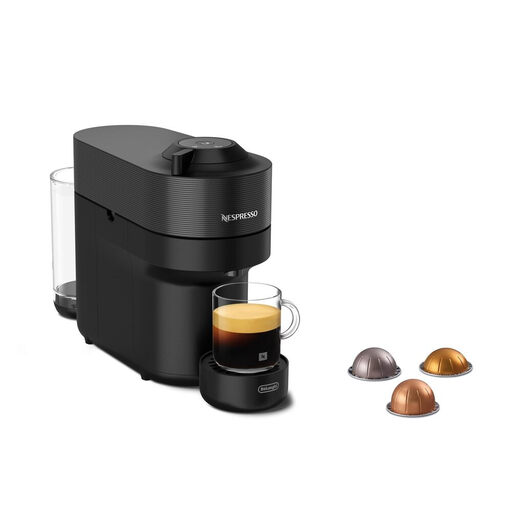 Image unavailable
Nespresso Vertuo Pop ENV90.B black
For switching between espresso and longer coffees without manual dosing, with advertised one-button operation.
Five advertised drink sizes, from 25 to 230 ml, with a 0,6 L tank and a container holding eight capsules. Advertised dimensions: 136 × 426 × 250 mm. Check compatible Vertuo capsules and how they can be recycled.
Joybuy
Frequently asked questions
How often should a capsule or pod machine be descaled?
Follow the model’s manual and its indicator light, where available. Nespresso recommends descaling every three months or after around 300 capsules, more frequently if the water is hard. Philips recommends descaling Senseo machines every three months; models with a CALC light indicate maintenance according to their programmed cycle.
Does a machine with a grinder really require more maintenance?
Yes. As well as descaling, you need to rinse the coffee-grounds container and drip tray regularly and, depending on the model, clean the brewing unit or brewing chamber. UFC-Que Choisir also states that machines with grinders are bulkier and noisier than capsule systems.
How can you compare daily spending between systems?
Compare the cost of coffee portions, the machine price and maintenance separately. For ground coffee or whole beans, apply the price per kilogram to the dose you actually use; for capsules and pods, compare the pack price with the number of portions. Then add filters, descaler, water, energy and wastage according to how you use the machine.
How should coffee capsules be recycled in France?
ADEME states that aluminium or plastic capsules should be placed in the paper and packaging recycling bin, bag or container. Paper capsules can only be composted where a suitable local solution is available.


