
Livraison le jour même ou le lendemain

Qualité garantie

Débloquez vos offres de bienvenue: Livraison GRATUITE | Jusqu'à -80 % | 30 jours d'essai gratuits à JoyPlus
Téléchargez l'application
Enjoying a rich, creamy, authentic espresso without leaving the comfort of your living room? For many, it's the dream. Yet, the quest for the perfect espresso machine is often riddled with marketing traps and confusing technical promises. Between inflated pressure stats and superfluous features, it's easy to make the wrong choice. As a product expert for Joybuy, my mission is to help you cut through the noise. This guide gets straight to the point: breaking down the criteria that truly matter so you can make an informed decision that fits your habits and your budget.
The market is saturated with often-misleading marketing claims. Before you decide, watch out for these two classic pitfalls that can be a costly mistake.
To make the right choice, focus on the features that have a real impact on your coffee's quality and your user experience.
Your choice will depend on the time and involvement you want to dedicate to the brewing process.
Water temperature is a critical factor. Two main technologies coexist:
A good machine is just the starting point. The quality of your final drink will also depend on:
Rather than an endless list, here are three options we recommend. Each one is tailored to a specific user profile to help you find the machine that's right for you.

Why we chose it: It's the ideal entry point for transitioning from filter coffee to espresso. Simple and functional, it lets you learn the basics of manual preparation (dosing, tamping) and milk frothing without breaking the bank.
This machine focuses on the essentials: extraction and steam. It doesn't include a mediocre-quality grinder, leaving you free to choose a suitable one later. It avoids the low-end 'all-in-one' trap.
Its powerful steam wand allows you to get started with creating creamy milk foam for cappuccinos and lattes, a feature often overlooked on entry-level models.
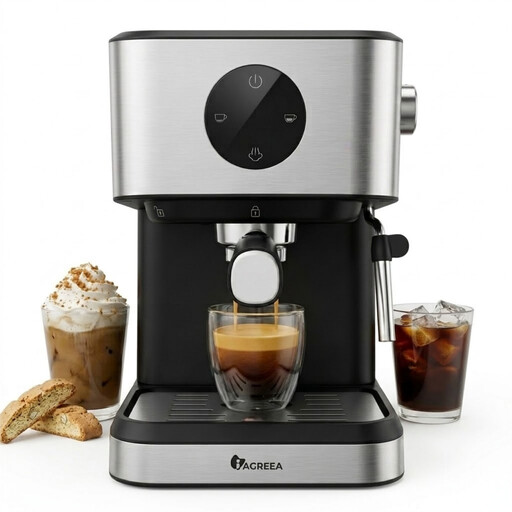
Why we chose it: For those who want to master the art of the cappuccino, this machine offers the right tools. Its stainless steel body gives it a robust look and feel, and its manual steam wand provides the essential control needed to create a pro-level microfoam.
It doesn't take the easy way out with automatic frothers that often produce stiff, bubbly foam. By offering a manual wand and dedicated temperature control, it empowers the user to texture milk with precision.
The dual thermostat allows you to manage the temperature for coffee extraction and steam production separately. This ensures better consistency and more reliable results for your milk-based drinks.
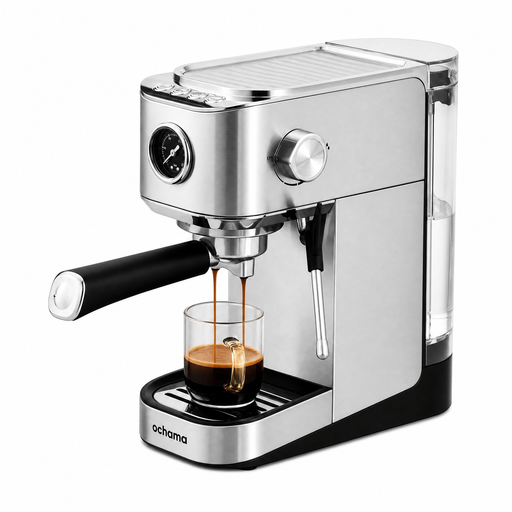
Why we chose it: This model is for the user seeking durability and precise visual feedback. The all-metal body ensures excellent thermal stability and great robustness. The front-facing pressure gauge isn't a gimmick: it's a true dashboard instrument that lets you monitor the extraction pressure in real time—an invaluable tool for perfecting your technique.
It ignores superfluous features to focus on raw extraction performance. Its metal construction is an investment in longevity, unlike plastic machines that can age prematurely.
The pressure gauge is a fantastic learning tool. It helps you understand the impact of your grind and tamp on the extraction, guiding you step-by-step towards the perfect espresso.
We have curated a full range of products that meet our selection criteria and European safety standards.
Even if pumps are rated for 15, 19, or 20 bars, the pressure actually applied to the coffee for an ideal espresso extraction is around 9 bars. A more powerful pump can help compensate for a grind that's too fine or a tamp that's too firm, but it's not a mark of quality. The stability of the pressure and temperature is more important than raw power.
The choice depends on your priorities.
Regular maintenance is crucial. Remember to empty and clean the drip tray after each use, and rinse the portafilter. If you have a steam wand, purge and wipe it immediately after use. Most importantly, don't forget regular descaling, following the manufacturer's instructions and taking into account your water hardness. Good maintenance is the best insurance against breakdowns and ensures the consistent taste of your coffee.