Households looking to keep preparation simple
If you want to make your daily coffee with just a few steps, compare capsules and pods, checking which formats work with each machine. UFC-Que Choisir highlights how easy these products are to use.


For your daily coffee at home, start by deciding how much preparation you’re happy to do: capsules and pods keep things simple, while a portafilter gives you more scope to adjust things by hand. A bean-to-cup machine may suit a household that often uses whole beans, provided you’re happy with the space it takes up, the noise and the maintenance. Compare the cost of consumables based on how much coffee you actually drink.
If you want to make your daily coffee with just a few steps, compare capsules and pods, checking which formats work with each machine. UFC-Que Choisir highlights how easy these products are to use.
When you’re making several coffees throughout the week, your choice of capsules, pods, ground coffee or beans affects your regular spending. UFC-Que Choisir also recommends factoring in the machine itself and its maintenance, rather than looking only at the coffee you use.
Before choosing an automatic bean-to-cup machine, check how much room it needs and whether you can easily access its reservoirs. UFC-Que Choisir notes that these machines take up more space and make more noise than capsule systems or filter coffee machines.
Worth considering: if you want to make coffee with minimal effort and can easily find capsules for your chosen system.
Be prepared for: being tied to a specific format and paying for consumables with every cup.
Worth considering: if you prefer a simple way to make coffee without a grinder; some models can make two cups at once.
Be prepared for: checking that the pods fit your chosen machine, and having fewer manual adjustments than with a portafilter.
Worth considering: if you want to use ground coffee and control the dose and preparation yourself.
Be prepared for: handling the portafilter and cleaning it after use.
Worth considering: if your household often makes coffee from whole beans and would rather not measure out each dose by hand.
Be prepared for: needing more space, grinder noise and a regular cleaning routine.
| Consideration | What to check before buying | Who should consider it? |
|---|---|---|
| Everyday steps | Compare the steps involved in making each cup and the parts you’ll need to empty afterwards. | If I make coffee before heading out, I want to avoid measuring a dose and cleaning a portafilter straight away. Simplicity would be the top priority for around 33% of consumers. |
| Running costs | Compare compatible consumables and maintenance costs against the number of coffees you actually make. | If we have several coffees a day at home, I want to know what each format will cost over time. For around 25% of consumers, the total cost would be the main consideration. |
| Space and noise | Measure the space available and the clearance needed to remove the reservoirs; check how noisy the model you’re considering is. | In a small kitchen or near a living area, I don’t want to find out after buying that the machine blocks the way or makes conversation difficult. These factors would be the priority for around 25% of consumers. |
| Maintenance | Read the manual to find out about routine cleaning and the model’s descaling instructions. | If I don’t have much time for rinsing and cleaning, I need to choose a routine I’ll actually stick to. Maintenance would be the top priority for around 17% of consumers. |
For daily coffee, consumables and maintenance matter too. UFC-Que Choisir notes that a portafilter or grinder may cost more upfront than a capsule machine, while changing the cost of the coffees you make.
Estimate how much coffee you drink each week, then compare the compatible formats you’ll actually use.
Factor in any filters, descaling products and the time you’ll spend on maintenance.
UFC-Que Choisir describes automatic bean-to-cup machines as bulkier and noisier than capsule systems or filter coffee machines. Checking the width alone won’t tell you whether a machine will be practical in your home.
Also measure the available height and the clearance needed to fill or remove the reservoirs. To check the noise level, look for an assessment of the specific model.
UFC-Que Choisir links poor maintenance to early breakdowns. Cleaning and descaling are still tasks to plan for, even when coffee preparation is automated.
Check the manual before choosing: distinguish between what you need to do after each use and periodic cleaning cycles, which depend in part on the model and water hardness.
Using the same word doesn’t guarantee that two systems are compatible. Nespresso, for example, describes its Original capsules as a format designed for corresponding machines.
Check which format is accepted by the exact machine model and whether the consumables you plan to use are readily available.
A capsule system to consider if you want to keep preparation simple and choose from capsules in a compatible format.
A range of soft-pod machines for households looking for a simple way to make coffee without a grinder.
Manual portafilter machines and automatic bean-to-cup models let you compare two ways of making espresso.
A brand with machines across both the SENSEO pod range and automatic espresso machine range.
These models illustrate several of the options covered here: an integrated grinder, a portafilter, capsules and espresso preparation. Compare how each one works and what to check for that specific model before choosing.
 Image unavailable
Worth considering if you want to make your daily coffee from beans using an integrated grinder.
Check the manual for cleaning instructions and how to use the maintenance accessories.
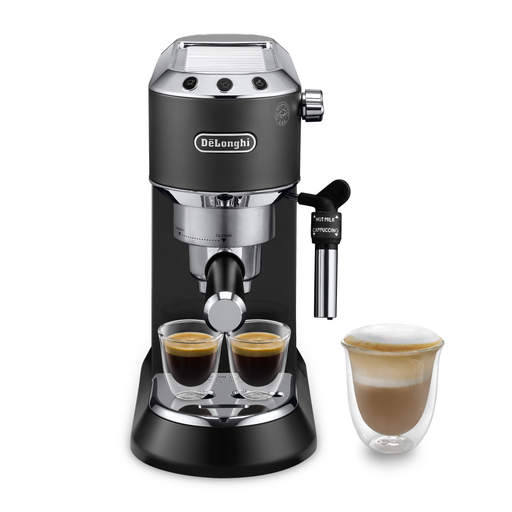 Image unavailable
Worth considering if you’re happy to prepare and clean a portafilter.
The stated pressure is 15 bar; this alone isn’t enough to judge the extraction. Check the reservoir capacity for this variant before buying.
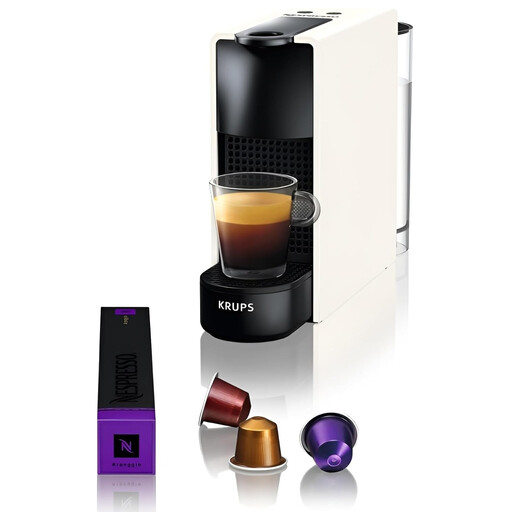 Image unavailable
A capsule option if you want to keep the steps involved in making coffee to a minimum.
The title states that it has a 0.6 L reservoir and a power rating of 1,200 W. Check exactly which capsule formats are compatible before choosing your consumables.
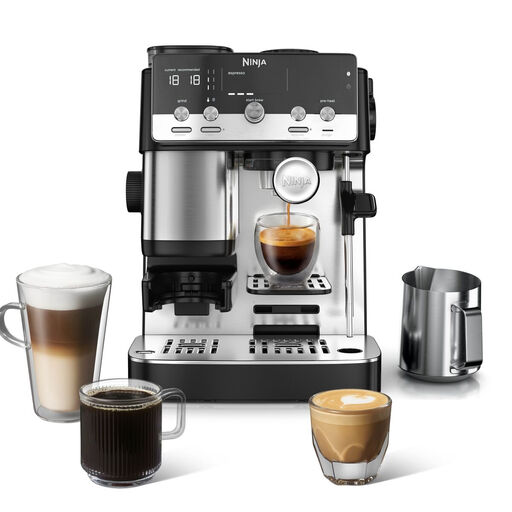 Image unavailable
Worth a look if you want an integrated grinder for making espresso and filter coffee.
The product description lists both brewing modes. If these details matter to you, check the dimensions, maintenance routine and type of milk frother for this variant.
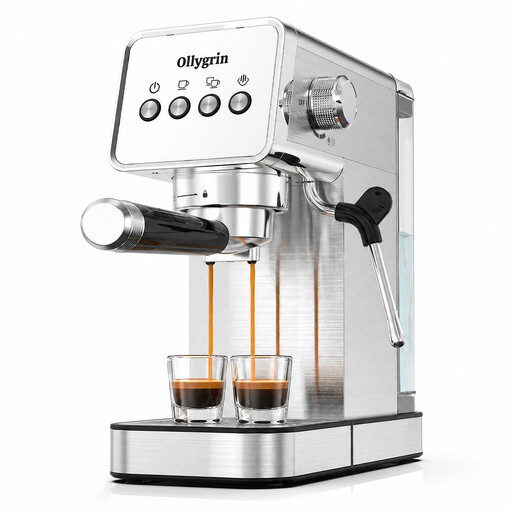 Image unavailable
Worth considering for making espresso at home if a steam wand is one of your must-haves.
The title mentions a removable reservoir and drip tray, as well as a stated pressure of 20 bar, which isn’t a measure of the coffee’s quality in the cup. Check which coffee format it accepts and what maintenance it needs.
It depends on the model and the hardness of your water. For machines covered by its guidance, Nespresso recommends descaling every three months or after around 300 capsules, and more often if your water is hard. De’Longhi also refers customers to the instructions for their specific machine. Follow the manual for your model rather than applying one schedule to every type of machine.
No. It depends on how many coffees you make, which consumables you choose and the maintenance involved. UFC-Que Choisir notes that a grinder may make up for its higher upfront cost over time, but that doesn’t determine the costs for your household. Compare the formats and the coffee you’d actually buy.
Measure the available space and the clearance needed to fill and remove the reservoirs, not just the machine’s width. If you’re considering a grinder, also check how noisy the specific model is: UFC-Que Choisir describes this type of machine as bulkier and noisier than capsule systems or filter coffee machines.
In France, ADEME advises putting aluminium or plastic capsules in the recycling bin, bag or container for paper and packaging. Also check your local council’s guidance on household recycling.