Households making several espressos a day
You’re weighing up the cost of buying a grinder and beans against the ongoing cost of capsules, without forgetting regular maintenance. UFC-Que Choisir covers these factors in its guide to espresso machines.


If you make several espressos a day, compare the cost of beans with that of capsules based on your actual usage, taking the machine price and maintenance into account. An automatic bean-to-cup machine could suit you if you’re happy to rinse, clean and descale it. Capsules may be a better fit if you prefer pre-portioned coffee and fewer steps. Whichever you choose, check the noise level, available space and milk system of the specific model.
You’re weighing up the cost of buying a grinder and beans against the ongoing cost of capsules, without forgetting regular maintenance. UFC-Que Choisir covers these factors in its guide to espresso machines.
You want a straightforward way to make coffee and a machine that fits your available space, while also checking the price and format of compatible consumables.
You’re looking for a milk system with preparation and cleaning steps that fit the way you plan to use it.
For a household that regularly makes several espressos, the choice depends in part on running costs, preparation steps, maintenance and available space. UFC-Que Choisir identifies several types of machine, including capsule, soft pod, portafilter and bean-to-cup models.
Worth considering: if you want to use coffee beans for several cups a day and can keep up with the maintenance routine.
Bear in mind: you’ll need to rinse, clean and descale it, as well as make room for the machine.
Worth considering: if pre-portioned coffee and fewer steps between cups matter most to you.
Bear in mind: you’ll need space to store capsules and to factor in their ongoing cost, as well as sorting them according to their material.
Worth considering: if the coffee it makes suits your household’s habits and the specific model can prepare the drinks you want.
Bear in mind: a soft pod is not a capsule. Check the format and type of drink before you buy.
Worth considering: if you want to measure out your own ground coffee and control the preparation steps.
Bear in mind: you’ll need to fill and tamp the portafilter and clean it afterwards. If you’re using beans, you’ll also need a way to grind them.
| Criterion | What to check before buying | Who is it for? |
|---|---|---|
| Total cost based on your usage | Compare machines and consumables over the same period and for the same number of cups; include maintenance and any potential repairs. | If I make several coffees regularly, I want to compare the cost of beans and capsules without looking only at the price of the machine. Around 28% of consumers prioritise the total cost. |
| Preparation steps and upfront cost | Check the preparation process, how many cups can be made at once and the format of the consumables. | If I want to make coffee with as little handling as possible, I also consider the upfront cost. Around 22% of consumers prioritise simplicity and the initial investment. |
| Regular maintenance | Check the instructions for rinsing, cleaning the relevant parts and descaling. | If I know I won’t have time to keep up with a demanding routine, I want to know what I’ll need to do for the exact model. Around 17% of consumers put maintenance first. |
| Noise and space | Check the dimensions, access to the water tank and containers, and the noise rating for the specific model. | In a small kitchen or when making coffee early in the morning, I want a machine that fits the space and won’t disturb my household. Around 11% of consumers prioritise quiet operation and a compact design. |
| Milk-based drinks | Check the type of steam wand or milk frother and the cleaning instructions after use. | If I regularly make drinks with milk, I want to know how the system works and what needs washing afterwards. Around 11% of consumers prioritise milk-based drinks. |
| Waste and recycling | Find out what the consumables are made of and which recycling instructions apply where you live. | If I choose a capsule machine, I want to know where to take the used capsules and what instructions to follow. Around 11% of consumers prioritise waste management. |
The number of cups you make and the cost of consumables also affect the comparison. The cost per coffee alone doesn’t take the initial investment into account.
Compare options for the same number of cups over the same period, using the prices of products you’d actually buy, then factor in maintenance.
You use beans or capsules each time you make a coffee. Cleaning products and repairs can also take time or mean extra purchases.
These formats are designed for different systems. Compatibility with one machine doesn’t automatically mean it works with the others.
Check the full model name and the exact format it accepts before buying consumables.
A steam wand and a built-in frother require different steps, and having either one doesn’t remove the need to clean the machine after use.
Check the instructions for the exact model variant and find out how to clean the parts that come into contact with milk.
Cleaning the wand, frother or parts that come into contact with milk adds extra steps to your after-use routine.
Disposal instructions tell you where to put a capsule; they don’t guarantee what will happen to every single one.
ADEME recommends following the sorting instructions for the material and checking which collection options are available where you live.
The Magnifica S ECAM22.140.B and Dedica Style EC685.R EX:4 illustrate two ways to make espresso: automatically with a built-in grinder, or manually using a portafilter.
The 2200 Series EP2220/10 is a bean-to-cup espresso machine, while the Senseo Original Plus CSA210/50 uses soft pods.
The Jolie A Modo Mio is a capsule machine. According to Lavazza, the Jolie & Milk variant adds a built-in milk frother.
The Purista range includes automatic bean-to-cup machines to consider if you’re looking for settings for black coffee.
These models include automatic bean-to-cup machines and capsule machines for making coffee at home.
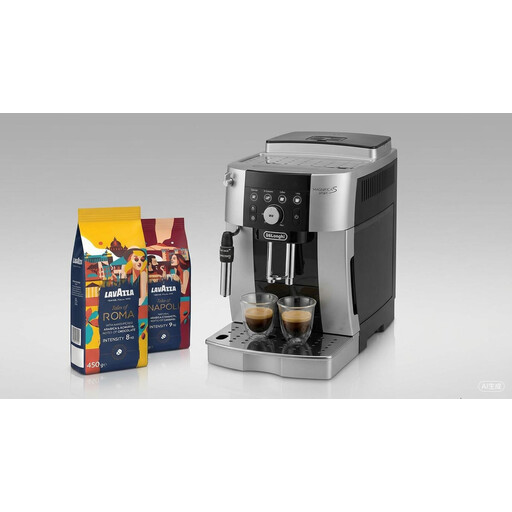 No image available
Worth considering if you’re looking for an automatic bean-to-cup machine and would also like to make drinks with milk.
The description lists a 1,8 L water tank, a removable brewing unit, a steam wand and an indicator that alerts you when descaling is needed. It recommends rinsing the brewing unit regularly and cleaning the wand after use.
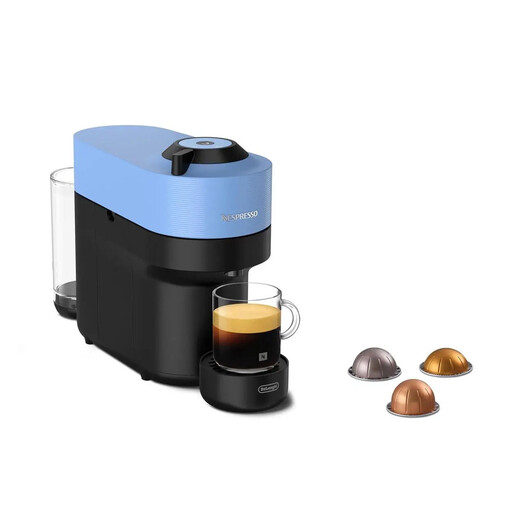 No image available
Worth considering if you want capsule coffee and a choice of cup sizes.
The description lists four cup sizes, barcode recognition and one-touch operation. This machine uses Nespresso Vertuo capsules.
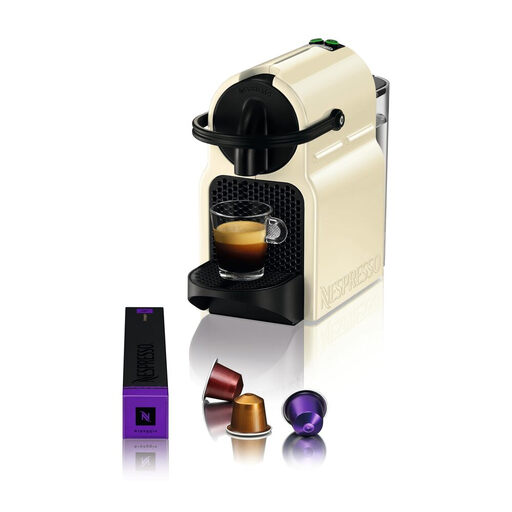 No image available
Worth considering if you’re looking for a capsule machine with programmable espresso and lungo volumes.
The description lists a removable 0,6 L water tank, a container that holds up to six used capsules and dimensions of 8,4 × 33 × 20,4 cm. It takes Nespresso Original or compatible capsules, not loose coffee.
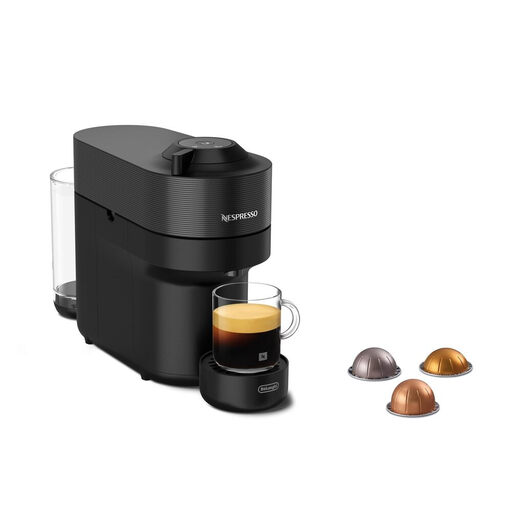 No image available
Worth considering if you want to make drinks in different sizes using Vertuo capsules.
The description lists five drink sizes, including espresso and double espresso, a 0,6 L water tank and dimensions of 136 × 426 × 250 mm. The machine uses Nespresso Vertuo capsules.
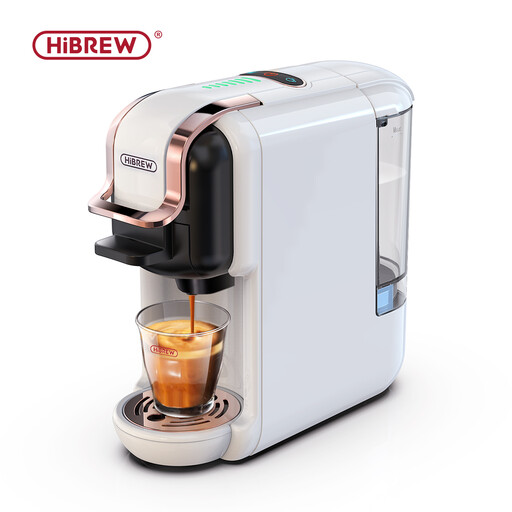 No image available
Worth considering if you want to compare different capsule formats, ESE pods and ground coffee in one machine.
The description lists hot and cold modes, a 600 ml water tank and a 19 bar pump. Cups over 3,8 inches tall won’t fit; the description recommends a 6 to 8 oz cup.
Compare the cost of beans and capsules for the same number of coffees over the same period. Factor in the amount of beans you actually use and the consumables you’d buy, then add the cost of the machine and its maintenance. Prices vary depending on the model and where you buy it.
No. Even if it has a rinse function, you’ll need to follow the instructions for cleaning the relevant parts and descaling the machine. If you make milk-based drinks, also check how to clean the wand or frother on the exact model. UFC-Que Choisir points out that rinsing, cleaning and descaling need to be done regularly.
For aluminium or plastic capsules, ADEME says to use the recycling bin, bag or container for packaging. Follow the instructions for the material and the collection service available where you live: recycling instructions don’t guarantee that every capsule will actually be recycled.
In France, goods sold by a trader to a consumer are covered by the statutory legal guarantee of conformity. The Ministry of the Economy and Finance states that it applies to new, second-hand and refurbished goods. Check the conditions that apply to your purchase and keep your proof of purchase.