If you make coffee regularly at home, start by choosing a machine that suits the steps you’re happy to take, the space you have available and the cost of consumables. Capsules and soft coffee pods make preparation easier, a portafilter gives you more hands-on control, while a grinder lets you use whole beans. UFC-Que Choisir notes in particular that a grinder machine generally takes up more space and makes more noise than a capsule system. Whichever type you choose, check which coffee formats it accepts and what maintenance the specific model requires.
Which type is right for you?
How often you make coffee isn’t the only factor to consider. The time you have for each brew and for maintenance matters too.
For quick coffee in a small kitchen
If you make one or a few drinks and want to keep handling to a minimum, consider capsule machines, checking their footprint and the capsule format they accept. UFC-Que Choisir lists ease of use and space requirements among the trade-offs of this type of machine.
For frequent coffee and a choice of beans
An automatic grinder lets you use whole beans without filling a portafilter for every cup. If you’d rather control the dose and tamping yourself, compare manual machines instead. These steps, and cleaning afterwards, will become part of your routine. UFC-Que Choisir distinguishes between these two types in its buying guide.
For a simple routine with maintenance in mind
A soft pod machine means you don’t have to grind or tamp the coffee, but it still needs descaling. For SENSEO® models, Philips provides care instructions and model-specific support pages. Check the page for the machine you’re considering before you choose.
What sets the machines apart?
Start with the factor that will matter most in your daily routine, then check the specific model’s requirements: dimensions, compatible consumables and maintenance tasks.
| Criteria |
What to check |
Who it suits |
| Speed and size |
Measure the space required, including room to access the water tank; check the capsule format and drink sizes available. |
In a small kitchen, I want to make coffee with minimal effort without permanently taking up worktop space; around 29% of consumers rank speed and a compact footprint as their top priorities. |
| Running costs and choice of coffee |
Compare compatible consumables based on how often you make coffee. For a grinder machine, also factor in maintenance of the components you use. |
When I make several coffees at home, I’d rather choose my own beans and keep an eye on the cost of each cup; this is the top priority for around 29% of consumers. |
| Pods and maintenance |
Check the pod format, descaling instructions and support resources for the exact model. |
I want a pre-portioned drink without grinding or tamping, and a maintenance routine I can stick to; around 21% of consumers put this simplicity first. |
| Manual preparation |
Check which filters are designed for ground coffee, whether ESE compatibility is listed, and what equipment you need for milk-based drinks. |
If filling and tamping the portafilter are part of the preparation I’m looking for, I’m happy to put in a few extra steps; around 21% of consumers prioritise hands-on control. |
To give you an idea of the trade-offs, UFC-Que Choisir says in its guide to grinder machines that coffee beans cost less per cup than espresso pods. However, you should still compare consumables that suit your machine and how often you use it.
What not to overlook
-
Choosing capsules without checking the format
An easy-to-use machine can become inconvenient if compatible capsules don’t match the ones you usually buy. For example, the compatibility L’OR Espresso lists for L’OR BARISTA applies to that system, not to all capsule machines.
Make a note of the machine’s exact model, then check which capsules it accepts and whether you can usually get hold of them before buying.
-
Overlooking descaling when you decide
UFC-Que Choisir recommends descaling espresso machines regularly. The process can vary by model: De’Longhi even sets out two procedures for its ECAM22.110, depending on when it was manufactured.
Read the instructions for the model you’re considering and make sure you can access the parts that need cleaning.
-
Buying a grinder machine without making room for it
According to UFC-Que Choisir, a machine with a grinder generally takes up more space and makes more noise than a capsule system. Filling the machine, emptying the trays and cleaning it also add steps to your coffee-making routine.
Measure the space you have in mind and check that you can access the water tank, grounds container and any parts that need removing for maintenance.
-
Assuming a portafilter machine can make every kind of drink
De’Longhi says that using its manual machines involves filling and tamping the portafilter. ESE compatibility listed for a specific model doesn’t apply to the whole range, and neither does the inclusion of equipment for milk-based drinks.
Check the model’s product page for the filters and accessories included, as well as the functions you need for the drinks you make.
If you use whole beans and your machine doesn’t grind them, you’ll need a separate grinder.
Brands to consider
These brands cover different types of machine. Always check compatibility and care instructions for the exact model.
De’Longhi
Worth considering for manual portafilter machines or automatic models with a grinder.
- De’Longhi explains that its manual machines require you to fill and tamp the portafilter, which is worth bearing in mind if you want to be involved in these steps.
- The ESE compatibility listed for the Classic EM450.M doesn’t apply to every model. Make sure you also follow the descaling procedure for the specific machine.
Philips / SENSEO®
Worth considering for SENSEO® soft pod machines and, separately, Philips automatic machines.
- Philips provides manuals, descaling instructions and information about parts or accessories for specific SENSEO® models.
- A support page doesn’t guarantee that every part will remain available in future, so check the information for the model you’ve chosen.
L’OR BARISTA
A capsule system to consider if you want to keep preparation simple.
- According to L’OR Espresso, L’OR BARISTA machines accept standard L’OR capsules, double L’OR BARISTA capsules and some Nespresso®-compatible capsules.
- This compatibility information applies to L’OR BARISTA, not to other capsule systems. The manufacturer also says that regular cleaning and descaling are still required.
Machines to consider on Joybuy
These machines cover the four types of use considered here: whole-bean coffee with a grinder, capsule brewing, soft pods and a manual portafilter. Compare their day-to-day routines and the coffee formats they accept before choosing a model.
 Image unavailable
Philips Series 2200 EP2230/10 LatteGo, glossy black
Worth considering if you regularly make coffee from whole beans and prefer an automatic machine to using a portafilter. The LatteGo system sets this version apart, so check how much space it needs and what cleaning steps are described in its manual. If you plan to use an AquaClean filter, confirm that it’s included with the offer you choose.
View on Joybuy
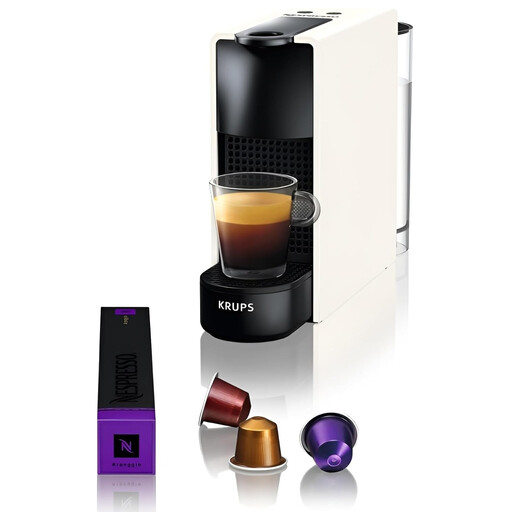 Image unavailable
KRUPS Nespresso Essenza Mini, white, 0.6 L, 1200 W
This capsule machine is worth comparing if you want a straightforward brewing process and have limited space. The product title lists a 0.6 L water tank and 1200 W of power. Before buying, check which capsules this model accepts, whether you can usually get hold of them and how to descale the machine.
View on Joybuy
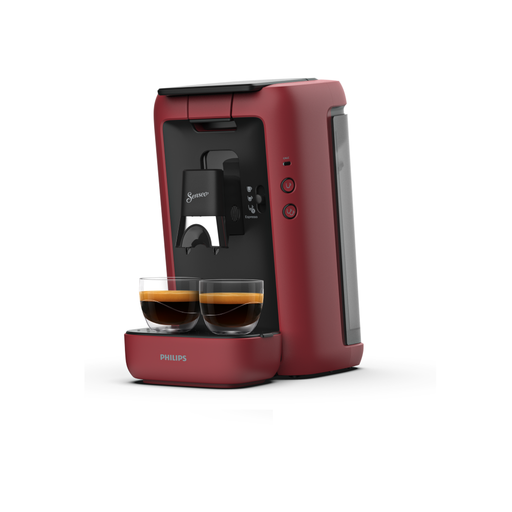 Image unavailable
Philips SENSEO® Maestro CSA260/91, deep red
Worth considering if you want pre-portioned coffee without grinding or tamping. Check that the pods designed for this SENSEO® machine suit your usual shopping habits. For maintenance, consult the manual and Philips support information for the CSA260/91 model.
View on Joybuy
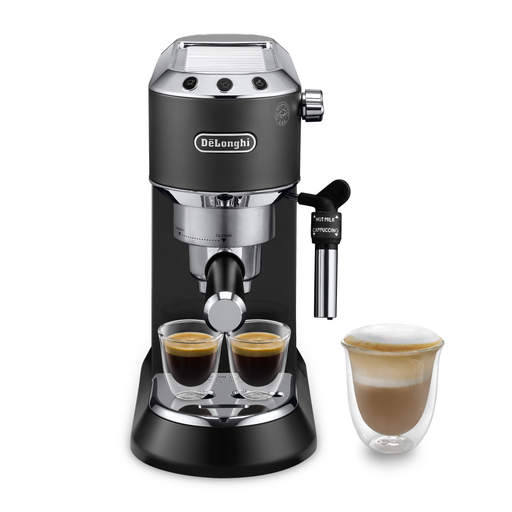 Image unavailable
De’Longhi Dedica Style EC685.BK, black
This portafilter machine is suited to anyone happy to fill and clean the filter themselves. If you want to use ESE pods or make milk-based drinks, check which features are listed for this model. Check the water tank capacity too before comparing machines: the information available for this model differs on this point.
View on Joybuy
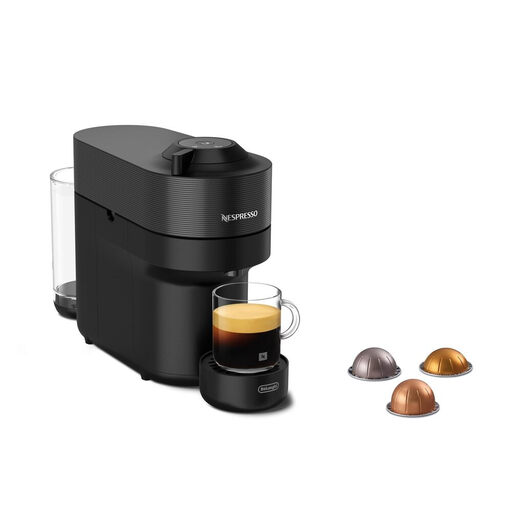 Image unavailable
Nespresso Vertuo Pop ENV90.B, black, 0.6 L
This Vertuo capsule machine is worth comparing if you’re looking for easy preparation and the drinks available with this system. The product title lists a 0.6 L water tank; also measure the depth of the space available on your worktop. Before choosing, check which Vertuo capsules are compatible and read the descaling instructions for the ENV90.B.
View on Joybuy
Frequently asked questions
How should you recycle coffee capsules in France?
ADEME says to put aluminium or plastic capsules in the recycling bin, bag or container. Check your local council’s instructions to use the collection scheme available where you live.
When should you descale an espresso machine?
Follow the machine’s alert and the instructions for your model rather than relying on the same schedule for every machine. UFC-Que Choisir recommends regular descaling, but the process depends in particular on the model, as shown by De’Longhi’s support information for the ECAM22.110.
What should you check before choosing capsules or pods?
Find out which format the exact machine accepts, then check that you’ll be able to buy the right consumables regularly. Compatibility listed for one system, such as L’OR BARISTA according to L’OR Espresso, doesn’t automatically apply to other models.
How can you plan for maintenance and wear parts?
Before buying, check the support page and manual for the exact model to find out about cleaning, descaling and the parts or accessories listed. Philips provides these resources for specific SENSEO® models, although their availability doesn’t guarantee that every part will remain available in future.


