Which households is it for?

Daily coffee drinkers who value simplicity

You make one or more coffees a day and mainly want a machine that is quick, compact and easy to use. Start by comparing capsules and pods, then consider the ongoing cost and consumable compatibility. According to UFC-Que Choisir and Senseo France, these systems use ready-to-use portions.

Those who keep a close eye on ongoing costs

If you drink coffee regularly and are happy to make an initial investment and carry out maintenance, consider a bean grinder or a portafilter machine. UFC-Que Choisir states that beans or ground coffee can be more economical to use than individual portions.

Households that switch between coffee and milk-based drinks

If you alternate between espresso, long coffee and milk-based drinks, check the precise milk system on the model, the cleaning required after use, the tank size and the drinks it actually offers. Models in the same range do not necessarily have the same functions.

What to look for

Start with how often you want to prepare coffee, then weigh up the cost of consumables, available space and maintenance requirements against your everyday needs.

Priority What to check Your needs
Simplicity and speed Compare the consumable format, the dosing and cleaning steps, and whether it can prepare one or two cups when this feature is needed. I want to make my daily coffee without complicated dosing or lengthy preparation.
Overall cost Calculate the cost of compatible capsules or pods based on your usual consumption. For a grinder, factor in coffee beans, any filters and maintenance products. I want to avoid a machine that is inexpensive to buy but results in more expensive coffee over the weeks.
Size and noise Measure the width, depth and height, including the clearance beneath cupboards. Check the tank capacity and the noise level where stated. My worktop needs to remain practical, and refilling or noise should not disturb the household.
Maintenance and support Check access to the coffee-grounds container, drip tray and brewing unit on grinders. Read the descaling procedure, milk-cleaning instructions and manual, and check the repair options for the exact model. I am looking for a maintenance routine I can follow regularly to keep the machine in good condition.
Waste and consumables Check whether the system uses proprietary portions, ground coffee or beans. For capsules, follow local recycling guidance and look into the collection options available. I want to limit individual packaging while choosing a consumable that is easy to find.

Mistakes to avoid

  • Choosing a capsule machine without calculating your ongoing coffee budget

    An affordable machine can become more expensive to run if you make coffee every day. UFC-Que Choisir highlights that capsules and pods cost more than beans or ground coffee.

    Compare the cost per cup of the capsules or pods that are genuinely compatible with the model, then factor this into your weekly consumption before making a decision.

  • Installing a grinder without allowing for space, noise and maintenance

    A grinder takes up more room and is noisier than a capsule system, according to UFC-Que Choisir. The containers, brewing unit and descaling also require a regular routine.

    Measure the space, check the noise level where it is published and make sure you can access the parts that need rinsing before you buy.

  • Assuming that a milk system requires no maintenance

    Milk residue needs to be dealt with after use. UFC-Que Choisir specifically recommends rinsing the steam wand and following the machine’s instructions for milk-based drinks.

    If you only occasionally prepare milk-based drinks, a simple steam wand may be enough. Otherwise, compare the rinsing, dismantling and cleaning required for the milk circuit.

  • Confusing capsule recycling with having no waste

    ADEME states that aluminium or plastic capsules are sorted with paper and packaging, but they are still individual items of packaging.

    If reducing packaging is a priority, compare a portafilter or grinder that uses ground coffee or beans. If you stick with capsules, follow the recycling guidance that applies in your area.

A guide to espresso machine brands

Nespresso

An ecosystem of capsule machines and associated services to consider if you deliberately choose portioned preparation and this system’s capsules.

  • Nespresso France reports more than 2,000 capsule collection points in France.
  • According to Nespresso France, a repair may not be possible when parts are unavailable; check the conditions that apply to your chosen model.

Senseo

A system of machines using soft pods, worth comparing if you are looking for one-touch preparation and pods available in several formats.

  • According to the model, Senseo France lists features such as a descaling indicator, intensity adjustment and the ability to prepare one or two cups.
  • Water capacity and functions vary by reference, so check the exact model’s specifications and compatible pods.

De’Longhi

A brand available across bean-to-cup and manual espresso machines, worth considering if you are choosing between automated bean preparation and a more hands-on approach.

  • De’Longhi France provides manuals, support and a service centre for its products.
  • Milk-based drink options, capacity and the cleaning system vary between ranges, so compare the full reference.

Krups

A brand to compare among bean-to-cup machines for automatic preparation of espresso, coffee or ristretto, with milk-based drinks available on selected references.

  • The official manual for the EA815, EA816 and EA817 series describes automatic preparation of espressos, coffees, ristrettos and cappuccinos.
  • This documentation covers these specific series and cannot be used to generalise the functions or support available across the entire range.

Melitta

A brand to consider among bean-to-cup machines, particularly when comparing automatic machines that offer milk-based drinks.

  • UFC-Que Choisir included the Melitta CI Touch Frosted F630-112 and Barista SE F830-003 among the models recently tested in its comparison, updated on 13 January 2026.
  • The inclusion of models in this comparison does not constitute a ranking of the entire brand, nor a guarantee of after-sales service or availability.

Joybuy products

Joybuy options for everyday coffee at home, including a soft-pod machine and several bean-to-cup espresso machines.

Philips EP2230/10 Series 2200 LatteGo gloss black

Philips EP2230/10 Series 2200 LatteGo, gloss black

A grinder option for everyday bean coffee and milk-based drinks.

Check the cost and availability of the AquaClean filter, listed as compatible but not included, as well as the space required on your worktop.

Joybuy
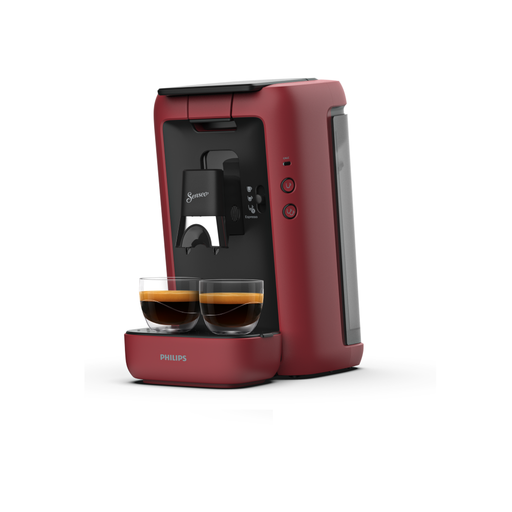
Philips Senseo Maestro CSA260/91 intense red

Philips Senseo Maestro CSA260/91, intense red

A soft-pod option for simple everyday preparation at home.

Check the price, availability and storage space required for compatible Senseo pods, as well as the functions needed for the drinks you make.

Joybuy
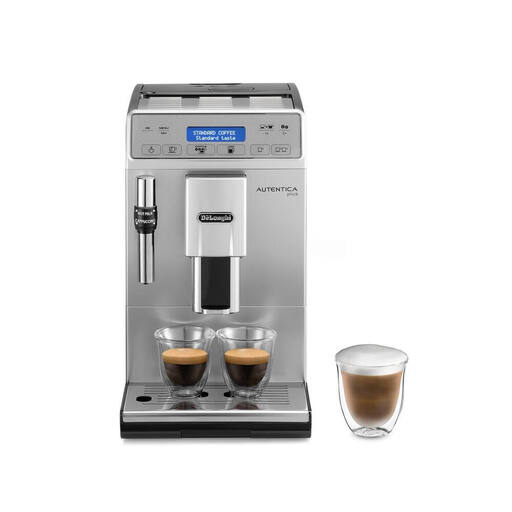
De’Longhi Autentica Plus ETAM29.620.SB grey

De’Longhi Autentica Plus ETAM29.620.SB, grey

An automatic grinder machine for households that want to enjoy a variety of coffees every day.

Milk-based drinks and steam-wand cleaning remain manual; also check the available clearance beneath your cupboards.

Joybuy
HiBREW H16 automatic espresso machine with grinder

HiBREW H16, automatic espresso machine with grinder

A grinder option with a cappuccino system for making coffee and milk-based drinks regularly.

Before buying, check the detailed maintenance procedure, removable parts, consumables and repair options available for this model.

Joybuy

De’Longhi Magnifica Start ECAM220.21.WW white

De’Longhi Magnifica Start ECAM220.21.WW, white

A grinder machine for everyday black coffee and espresso, with a steam wand for frothing milk.

Frothing and rinsing the wand are manual; check the depth required on your worktop and the maintenance consumables.

Joybuy

Frequently asked questions

Can coffee capsules be recycled in France?

Yes. ADEME states that aluminium or plastic coffee and tea capsules should be placed in the recycling bin, bag or container for paper and packaging. Check your local guidance if your local authority has additional requirements.

How often should an espresso machine be descaled?

The frequency depends on water hardness and usage. UFC-Que Choisir recommends descaling every two to three months on average; also follow the machine’s alert and the procedure specified by its manufacturer.

Is a grinder cheaper to run than a capsule machine?

For coffee beans, yes, according to the comparison cited by UFC-Que Choisir: the cost per cup of a grinder is reported to be two to three times lower than that of pod espresso. However, the result depends on the beans you choose, your consumption and the maintenance products required.

Will a capsule machine accept all capsules?

No. UFC-Que Choisir states that most brands accept only one type of capsule. Before buying, check the compatible capsule system, available references and collection arrangements.

How do I choose a machine for cappuccino or latte?

Check the exact system provided: steam wand, milk carafe or automatic preparation, depending on the model. Cleaning is just as important as the recipe: UFC-Que Choisir recommends rinsing the steam wand after use and following the manufacturer’s instructions for the milk circuit.