If you’re short on time and space
If you make one or a few cups and don’t want to measure or tamp the coffee, consider a capsule or pod machine. Check the format it takes, its dimensions and the capacity of the water tank.


If you make coffee regularly at home, choose a system that suits the steps you want to take: capsules or pods for a pre-measured serving, a portafilter if you want to be involved in making every cup, or an automatic grinder if you want to use whole beans with less hands-on preparation. Before choosing a model, check which consumables it takes, how much space it needs and what maintenance the instructions recommend.
If you make one or a few cups and don’t want to measure or tamp the coffee, consider a capsule or pod machine. Check the format it takes, its dimensions and the capacity of the water tank.
If filling and tamping a portafilter is part of the preparation you enjoy, a manual machine is worth considering. Bear in mind that you’ll also need to clean the portafilter after use.
If you’d rather choose your own beans than use pre-measured portions, consider an automatic grinder. Make room for the machine and check what maintenance the model you’re considering requires.
Consider this if: you want to make a cup using a pre-measured portion, and have found a capsule system that suits you.
Bear in mind: you’ll need a regular supply of capsules in the format your machine takes.
Consider this if: you prefer making one cup at a time with soft pods that are compatible with your machine.
Bear in mind: you’ll need a regular supply of pre-measured portions and will need to follow the machine’s maintenance instructions.
Consider this if: you want to fill and tamp the coffee yourself before making each cup.
Bear in mind: there are more steps involved, and you’ll need to clean the portafilter.
Consider this if: you make coffee often and want to use whole beans without handling a portafilter for every cup.
Bear in mind: you’ll need to clean and descale the machine as directed.
| What to consider | What to check | What I need |
|---|---|---|
| Preparation | Compare the steps involved in making a cup. If you make several coffees one after another, check the water tank capacity and how the machine works. | In the morning, I want to make my cups without repeating more steps than I’m happy with. |
| Coffee compatibility | For pre-measured portions, check the capsule system or pod format in the instructions. For a grinder or portafilter, check what type of coffee the machine is designed for. | I’d rather choose my own beans, or I want to know exactly which portions I can use. |
| Space and capacity | Measure the space available and check the machine’s dimensions. Make sure you can reach the water tank easily, and consider how many cups you make in a row. | I need to be able to fit the machine on my worktop and fill it without difficulty. |
| Maintenance | Read the machine’s cleaning and descaling instructions. According to UFC-Que Choisir, how often you need to descale depends in part on water hardness and how often you use the machine. | I can fit these tasks into my routine, as long as I know what they involve. |
| Parts and support | Search for the exact model number in the manufacturer’s support section, then check which parts are available and how repairs are handled. | If there’s a problem with a part, I want to know who to contact about that specific model. |
A capsule or pod machine means you’ll need a regular supply of compatible portions. Some machines may also need specific filters or cleaning products.
Before choosing, make a note of the consumables listed for the model and check that you’ll be able to get hold of them.
A machine’s name alone doesn’t tell you which other formats it takes. A portion that isn’t compatible won’t do the job you bought the machine for.
Check the system and compatible product references in the machine’s instructions before choosing your capsules.
According to UFC-Que Choisir, water hardness and how often you use the machine both affect how often it needs descaling. Nespresso and Philips provide instructions for the machines they cover.
Follow the instructions and any alerts from your machine, using the product recommended for it.
This takes time and requires a suitable product.
A help page doesn’t guarantee that a particular part is available. Nespresso says it may not be possible to repair a machine if the necessary parts are unavailable.
Check the available parts and repair options for the exact model you’re interested in.
Worth looking into if you’re considering a Nespresso capsule machine and want to check its maintenance instructions.
Philips provides support information for its coffee machines, including the SENSEO pod range.
De’Longhi’s range includes manual and automatic machines, so you can compare them based on how hands-on you want to be.
These models offer two ways to make coffee at home: use whole beans with an automatic grinder, or make pre-portioned coffee with a capsule machine. Check the features and consumables for each model before choosing.
 Image unavailable
Its grinder makes it suitable for a regular routine using whole beans; check the cleaning tasks required for this model. The EP2230/10 is part of the Series 2200 and features LatteGo.
 Image unavailable
This bean-to-cup espresso machine is for anyone who’d rather use a grinder than individual portions. Check the space needed and the maintenance requirements for the ECAM220.21.WW.
 Image unavailable
With its grinder, this automatic model suits a routine based on whole beans. Check the ECAM22.140.B instructions for cleaning and descaling guidance.
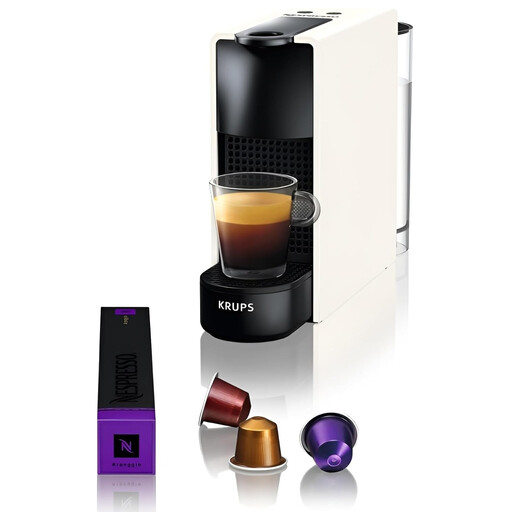 Image unavailable
This capsule machine is designed for a pre-portioned coffee routine. The product name lists a capacity of 0.6 L and a power rating of 1200 W; check the instructions to confirm exactly which capsule format it takes.
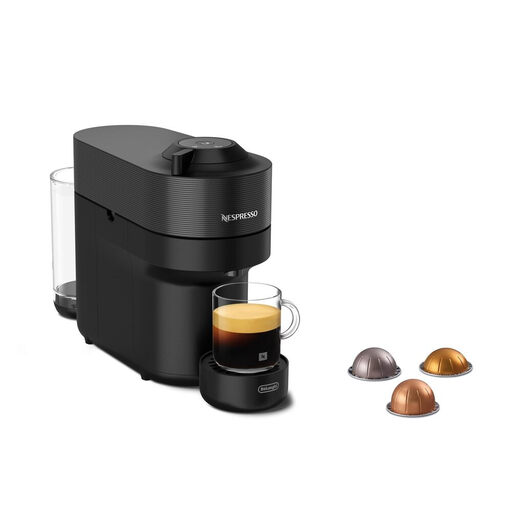 Image unavailable
This model makes coffee with Vertuo capsules rather than whole beans. The product name lists a capacity of 0.6 L; check that this capsule system suits your needs.
Don’t assume that every portion will fit every machine. Check the instructions to see which system your chosen model takes, then look for consumables marked as compatible.
Always start by checking your model’s instructions: water hardness and how often you use the machine affect how frequently it needs descaling. UFC-Que Choisir suggests an average of every two to three months; Nespresso recommends every three months or after around 300 capsules for its maintenance kit, while Philips recommends every three months for the SENSEO machines covered by its advice.
Search for the exact model number on the manufacturer’s website, then check which parts are available and how repairs are handled. Philips provides support resources; Nespresso notes, however, that a repair may not be possible if the necessary parts are unavailable.
ADEME advises putting aluminium or plastic coffee capsules in the recycling bin, bag or container for paper and packaging. If you use pre-measured portions every day, also consider where you’ll store them before collection.