For making espresso every day in a small space, a capsule machine keeps preparation simple, provided you’re happy with its capsule format. A portafilter machine is a good fit if you want to be involved in the brewing process. An automatic bean-to-cup machine lets you choose your beans and makes brewing easier, but it takes up more space and needs regular maintenance.
Who are these machines for?
People who regularly drink coffee made from beans
You want to make an espresso without filling and tamping a portafilter for every cup. An automatic bean-to-cup machine suits this preference if you’re happy to empty the trays, clean the parts specified by the manufacturer and descale the machine when prompted.
People short on time and space
You’re looking for a machine that takes just a few steps to make each espresso and fits on your worktop. A capsule machine is worth considering, once you’ve checked its dimensions and the capsule format it accepts.
People who like to be involved in the brewing process
You prefer to measure and tamp the coffee yourself, then handle the portafilter. This way of making espresso also means cleaning the portafilter and filters after use.
Which features should you prioritise?
For everyday espresso, start by thinking about the steps you’re happy to take for each cup and the maintenance you’re prepared to do afterwards. Que Choisir also highlights the differences in size between the various types of machine.
Capsule machine
Worth considering: if you want to make espresso with minimal effort and have limited space.
Be prepared for: choosing capsules that are compatible with your machine and dealing with the used capsules.
Portafilter machine
Worth considering: if you want to fill and tamp the portafilter yourself.
Be prepared for: more steps while making your coffee and more cleaning afterwards.
Automatic machine with grinder
Worth considering: if you often make espresso and want to choose your own beans without measuring out each cup by hand.
Be prepared for: a machine that’s generally larger and noisier than a capsule system, as well as regular maintenance, according to Que Choisir.
| Feature |
What to check |
Who it matters to |
| Choice of coffee and consumables |
Check which capsule format the machine accepts or whether you can use your coffee of choice. Also find out which maintenance products you’ll need. |
If I want to choose my own beans without relying on a capsule format, that freedom will guide my purchase; around 31% of consumers put this need first. |
| Ease of use and size |
Measure the space available, including room to access the water tank and trays, then check how many steps it takes to make a cup. |
With a small worktop, I’d prefer a machine that takes little effort to use; around 23% of consumers put this need first. |
| Automation and maintenance |
Check the manual for instructions on cleaning the trays, brewing unit and milk system, if there is one, as well as descaling. |
If I regularly make several espressos, I want to avoid measuring out each cup, while knowing the machine will need maintenance; around 31% of consumers prioritise this balance. |
| The drink you actually want |
Think about the difference between short espressos and several cups of filter coffee that you might make each day. |
If I mainly drink filter coffee, buying an espresso machine wouldn’t suit my main needs; around 15% of consumers should reconsider their choice to make this their priority. |
Mistakes to avoid
-
Assuming automatic brewing means no maintenance
A grinder can start brewing at the touch of a button, but its trays and, depending on the model, its brewing unit or milk system still need regular attention. Que Choisir stresses that maintenance is important for keeping the machine in use over time.
Before choosing a model, check the manual to see what needs doing after each use, what needs cleaning periodically and when the machine will prompt you to descale it.
Allow time for these tasks too, and check whether the model needs water filters or specific descaling products.
-
Choosing a capsule machine without checking its system
Simple brewing doesn’t mean that every capsule fits every machine. The format you choose determines which capsules you can use later on.
Check the system specified for the exact model and make sure you’re happy with the corresponding capsules before buying.
-
Assuming recyclable means waste-free
A capsule that’s sorted for recycling or collected is still individual packaging. ADEME recommends choosing products without single-serve portions where possible to reduce waste.
If this matters to you, compare the packaging generated by the way you use your machine and check your local recycling guidance or collection options.
-
Expecting a filter coffee machine to make espresso
A filter coffee machine suits a different way of making coffee. It won’t make a like-for-like replacement for a machine designed for short espressos.
Make a note of the drinks you actually make most often. Consider a filter machine if espresso is a secondary choice, rather than as another way to get the same cup.
Brands to know when comparing systems
Nespresso
A brand to explore if you’re considering a capsule machine and want to organise your capsules for recycling or collection.
- Nespresso lists recycling options and collection points in France; check which guidance applies in your area.
- Which capsules you can use depends on the machine you choose, and every used capsule is still packaging to deal with.
De'Longhi
Its portafilter machines and automatic grinders let you compare two distinct ways of making espresso.
- For its manual models, De'Longhi explains how to fill and tamp the portafilter.
- Descaling requirements and equipment vary by model, so check the manual for the one you’re interested in.
Philips
A brand to consider if you’re comparing automatic grinders, particularly models with a system for milk-based drinks.
- For some models, Philips provides maintenance guides, information about parts and troubleshooting support.
- Milk preparation features and noise specifications apply to the models concerned; check the details rather than assuming they apply to the whole range.
Machines for different needs
These models illustrate the three ways of making espresso covered here: with a portafilter, capsules or an automatic grinder. Focus on the brewing steps, the coffee system each machine accepts and the maintenance required for the model you’re interested in.
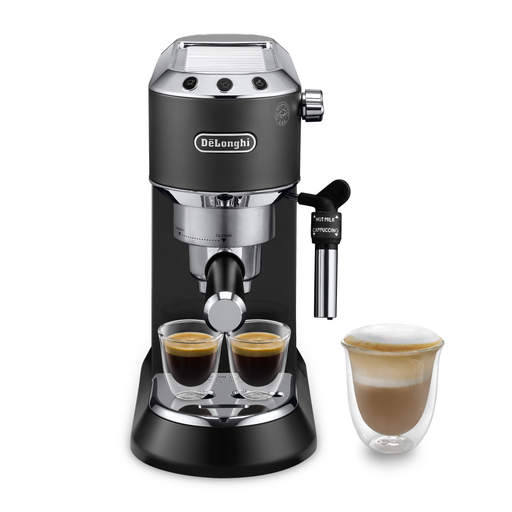 Image unavailable
De'Longhi Dedica Style EC685.BK, black
Worth considering if you’d like to make espresso with a portafilter rather than capsules. The model name specifies 15 bar pressure and a 1.6 L water tank; using a portafilter involves preparation and cleaning steps.
View on Joybuy
 Image unavailable
KRUPS Nespresso Essenza Mini, white
Worth looking at if you prefer capsule brewing and have limited space. The model name specifies a 0.6 L water tank and 1,200 W power; check that it accepts the capsule system you want to use.
View on Joybuy
 Image unavailable
De'Longhi Magnifica S ECAM22.140.B, with grinder
Worth considering if you regularly make espresso from beans without handling a portafilter for every cup. This is an automatic machine with a grinder; check the manual to plan for cleaning and descaling.
View on Joybuy
 Image unavailable
HiBREW H16, automatic grinder with milk system
Worth considering if you’d like to choose from several drinks on a machine with a grinder. The model name lists six types of coffee, a touchscreen and a milk system; check the manual for instructions on maintaining the latter.
View on Joybuy
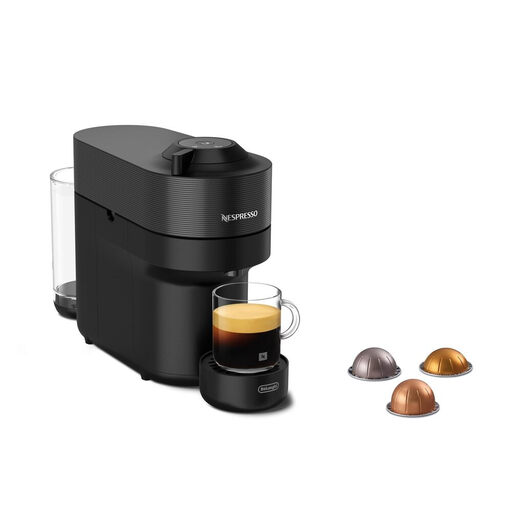 Image unavailable
Nespresso Vertuo Pop ENV90.B, black
A capsule machine worth considering if you want to make espresso with minimal effort. This model uses the Vertuo system, so check that its capsules suit you, and confirm the water tank capacity of the ENV90.B variant before choosing.
View on Joybuy
Frequently asked questions
Does an automatic machine with a grinder clean itself?
No. Some models run automatic rinsing cycles, but you’ll still need to clean the trays and descale the machine as prompted. Whether the brewing unit needs cleaning depends on the model; if you use milk, follow the cleaning instructions for the relevant system too.
Where should you put used coffee capsules in France?
According to ADEME, aluminium or plastic capsules should go in the packaging recycling system. Check your local council’s guidance; some brands also offer collection points.
Can a filter coffee machine replace an espresso machine?
Not if you’re looking for short espresso. Consider a filter coffee machine if you mainly make filter coffee and espresso is no longer your priority.
What statutory guarantee applies to a new coffee machine bought from a business in France?
For a new product, you can claim under the statutory guarantee of conformity from the business seller within the two-year period stated by the French Ministry of the Economy. This is separate from any commercial guarantee offered by a seller or manufacturer.


