If you make several espressos a day, start by choosing how much time you want to spend on each one. Capsules and pods keep things simple, while a portafilter gives you more hands-on control. A bean-to-cup machine is worth considering if your household drinks coffee regularly and wants to adjust its settings, provided you’re happy to keep on top of the maintenance. Also compare the space available, compatible consumables and running costs based on how much coffee you actually drink.
Which approach is right for you?
A busy household with limited space
If you want to make an espresso without grinding or measuring out the coffee, consider capsule and pod machines. Que Choisir describes capsule models as quick and compact; however, check the dimensions and the consumable format accepted by the specific machine.
Regular coffee drinkers keeping an eye on the cost per cup
When you make several coffees a day, your choice of beans or pods affects the running cost. In its guide, Que Choisir presents bean-to-cup machines as an option for enthusiasts and people who drink a lot of coffee, with a lower cost per cup than pod espresso machines. The cost for your household will depend on what you buy and how much you drink.
Those who like to adjust their drinks
If you like to fine-tune the extraction or make milk froth, look at portafilter machines equipped for these tasks. Some grinders also offer adjustable settings and milk-based drinks. Features vary by model, as do the parts you need to clean after each use.
What sets these machines apart?
For a household making several espressos a day, the main trade-offs are how many steps each coffee takes, which consumables you use and how much maintenance you’re prepared to do. Each system meets these priorities differently.
Capsules
Consider if: you want a quick espresso and a compact machine.
Bear in mind: you’ll need capsules compatible with the machine and will have to replace them as you use them.
Soft pods
Consider if: you want a straightforward way to make coffee; some models can make two cups at once.
Bear in mind: the choice of drinks and pods depends on the system and model.
Portafilter
Consider if: you want to control the dose and extraction, or use a steam wand if the machine has one.
Bear in mind: making coffee and cleaning the portafilter involve more steps.
Bean-to-cup grinder
Consider if: you make espresso regularly and want to choose your beans and adjust your drinks.
Bear in mind: you’ll need to clean the parts you use and descale the machine as instructed for that model.
| Consideration |
What to check |
Who it matters to |
| Speed and size |
Machine dimensions, space needed to remove the water tank and whether it can serve two cups. |
If everyone has coffee at a different time, I want to make it quickly without taking up too much worktop space; around 25% of consumers would prioritise this. |
| Ongoing running costs |
Compatible consumables and how much coffee your household actually uses. |
If we make several espressos a day, I want to keep track of what pods or beans will cost over time; around 31% of consumers would make this their priority. |
| Settings and drinks |
Strength and cup-size settings, as well as whether the chosen model has a milk system and how it works. |
In a household where everyone has different tastes, I want to be able to customise our coffees without assuming every recipe is available; around 25% of consumers would prioritise this flexibility. |
| Everyday maintenance |
Access to the trays and water tank, cleaning the milk system and descaling instructions. |
With a machine we use every day, I want cleaning tasks that fit into my routine; around 19% of consumers would put this first. |
Easy-to-overlook points
-
Forgetting the cost of each coffee
Choosing a machine also means choosing capsules, pods, beans or ground coffee. Que Choisir compares the cost per cup of grinders with that of pod espresso machines, so how often you use the machine matters when comparing them.
Start with the number of coffees your household makes and the consumables you’d actually buy for each system.
-
Assuming every model in a range has the same features
A milk-based recipe, user profile or grind setting may be available on one model but not another. The features described by Sage and De’Longhi apply to specific models.
Check the full model number, the drinks it offers and the cleaning involved for the features you’re interested in.
-
Underestimating cleaning and descaling
An automatic programme doesn’t necessarily mean you won’t have to empty the trays or clean parts that come into contact with milk. De’Longhi says that how often its grinders need descaling depends, among other things, on water hardness.
Check the model’s instructions to see which parts need rinsing, emptying or removing, and when to descale.
Cleaning the milk system and running descaling cycles also take time between uses.
-
Not planning what to do with your old machine
Used electric coffee machines should be taken to an electrical and electronic equipment collection point, not put out with ordinary household waste.
If you’re replacing an appliance in France, look into a take-back scheme, collection point, recycling centre or reuse organisation that can accept it in its current condition.
Brands to know for each system
Nespresso
A brand to consider if you’re looking at a capsule machine and want to plan ahead for maintenance.
- Nespresso provides support information and descaling products for its machines.
- Check which capsule system the model uses and follow its maintenance instructions, particularly if you live in a hard-water area.
Philips SENSEO®
A range of soft pod machines for those who want an easy way to serve coffee.
- Depending on the model, Philips offers machines with a strength selector or a descaling indicator.
- Check whether it makes one or two cups, which pod holder it needs and whether compatible pods are available.
Sage
A brand to consider if you’re looking for a portafilter machine and want more control over how your espresso is made.
- Sage lists an integrated grinder and 16 grind settings for its Barista Express; these features apply to this model.
- Using a portafilter and, if you choose, a steam wand involves extra cleaning.
De’Longhi
A brand with a range of automatic grinders, whose features vary by model.
- Some models offer adjustable settings or milk-based drinks; check the features of the model you’re considering.
- De’Longhi says that how often its grinders need descaling depends, among other things, on water hardness; follow the instructions on the machine and in its manual.
Machines for the uses discussed
These machines show three ways to make espresso regularly: a bean-to-cup grinder, soft pods and a portafilter. Compare how each one works and what maintenance it needs against your household’s priorities.
 Image unavailable
Philips Series 2200 EP2230/10 LatteGo
Worth considering if you regularly make espresso using a grinder and would also like a LatteGo system. If you want to serve two milk-based drinks at the same time, check the limit stated for this model and make sure the cleaning steps suit you.
View on Joybuy
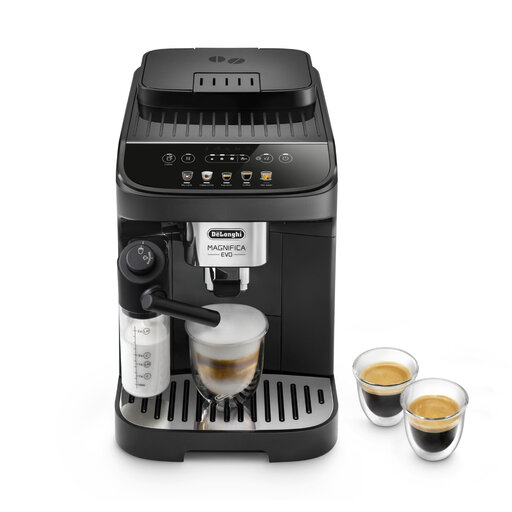 Image unavailable
De’Longhi Magnifica Evo ECAM290.61.B LatteCrema
Consider this if you want to combine an automatic grinder with the LatteCrema milk system. If several people want different drinks, check which recipes this model offers before choosing.
View on Joybuy
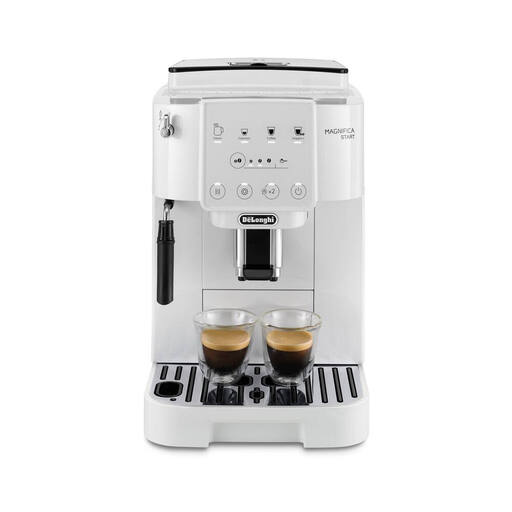 Image unavailable
De’Longhi Magnifica Start ECAM220.21.WW, white
An option for making coffee from beans regularly without having to grind each dose by hand. If you plan to use the steam wand listed for this model, remember to clean it after making milk-based drinks.
View on Joybuy
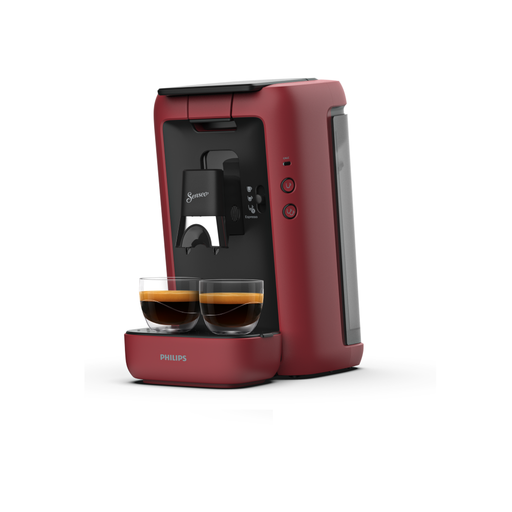 Image unavailable
Philips SENSEO® Maestro CSA260/91, red
Worth considering if you prefer soft pods and a straightforward way to serve coffee, particularly when two people want a cup at the same time. Check that the pods are compatible with SENSEO® and that you have enough space around the machine.
View on Joybuy
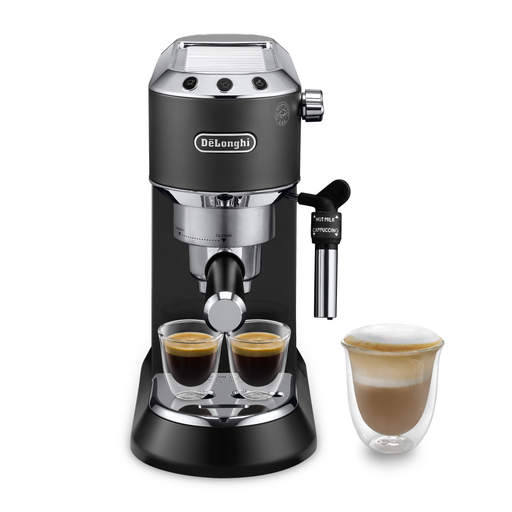 Image unavailable
De’Longhi Dedica Style EC685.BK, black
Consider this if you want to make espresso with a portafilter and have more control over each coffee. Check that the water tank holds enough for the number of cups your household expects to make; the portafilter and steam wand also need cleaning after use.
View on Joybuy
Frequently asked questions
Will a bean-to-cup grinder always reduce the cost of making several espressos a day?
Not necessarily for your household: it depends on how many coffees you make and which consumables you choose. In its guide, Que Choisir gives a lower cost per cup for a grinder than for pod espresso; compare the cost of beans, pods and maintenance based on how you use your machine.
What should I choose if my household also wants longer coffees or milk-based drinks?
Choose a model with settings and drinks that suit your needs rather than relying on the machine type alone. Some grinders offer adjustable cup sizes or milk-based recipes; a portafilter machine with a steam wand is a good fit if you want to froth the milk yourself.
How often should I descale the machine?
Follow the manual and the machine’s alerts: how often you need to descale varies depending on the machine, how much you use it and the hardness of your water. De’Longhi highlights the importance of water hardness for its grinders; check the instructions for your specific appliance.
What should I do with an old electric coffee machine in France?
Take it to an appropriate electrical equipment collection point rather than putting it out with ordinary household waste. The French Ministry for Ecological Transition lists collection points and recycling centres; depending on the condition of the appliance, you could also consider a reuse organisation.


