Buying priorities
First compare how often you will prepare coffee, then consider consumables, maintenance and the space genuinely available in your kitchen.
| Priority |
What to check |
Your needs |
| Speed and simplicity |
Compare the loading format, the number of cups you can prepare and the steps required before and after extraction. For the exact model, also check the rinsing or cleaning functions. |
I want to prepare one or two cups without turning every coffee into a technical procedure. Pre-dosed systems generally make the routine easier, whereas a portafilter involves more handling. |
| Running costs |
Relate the price of pods or beans to your actual consumption. Also check any cartridges, descaling requirements and other consumables specified by the manufacturer. |
I want to compare the ongoing cost of coffee and maintenance, not just the purchase price of the machine. According to UFC-Que Choisir, the cost per cup of a bean grinder can be two to three times lower than that of a pod espresso. |
| Maintenance |
Consult the manual to find out about descaling, parts that need rinsing and access to the containers. In particular, check the brewing unit, drip tray and steam wand where the model has one. |
I want maintenance to fit into my routine. UFC-Que Choisir recommends descaling every two to three months on average, adjusted according to the water and how the appliance is used. |
| Compatibility and waste |
Confirm the capsule or pod format before buying. For capsules, also check the material and the recycling instructions that apply in your area. |
I do not want to be restricted by a consumable format that does not suit my habits. A Nespresso Vertuo Up machine, for example, is only compatible with Nespresso Vertuo capsules, according to Nespresso France. |
Machines available on Joybuy
These Joybuy options include espresso machines with bean grinders and a soft-pod machine for a regular home coffee routine.
 Image unavailable
Philips EP2230/10 Series 2200 LatteGo
For a household that regularly prepares coffee from beans and also wants milk-based drinks.
Grinder with 12 settings, ground coffee option, two-cup preparation, 1.8 L reservoir and 275 g bean container.
Check the available space: the machine weighs 8 kg and measures 246 × 371 × 433 mm. The AquaClean filter is stated to be compatible but is not included.
View on Joybuy
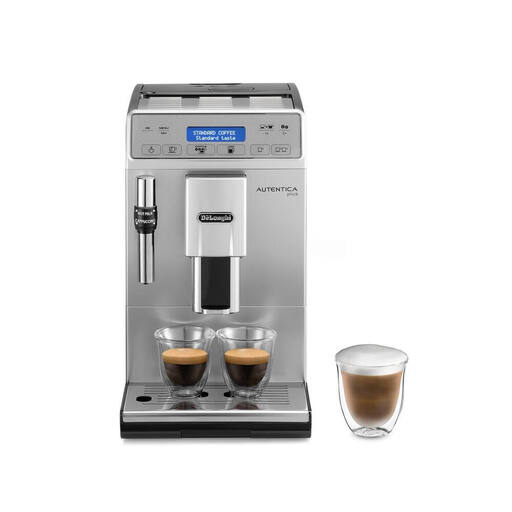 Image unavailable
De’Longhi Autentica Plus ETAM29.620.SB
For a routine based on beans or ground coffee, with one- or two-cup preparation.
Grinder with 13 settings, 1.4 L reservoir, 200 g bean container, LCD screen and programmed recipes.
Its slim format measures 194 mm wide, but its height of 477 mm and weight of 9.5 kg mean you should check the available space, particularly beneath wall cupboards.
View on Joybuy
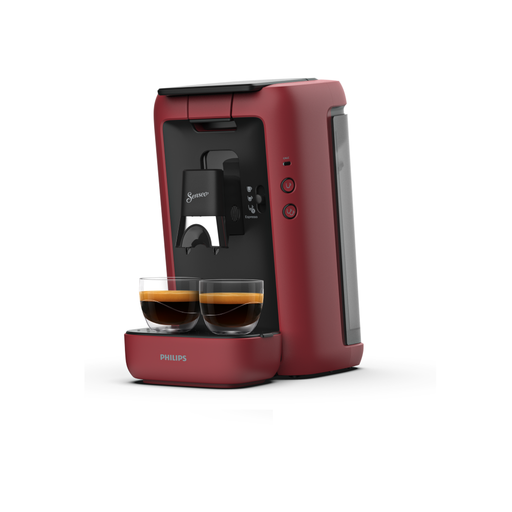 Image unavailable
Philips Senseo Maestro CSA260/91
For a quick individual coffee or two cups using SENSEO pods.
One cup is stated to take less than 45 seconds and two cups less than 75 seconds. The machine has a removable 1.2 L reservoir and a descaling indicator light.
The title mentions capsules, while the description specifies SENSEO pods: confirm the accepted format before buying. Its dimensions are 28,5 × 17 × 31 cm.
View on Joybuy
 Image unavailable
De’Longhi Magnifica Start ECAM220.21.WW
For a household wanting to prepare several coffees directly from beans.
1.8 L reservoir, 250 g bean container, grounds container stated to hold 14 coffees, three direct recipes and a grinder with 13 settings.
The machine measures 240 × 440 × 350 mm and weighs 8,99 kg. Also check the space needed to handle the reservoir, bean container and grounds container.
View on Joybuy
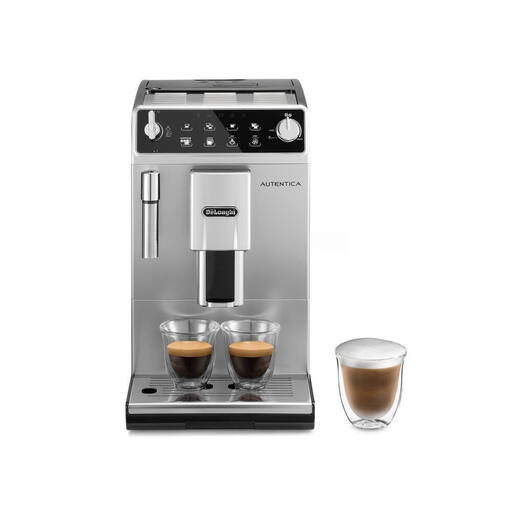 Image unavailable
De’Longhi Autentica ETAM29.510.SB
For everyday coffee made with beans or pre-ground coffee, with several drink settings.
200 g bean grinder, hatch for pre-ground coffee, 13 grind settings, 1.4 L reservoir, six recipes and cappuccino nozzle.
Its dimensions of 195 × 340 × 477 mm and weight of 9,542 kg require a stable location. The steam wand must be cleaned after use.
View on Joybuy
Frequently asked questions
What maintenance does an espresso machine used every day require?
Clean the drip tray, capsule or grounds containers and all parts that come into contact with coffee regularly. Descaling should follow the model’s instructions and take account of water hardness and usage; UFC-Que Choisir refers to an average of every two to three months. With a grinder, also plan to clean the containers and, depending on the model, the brewing unit.
Do coffee capsules go in general waste in France?
No. ADEME states that aluminium and plastic capsules should be placed in the recycling bin, bag or container for paper and packaging. Check the guidance that applies in your local authority and the material of your chosen consumable.
Is there financial assistance for repairing a coffee machine outside its warranty?
Yes, provided the fault and repair are eligible and the work is carried out by a QualiRépar repairer. Ecosystem states that the Repair Bonus is 15 € for a filter or capsule coffee maker and 25 € for a fully automatic coffee machine; cosmetic damage, misuse, lack of maintenance and removable accessories are among the items not eligible.


