Quick coffee breaks
You make a cup between other activities and want to keep preparation time and effort to a minimum. The capsule system, its compatibility and the cost of using it over time all matter when choosing.


If you want a quick coffee break with minimal fuss, a capsule machine could suit you, provided its capsule system and drinks meet your expectations. If you drink coffee regularly, compare the cost of consumables and maintenance based on how many cups you actually make, then choose between automated and manual preparation according to the space you have and the steps you’re happy to take. A soft coffee pod doesn’t guarantee a genuine espresso, and an automatic machine still needs regular maintenance.
You make a cup between other activities and want to keep preparation time and effort to a minimum. The capsule system, its compatibility and the cost of using it over time all matter when choosing.
You make coffee at home throughout the day and want to compare the cost of the machine, consumables and maintenance based on the number of cups you actually make.
You prefer to be involved in making your coffee and are happy to handle and clean a portafilter between cups.
Capsule, soft pod, portafilter and bean-to-cup machines differ in the steps involved, the consumables they use and the maintenance they need. Compare them with your coffee breaks and the space you actually have in mind.
Choose this if: you prefer a single cup with minimal effort.
Bear in mind: the capsules must be compatible with the machine’s system, and you’ll pay for them every time you make a coffee.
Choose this if: you’re mainly looking for a long or strong coffee that’s simple to prepare.
Bear in mind: tests by Les Numériques distinguish the result from a Senseo machine from a genuine espresso.
Choose this if: you want to have more input into preparing each cup.
Bear in mind: filling and emptying the portafilter means extra steps and cleaning between coffees.
Choose this if: you often make coffee from beans and want grinding and brewing to be automatic.
Bear in mind: the grinder takes up space and makes noise; the bins and brewing unit need regular maintenance, as Que Choisir Ensemble points out.
| Criterion | What to check | Who it matters to |
|---|---|---|
| Total cost | Compare the cost of the machine, consumables and maintenance over the same period, based on the number of cups you expect to make. | If I make several coffees at home, I want to know what consumables and maintenance will cost over time; around 30% of consumers put total cost first. |
| Steps and time | Look at the steps needed to make each cup and check whether the model can make one or two cups, if that matters to you. | If I take a short break, I want a machine that doesn’t involve lots of steps; around 30% of consumers prioritise ease of use and the time it takes to make each cup. |
| Maintenance | Check how easy it is to access the bins and parts that need cleaning, as well as the descaling process described in the manual. Que Choisir Ensemble particularly recommends regularly rinsing the bins and brewing unit of a bean-to-cup machine. | If I want cleaning to fit into my routine, I check what needs rinsing and descaling on the model I’m considering; around 20% of consumers make maintenance their priority. |
| Space and noise | Measure the space available, allowing for access to the water tank and room to prepare your coffee. Que Choisir Ensemble notes that a grinder takes up more space and makes more noise than a capsule system. | If my machine will sit near a workspace or somewhere people relax, I want to check its footprint and how noisy the grinder is; around 10% of consumers put space or quiet at the top of their list. |
| Drink and waste | Check what type of drink the machine makes, the exact format of compatible pods or capsules, and how their packaging should be sorted for recycling. | If I want a particular kind of espresso or would like to reduce pod waste, I check what drink to expect and what happens to the packaging; around 10% of consumers prioritise the drink produced or the waste generated. |
The cost of making coffee regularly also depends on consumables and maintenance. Comparing only the initial purchase price isn’t enough to decide between systems.
Over the same period, add up the cost of the machine, the cups you expect to make and maintenance, then compare the options based on how you’ll actually use it.
Nespresso Original and Vertuo capsules use different systems. Similarly, a short coffee made with a soft pod isn’t necessarily an espresso.
Before choosing your consumables, check the machine’s full model number, the system it accepts and the type of drink you can expect.
Bean-to-cup machines need rinsing and descaling according to the model’s instructions. Simple controls don’t eliminate these tasks.
Read the manual and check that you can easily access the parts that need cleaning in the space you have and as part of your routine.
A part made for one range won’t necessarily fit every model. Philips recommends searching for Senseo parts using the model number.
Make a note of the full model number and check that the part is compatible with the manufacturer or retailer.
These models illustrate two different systems: soft pods with the SENSEO Original Plus CSA210/50, and a grinder with the Philips Series 2200 EP2224/10.
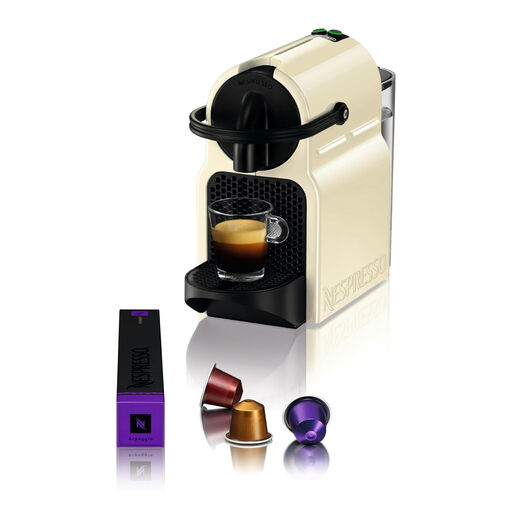
The Original system Essenza Mini is an example of a compact machine for espresso or lungo.
The Dedica Style EC685.M EX:4 is a manual portafilter machine, while the Magnifica S ECAM22.110.B is an automatic bean-to-cup model.
The KF4 5KES8454EBM is an example of an automatic bean-to-cup machine worth considering in terms of its footprint and access to parts that need maintenance.
This selection includes capsule machines and compact or semi-automatic espresso machines for making individual coffees at home.
 No image available
Worth considering if you want to make espresso or lungo with Nespresso Original capsules.
The product details list 19 bar pressure and a fold-away drip tray.
 No image available
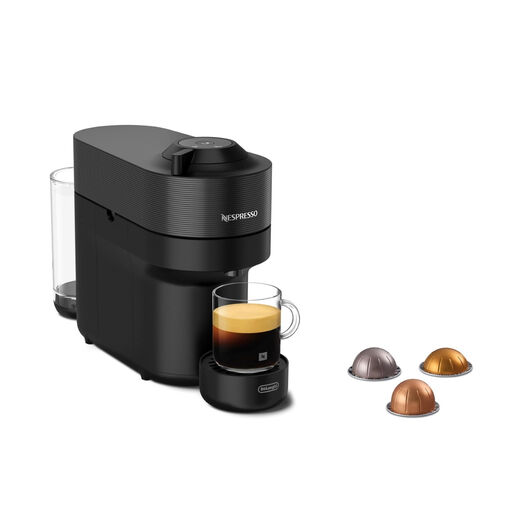
Worth considering if you want a Vertuo capsule machine for making drinks on demand.
The product details list a 0,6 L tank and compatibility with Nespresso Vertuo capsules.
 No image available
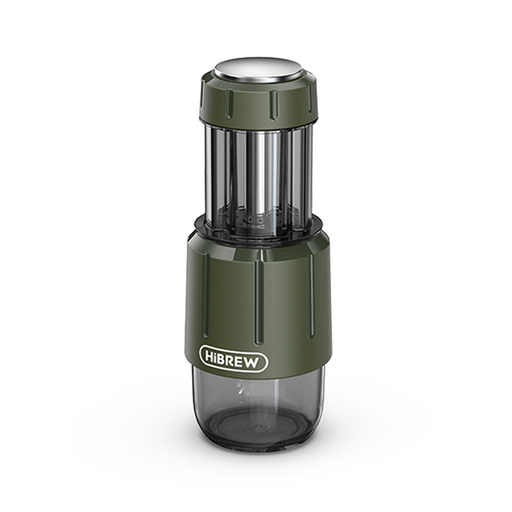
Worth considering if you’re looking for a compact machine advertised as compatible with capsules or ground coffee.
The product details list pressure of 8 to 15 bar and a portable design.
 No image available
Worth considering if you want a semi-automatic espresso machine with preparation settings listed in its product details.
The title lists 20 bar pressure and hot or cold preparation.
 No image available
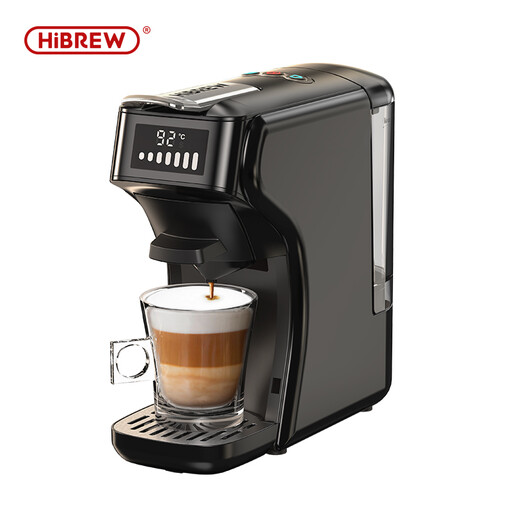
Worth considering if you want to compare a machine advertised as compatible with several pod formats and ground coffee.
The title lists a 600 ml tank, 19 bar pressure and hot and cold modes. Check which formats are compatible with your consumables before buying.
No, a soft pod doesn’t guarantee an espresso. Les Numériques says the Senseo Maestro it tested doesn’t make a true espresso; check the type of drink listed and reviewed for the model you’re interested in.
How often depends on the model and how you use it; there’s no single schedule that applies to all four types. Que Choisir Ensemble recommends regularly rinsing the bins and brewing unit of a bean-to-cup machine. For the SENSEO Original Plus, Philips says to descale when the one-cup and two-cup button lights flash at the same time; check the manual for your model.
Check the capsule or pod system and the machine’s full model number before buying. In its February 2025 testing, Que Choisir Ensemble tested capsules compatible with Nespresso machines and pods compatible with Senseo machines; this doesn’t guarantee compatibility with Vertuo or ESE. Philips recommends searching for Senseo parts using the model number, and the DGCCRF says that the seller must tell you how long parts will be available if the manufacturer has provided this information.
Subject to its conditions, the legal guarantee of conformity applies to new, second-hand and refurbished goods sold by a business to a private individual. The French Ministry of the Economy says that claims must be brought within two years of delivery; this legal guarantee is separate from any commercial warranty that may also apply.
According to ADEME, aluminium or plastic capsules should go in the recycling container provided for paper and packaging. This instruction is about sorting packaging and doesn’t mean that every capsule collected will actually be recycled.