
Livraison le jour même ou le lendemain

Qualité garantie

Débloquez vos offres de bienvenue: Livraison GRATUITE | Jusqu'à -80 % | 30 jours d'essai gratuits à JoyPlus
Téléchargez l'application
By the Joybuy Expert Team
Savouring a rich, smooth espresso worthy of a real barista without leaving your kitchen? It's a dream for many. Yet, faced with marketing jargon and complex technical sheets, finding the perfect espresso machine can quickly become a headache. To ensure your investment doesn't turn into a disappointment, here are the pitfalls to avoid.
The 3 Pitfalls to Avoid Before Buying Your Espresso Machine:
To see more clearly and make the right choice, focus on the few parameters that define a machine's performance and its relevance to your habits.
This is the first choice, the one that determines your level of involvement in the preparation.
As we've seen, don't be mesmerised by the maximum number. A 20-bar coffee machine certainly has a powerful pump, but what's essential is its ability to maintain stable pressure. Furthermore, a rapid heating system (thermocoil or thermoblock) will save you long minutes of waiting in the morning. For fans of a cappuccino machine, a dual boiler system is the holy grail: it allows you to prepare the espresso and froth the milk simultaneously. A huge time-saver.
A stainless steel coffee machine isn't just about looks. This material is robust, often treated to be fingerprint-resistant, and cleans with a simple wipe, ensuring better hygiene and a longer lifespan. Also, make sure that key components (water tank, drip tray, portafilter) are easily removable. This guarantees that maintenance doesn't become a chore. Finally, in a small kitchen, a compact design is a major asset.
Rather than just listing features, let's see which machine suits which user.
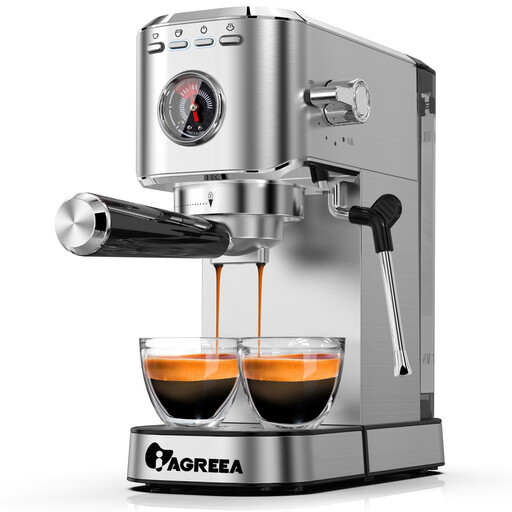
Why we love it: Ideal for learning to control extraction without breaking the bank. It combines professional tools (pressure gauge) with the simplicity of a semi-automatic machine.
Its built-in pressure gauge demystifies the "20-bar" claim. It displays the real-time pressure during extraction, teaching you what actually makes a good espresso. The removable parts make cleaning much easier.
Its powerful steam wand for practicing latte art; its compact, durable stainless steel design, perfect for small kitchens.
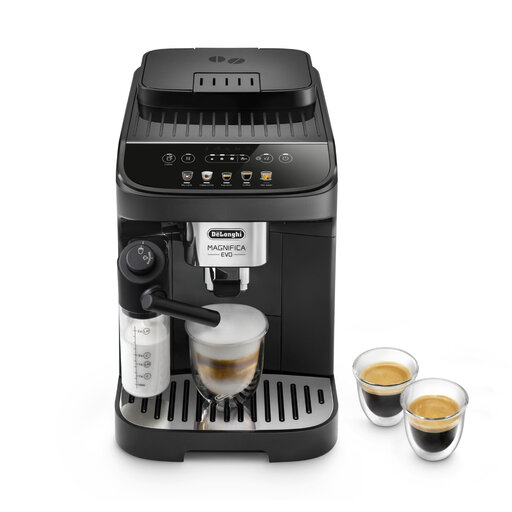
Why we love it: For a perfect cappuccino or latte at the touch of a button, without the hassle of adjustments. The freshness of newly ground beans is a real bonus.
It tackles the maintenance problem head-on: its milk carafe is dishwasher-safe, and its cleaning function is automatic. The LatteCrema system guarantees quality foam, every time.
Integrated bean grinder (13 levels); 5 drinks accessible via a colour touch panel; customisable aroma and temperature.
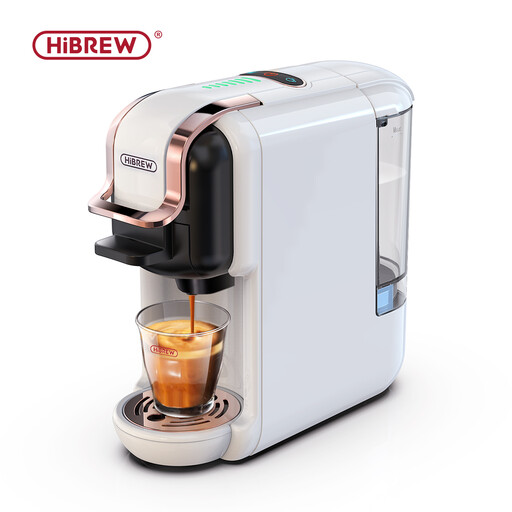
Why we love it: The perfect solution for the undecided or for households with varied tastes. It lets you juggle between capsules (Nespresso, Dolce Gusto…), ESE pods, and ground coffee without needing multiple machines.
It avoids the "false versatility" trap by offering simple and effective compatibility via dedicated adapters, without ever sacrificing quality. No more being locked into a single capsule ecosystem!
Hot and cold modes for iced coffees in the summer; ultra-compact design to free up counter space; automatic shut-off for added safety.
Discover our complete selection of machines that meet our quality criteria and safety standards.
Not necessarily. A 20-bar pump indicates a high maximum pressure capacity, but the optimal espresso extraction happens at around 9 bars. The most important thing is the machine's ability to maintain this pressure in a stable manner throughout the entire extraction. A 15-bar machine with good regulation will perform better than an unstable 20-bar machine.
Absolutely. Descaling is crucial for preserving your machine's performance and lifespan. The limescale present in water builds up in the heating system, which can affect water temperature and pressure. The frequency depends on your water hardness and usage, but as a general rule, descaling every 2 to 3 months is a good starting point. Many modern machines will alert you when descaling is needed.
It varies enormously depending on the brand, build quality, and maintenance. A well-maintained entry-level model can last for 3 to 5 years. Mid-range and high-end machines, especially those with a stainless steel body and quality components, can last 10 years or more if they are carefully maintained (regular cleaning and descaling).