For a household making several coffees every day, a bean-to-cup machine is worth comparing with pod-based options if you want to automate preparation while keeping an eye on the cost per cup. However, it requires a higher initial investment and regular maintenance. Capsules and pods prioritise convenience, while a portafilter machine suits those who want to measure and prepare their own espresso. Your choice also depends on whether you plan to make milk-based drinks and how easily the machine can serve several people in a row.
Which households are these machines suited to?
Households that regularly drink black coffee
If you make several espressos throughout the day, compare bean-to-cup and pod machines in terms of cost per cup and the everyday tasks involved: filling the reservoir, emptying the trays and cleaning the machine. UFC-Que Choisir notes that the cost per cup from a bean-to-cup machine can be lower than with a pod-based option, in return for a higher initial investment.
Households with different drink preferences
If people in your household switch between espresso, long coffee and milk-based drinks, check the recipes available on the specific model, its settings and its milk system. A feature one person appreciates could mean extra cleaning for everyone else.
People who enjoy making their own espresso
A portafilter machine gives you control over measuring, tamping and preparing the coffee. It’s better suited to a household happy to do these things and clean the filter between uses than to one expecting coffee at the touch of a button.
What should you compare before choosing?
Start with the number of cups and the drinks you actually make, then compare running costs, serving several people and the maintenance involved for each type of machine.
| Priority |
What to check |
Your needs |
| Cost per coffee |
Compare the initial investment, the coffee or pods you actually buy, and the cleaning products required. UFC-Que Choisir highlights the difference in running costs between bean-to-cup machines and capsule machines; check the consumables you use before applying this comparison to your household. |
We make several cups every day, so the ongoing cost of pods matters just as much as the cost of the machine. |
| Serving one cup after another |
Check the capacity of the reservoir and trays, whether you need to refill between coffees, and how simple the controls are. For bean-to-cup machines, UFC-Que Choisir’s testing protocol also measures how consistent the volume is over several consecutive cups. |
When several people have a coffee one after another, we want to avoid refilling or emptying the machine after every cup. |
| Drinks and preparation |
Check the recipes available on the model, useful settings and how the milk system works. A portafilter machine means measuring and handling the coffee; a steam wand also requires you to prepare the milk yourself. |
Some of us prefer black coffee, while others like milk-based drinks. We need to know who will make each drink and what’s involved. |
| Maintenance and pods |
Check the instructions for rinsing, cleaning the milk system and descaling. If you choose capsules, check their format and how to recycle them: in France, ADEME advises putting aluminium or plastic capsules in the paper and packaging recycling stream. |
A simple routine only works for us if cleaning, restocking pods and dealing with the waste all fit into everyday life. |
What buying mistakes should you avoid?
-
Focusing only on the initial cost
Regularly buying pods can change the overall cost for a household that makes a lot of coffee. UFC-Que Choisir highlights the difference in cost per cup between bean-to-cup machines and capsules; bear this in mind in relation to how much coffee you’ll actually drink.
Estimate how many cups you make each week and compare the coffee and cleaning consumables required by the systems you’re considering.
-
Confusing automatic preparation with no maintenance
A bean-to-cup machine automates preparation, but you’ll still need to empty the trays, clean the machine and descale it. Access to the parts and the work involved can affect how practical it is for everyday use.
Read the instructions for the specific model to find out which parts need removing, rinsing or emptying, and how often to descale it.
Set aside time for these tasks and check which cleaning products the manufacturer recommends.
-
Choosing a milk function without planning for cleaning
A steam wand needs to be handled after use, while a milk jug or another type of milk system also has parts that need cleaning. This is particularly important if you make several milk-based drinks throughout the day.
Compare how the milk system on the model you’re considering comes apart, how it needs rinsing and whether it has cleaning programmes.
-
Forgetting to recycle the capsules
Choosing a capsule machine means adding a collection routine to your coffee-making. In France, ADEME advises putting aluminium or plastic capsules in the recycling bin, bag or container for paper and packaging.
Check what your capsules are made of and plan how you’ll recycle them at home.
A few brands and ranges to know
De’Longhi
De’Longhi offers manual portafilter machines and bean-to-cup ranges, including Magnifica. These product families suit different ways of making coffee.
- De’Longhi presents Magnifica as a range designed to make preparing espresso simple.
- With a manual portafilter machine, you need to fill the filter, tamp the coffee and fit the portafilter in place.
Philips
Philips bean-to-cup espresso machines include models for households that want to save their drink preferences.
- Philips says the 5500 Series EP5543/90 lets you personalise and save drinks in four user profiles.
- Profiles and the milk system vary by model, so check the features and cleaning requirements of the one you’re considering.
Krups
Krups offers automatic bean-to-cup machines for making a range of drinks at home.
- The Krups instructions for the EA815 to EA817 series describe automatic preparation of espressos, coffees and ristretto, as well as the option to make milk-based drinks.
- Check the milk functions and maintenance tasks for the specific model on sale rather than assuming they’re the same across the whole range.
Machines for different routines on Joybuy
These models illustrate three ways to make coffee at home: a bean-to-cup machine for automatic preparation, soft pods for a portioned routine and a portafilter machine for manual preparation.
 Image unavailable
Philips EP2230/10 2200 Series LatteGo
Worth considering if your household switches between black coffee and milk-based drinks and you’d like a bean-to-cup machine. Check that the available recipes, LatteGo system capacity and cleaning routine suit the way you make coffee.
View on Joybuy
 Image unavailable
De’Longhi Magnifica S ECAM22.140.B
An option for a household that mainly drinks black coffee and wants an automatic bean-to-cup machine. If you also plan to make milk-based drinks, check that everyone is happy to use and clean the steam wand.
View on Joybuy
 Image unavailable
HiBREW H16, grinder and milk system
If your household is interested in a range of drinks and touchscreen controls, check which six coffee varieties the H16 is said to offer. Also look into the milk system and the parts that need cleaning before choosing this model for everyday use.
View on Joybuy
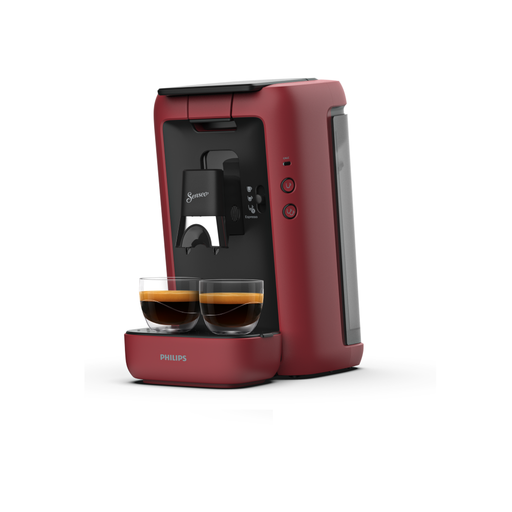 Image unavailable
Philips Senseo CSA260/91 Maestro, intense red
For soft-pod coffee, compare the cost and availability of compatible pods with your daily consumption. Also check the descaling instructions for the model.
View on Joybuy
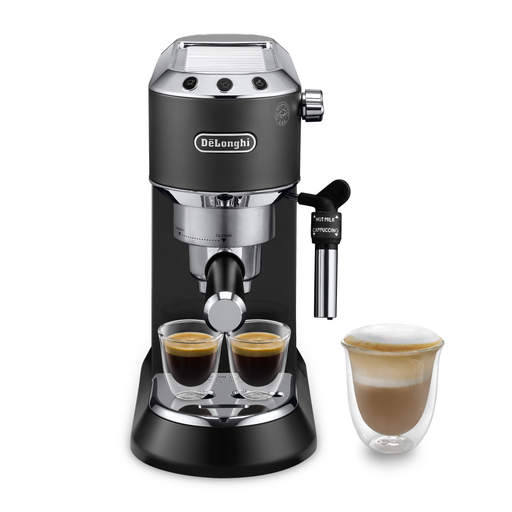 Image unavailable
De’Longhi Dedica Style EC685.BK, black
If you want to make your own espresso with a portafilter machine, allow time to fill it and clean it between coffees. If several people will use the machine throughout the day, check the reservoir capacity of the variant on sale.
View on Joybuy
Frequently asked questions
What type of machine should you choose if you make several coffees every day?
First compare the number of cups you make, the drinks you want and how much time you have for maintenance. A bean-to-cup machine may suit regular coffee drinkers if you’re happy with the initial investment and cleaning involved. Capsules or pods make preparation simpler, while a portafilter machine requires more hands-on effort. UFC-Que Choisir highlights differences between these types in terms of running costs and ease of use.
What should you check if several people have a coffee one after another?
Check the capacity of the reservoir and trays, as well as what you need to do between drinks. When comparing bean-to-cup machines, look for tests involving consecutive cups: UFC-Que Choisir’s testing protocol measures factors such as consistency in the volume served and preheating.
Does a machine with a grinder mean you don’t have to clean it?
No. You’ll still need to rinse the machine, empty the trays and descale it as instructed for the model. If you make drinks with milk, also check which parts of the milk system need cleaning after use.
How should you recycle coffee capsules in France?
ADEME advises putting aluminium or plastic capsules in the recycling bin, bag or container for paper and packaging. Check what your capsules are made of so you can follow the correct guidance.


