Households that want to serve coffee quickly, without adjusting settings
If you make several coffees throughout the day, capsules and pods mean fewer steps for each cup. However, check the consumable format and how it affects your running costs.


If you make several coffees regularly, start by choosing the preparation method that suits the amount of effort you’re happy to put in: capsules or pods for a straightforward brew, a portafilter if you want to control each extraction, or an automatic grinder if you want to use whole beans without preparing a portafilter for every cup. Then compare running costs, consumable compatibility, maintenance, noise and available space. None of these options will suit every priority equally.
If you make several coffees throughout the day, capsules and pods mean fewer steps for each cup. However, check the consumable format and how it affects your running costs.
A grinder lets you use whole beans without having to prepare a portafilter for every drink. Que Choisir highlights the trade-off between a higher upfront cost and a lower cost per cup than with pod espresso machines. However, there’s no single threshold that applies to every household.
A portafilter lets you fill and tamp ground coffee before extraction. As De’Longhi explains for its manual machines, these steps are part of the preparation. You’ll also need to empty and clean the portafilter.
Worth considering: if you want to make an espresso quickly, with minimal effort, and don’t have much space.
Things to bear in mind: your choice of capsules depends on the machine’s specific system, and you’ll pay for them with every cup.
Worth considering: if pre-portioned pods suit you and you want a simple, low-tech way to make coffee.
Things to bear in mind: you’ll need to stick to the pod format listed as compatible with your machine.
Worth considering: if you want to measure and tamp the ground coffee yourself.
Things to bear in mind: each drink takes more hands-on preparation, followed by cleaning the portafilter.
Worth considering: if you drink whole-bean coffee regularly but don’t want to fill a portafilter for every cup.
Things to bear in mind: the machine takes up space, grinding makes noise, and the trays and brew group need maintenance.
| Consideration | What to check before you buy | Who it matters to |
|---|---|---|
| Speed and effort | Count the steps needed for each cup, and check the tray capacities if you make several coffees in a row. | I want to serve several coffees without measuring or tamping each time; around 25% of consumers would put this convenience at the top of their list. |
| Running costs and choice of coffee | Compare the compatible consumables for your rate of coffee consumption, as well as the maintenance tasks involved. | If I make coffee every day, I want to choose my coffee without overlooking ongoing costs; this would be the priority for around 31% of consumers. |
| Manual preparation | Check the portafilter and the accessories you’ll need for the kind of preparation you want. | I’d rather fill and tamp the ground coffee myself, even if it takes longer; around 19% of consumers would prioritise this level of control. |
| Maintenance, noise and space | Measure the space available, check the model’s maintenance requirements and look for a comparable sound test if noise matters to you. | If space is limited in my kitchen or I make coffee early in the morning, I want a machine that suits me in terms of maintenance and noise; around 25% of consumers would make this their main priority. |
Two capsules that look similar aren’t necessarily interchangeable. Nespresso, for example, has separate Original and Vertuo systems.
Check the machine’s exact system, then make sure the capsules you plan to use are listed as compatible.
If you make several coffees regularly, consumables and maintenance should also factor into your decision. Que Choisir compares the cost per cup of pod machines and grinders, but doesn’t suggest that total costs will be the same for every household.
Compare the consumables that are actually compatible with your machine and the maintenance tasks in its instructions over the same period of use.
Automatic preparation doesn’t mean you can skip cleaning the trays, maintaining the brew group or descaling the machine as instructed.
Before choosing a model, check how easy it is to access the parts that need cleaning and how often the manufacturer recommends doing it.
Que Choisir’s testing takes noise during grinding, rinsing and dispensing into account. A claim that a machine is quieter doesn’t tell you how noisy it will be in your kitchen.
If you make coffee early, look for a measurement or test that applies to the model you’re considering, and think about where you’ll place it.
Worth looking at if you’re choosing a capsule machine and need to decide between Original and Vertuo.
A soft-pod system to consider if you’re after a simple way to make coffee.
Manual machines such as Dedica, and automatic grinders such as Magnifica, give you two different ways to make coffee.
Compare its grinders model by model, looking at access to the brew group, the features you want and noise levels.
These machines cover three ways to make coffee: an automatic grinder for whole beans, capsules for a fuss-free brew, and a portafilter for hands-on preparation. Check the exact capsule system before choosing between the two capsule models.
 Image unavailable
For making whole-bean coffee regularly without using a portafilter for every cup.
The model name includes the LatteGo system. Check the instructions to find out which parts need cleaning and how much space you’ll need to use it.
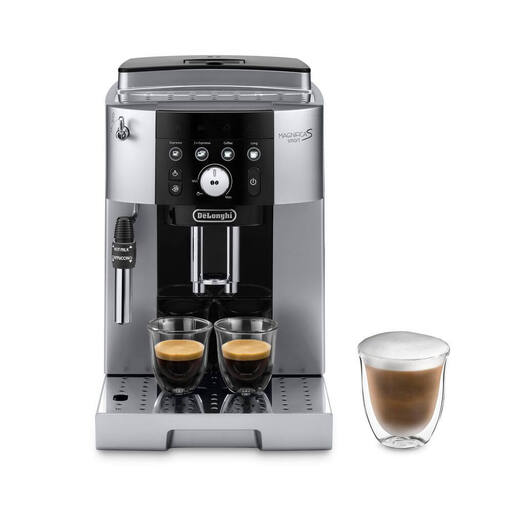 Image unavailable
For making coffee from whole beans without filling and tamping a portafilter for every drink.
This machine is described as an automatic model with a grinder. Allow time for maintenance of the brew group and steam wand, as well as the descaling recommended for this model.
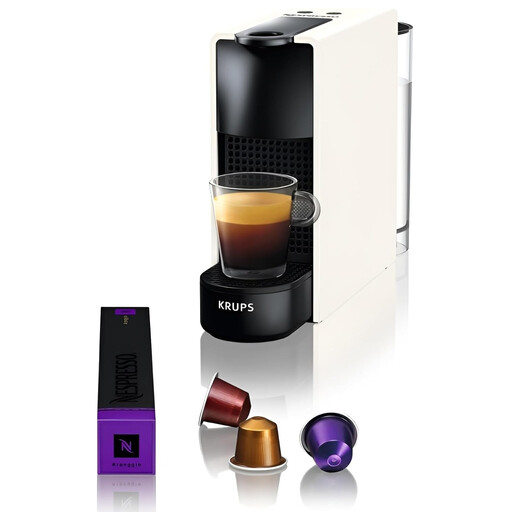 Image unavailable
For making coffee with a capsule instead of measuring ground coffee for every cup.
The specifications list a 0.6 L water tank and a power rating of 1 200 W. For this Essenza Mini, check for the Original marking on both the machine and the capsules you choose. Don’t assume it’s compatible with Vertuo.
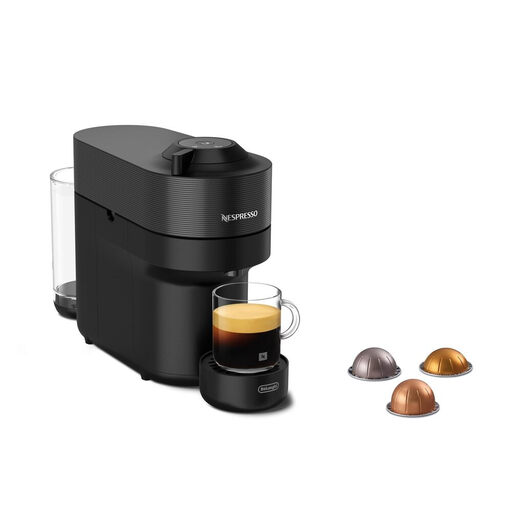 Image unavailable
For making coffee with Vertuo system capsules and keeping preparation to a minimum.
The specifications list a 0.6 L water tank. Choose capsules explicitly listed as Vertuo-compatible, and factor descaling into your routine.
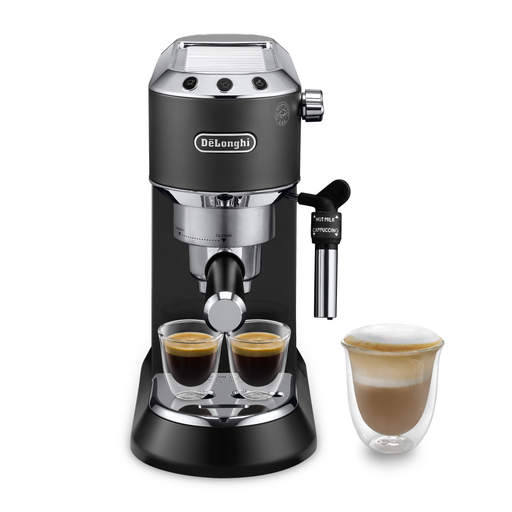 Image unavailable
For getting hands-on with ground coffee rather than using capsules or an automatic grinder.
The specifications list a pressure of 15 bars. You’ll need to fill, empty and clean the portafilter after use. Check the water tank capacity on the model’s product page before deciding where to put it.
No. Compatibility depends on the machine’s system and the information on the capsules. Nespresso says its Original capsules work with its Original machines; don’t assume this also applies to Vertuo or another brand of machine.
Coffee may cost less per cup, but that doesn’t guarantee that buying a grinder will be worthwhile for your needs. Que Choisir says the cost per cup is lower than for pod espresso, while the machine has a higher upfront cost. Remember to compare the cost of your consumables and the maintenance involved, too.
Check the instructions for your model to see how to clean the trays and brew group, if it’s accessible, and how to descale the machine. Philips says the brew group on some of its models can be removed and rinsed, but check that this applies to the machine you’re considering.
It depends on the model and where you put it: grinding and rinsing can be audible. Que Choisir includes these stages in its noise assessment. If noise matters in your household, look for a test that applies to the machine you’re considering rather than relying on the word “quiet” alone.