If you regularly make several espressos, start by considering an automatic grinder if you want to use whole beans and are happy to make room for it, put up with the noise and keep it clean. Capsules and pods offer pre-portioned coffee, while a portafilter is better suited to you if you want more control over the preparation and have time between cups. If milk-based drinks matter to you, check the milk system and how to clean it on the specific model.
Which households are these options suited to?
Households that often make several espressos
If one cup follows another almost every day, the amount of coffee you need and the steps between preparations matter more. Que Choisir highlights grinders as an option worth considering for coffee lovers and people who drink a lot of coffee.
Busy households that prefer pre-portioned coffee
Capsules or pods are worth considering if you want to make coffee with minimal handling. However, check which format the machine accepts and where you’ll store used portions.
Households that switch between espressos and milk-based drinks
If cappuccinos and other milk-based drinks are part of your routine, compare a manual steam wand, an automatic frother and a milk carafe. Cleaning the milk system and getting consistent results from one cup to the next matter just as much as the choice of recipes.
Which criteria should you consider first?
Bean-to-cup grinder
Worth considering: you regularly make several espressos and want a largely automated process using whole beans.
Bear in mind: Que Choisir says a grinder takes up more space and is noisier than a capsule system. Its collection trays and containers also need cleaning.
Capsules
Worth considering: you prefer a compact machine and coffee made from pre-portioned servings.
Bear in mind: you’ll need to choose compatible capsules, empty the used-capsule container and sort them for recycling after use.
Soft pods
Worth considering: you want pre-portioned servings without choosing a grinder.
Bear in mind: the pod format must exactly match the type accepted by the machine.
Portafilter
Worth considering: you want control over the dose and preparation of every espresso.
Bear in mind: you’ll need to repeat the steps for every cup. Also check how you’ll get ground coffee and clean the portafilter.
| Criterion | What to check | Best suited to |
|---|
| Making several drinks in a row |
Capacity of the water tank and containers; whether you can serve successive cups. |
If I make several espressos almost every day, I want to avoid refilling or emptying the machine between coffees. Around 31% of consumers put uninterrupted preparation first. |
| Simple routine |
Steps needed for each cup and what you need to do after use. |
If several people make coffee at different times, I prefer a process that involves minimal handling. Around 23% of consumers prioritise this simplicity. |
| Milk-based drinks |
Type of milk system and cleaning required after use. |
When we alternate between espressos and milk-based coffees, I want to know who will froth the milk and how to clean the parts afterwards. Around 23% of consumers put this use first. |
| Space, noise and waste |
Dimensions, including access to containers; grinder noise; and how to sort used portions. |
In a small kitchen, or if coffee is made early in the morning, I focus on the space it takes up, the noise and everyday waste. Around 23% of consumers put this need first. |
What pitfalls should you avoid?
-
Installing a grinder without allowing access to its containers
According to Que Choisir, a grinder takes up more space and is noisier than a capsule system. You may also need room around the machine to remove the water tank and collection containers.
Measure the space with room to open the machine and remove its parts, then check the care instructions for the model you’re considering.
-
Assuming an automatic milk drink means no cleaning
A carafe or frother adds parts that come into contact with milk, even when preparation is automated.
Compare the cleaning steps required after use for a manual steam wand, an automatic frother or a carafe.
Remember to allow time for this regular upkeep, too.
-
Assuming capsules sort themselves out for recycling
How they’re recycled depends on what you do with them after making your coffee.
In France, ADEME advises putting aluminium or plastic capsules in the recycling bin for paper and packaging. Check the guidance for other materials and find out what collection options are available where you live.
Brands to know by system type
De'Longhi
The Magnifica range is a useful point of comparison for households considering an automatic grinder, with automated milk preparation available on some models.
- De'Longhi says some versions come with a milk carafe and one-touch recipes.
- Other Magnifica versions have a manual steam wand. Check the features of the specific model you’re choosing rather than assuming they apply across the whole range.
Nespresso
Worth considering if you want a capsule machine. Check which format it uses and what care it needs.
- Nespresso provides care instructions for its machines and has capsule collection points in France.
- Collection points don’t replace sorting the specific capsules you use correctly.
Sage
The Bambino Plus is an example of a portafilter machine for households happy to take a more hands-on approach to making coffee.
- Sage describes the Bambino Plus as having a 54 mm portafilter and an automatic milk-frothing function. These features apply to this model.
- Check how you’ll get ground coffee, as well as the tamping and cleaning steps required for your setup.
Automatic grinders to explore on Joybuy
These bean-to-cup machines are suited to households considering an automatic grinder for making several coffees regularly. Compare their milk systems and cleaning routines against your needs.
 Image unavailable
Philips EP2230/10 Series 2200 LatteGo
Worth considering if your household makes espressos and also wants to use the LatteGo milk system. Before relying on it to serve two milk-based drinks at once, check what this specific model can do. Also make sure you can easily access the parts that need cleaning.
View on Joybuy
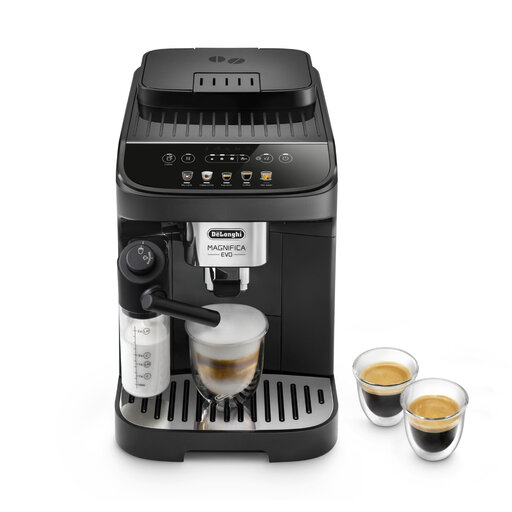 Image unavailable
De'Longhi Magnifica Evo ECAM290.61.B LatteCrema
Worth considering if both espressos and milk-based drinks are part of your routine. Check which recipes the ECAM290.61.B offers and what’s involved in cleaning the LatteCrema system before you choose.
View on Joybuy
 Image unavailable
White De'Longhi Magnifica Start ECAM220.21.WW
Worth considering if you want to make coffee from whole beans regularly while still having the option to prepare milk. The steam wand requires manual use, so check that the steps involved and the cleaning suit your household.
View on Joybuy
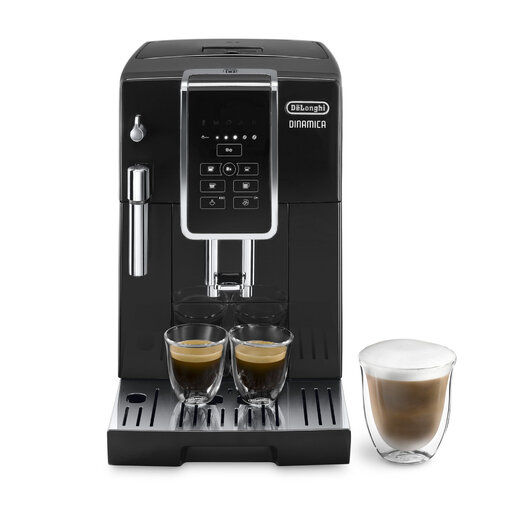 Image unavailable
Black De'Longhi Dinamica ECAM350.15.B
Worth considering if you want a grinder for everyday coffees and are happy to froth milk by hand. Check how much space the machine needs and what’s involved in cleaning its steam wand.
View on Joybuy
 Image unavailable
HiBREW H16 with grinder and milk system
Worth considering if you want to make coffee from whole beans and milk-based drinks with the same machine. Check the instructions to understand how the milk system works and how to clean it. Then make sure the water tank suits the number of coffees you make at home.
View on Joybuy
Frequently asked questions
What should I check if I want to serve several espressos in a row?
Check the capacity of the water tank and containers, what you need to do between coffees, and how consistent successive cups are. Que Choisir’s testing protocol for grinders measures, among other things, how consistent the volume is across several cups served one after another. If you need this information, look for results for the specific model you’re considering.
Does a capsule machine need cleaning too?
Yes. Follow the cleaning and descaling instructions for your machine. Nespresso advises against using vinegar in its machines, but you should still follow the instructions for your specific model.
Where should I put used capsules in France?
According to ADEME, aluminium or plastic capsules go in the recycling bin, bag or container for paper and packaging. For paper capsules, check which composting or food-waste collection options are available locally.


