What should you compare before switching?
First, choose a preparation method your household will be happy to use every day. Then compare the costs and tasks involved over the same period.
Bean-to-cup machine
Consider it if: you want to use whole beans for frequent coffee-making without measuring and tamping each cup by hand.
Be prepared for: a larger, noisier machine than a capsule system, as well as managing the coffee grounds and maintenance cycles, according to Que Choisir.
Portafilter machine
Consider it if: you want the hands-on experience of preparing each coffee yourself.
Be prepared for: adding and tamping the coffee, then emptying the portafilter after use, as described by Que Choisir.
Capsules
Consider them if: pre-measured portions and minimal handling of the coffee are your priorities.
Be prepared to: keep an eye on the cost of capsules over time and deal with their packaging.
Soft pods
Consider them if: you’d also like to make coffee using pre-measured portions.
Be prepared to: compare the cost of the pods you’ll actually use with the cost of whole beans or ground coffee, rather than assuming there’s a fixed difference.
| Factor | What to check | Think about your needs |
|---|
| Running costs |
Over the same period, compare the price of the machine, the coffee used per drink and maintenance consumables. Recalculate for your current routine and for a busier one. |
I make enough cups to want to look at the long-term cost, but I don’t want to confuse cheaper coffee per cup with guaranteed overall savings. Que Choisir distinguishes between these two factors for bean-to-cup machines. |
| Maintenance |
Check how easy it is to access the grounds container, drip tray and parts that need cleaning, then look at the descaling steps for the exact model. With a portafilter machine, remember to empty it after use too. |
The machine will be used often, so I’d rather know which tasks I’ll need to repeat than choose based only on the drinks it can make. |
| Noise and space |
For a bean-to-cup machine, look for a review of the exact model that covers grinding, rinsing and pouring. Check its dimensions and how much room you’ll need to fill and empty the tanks. |
In an open-plan kitchen or early in the morning, noise can influence your choice. Que Choisir assesses different noise phases, vibrations and stability in its tests of bean-to-cup machines. |
| Milk-based drinks |
Check whether the model you’re considering has a manual steam wand or an automatic milk system. Compare the steps involved and the cleaning needed after use. |
If we regularly make cappuccinos, I want a milk-preparation method that’s easy to fit into our routine when it comes to cleaning. |
| Waste |
Compare the waste produced by whole beans, ground coffee and pre-measured portions. In France, follow the local recycling guidance for aluminium or plastic capsules. |
I’d like to cut down on individual packaging where possible. ADEME recommends this approach and says aluminium or plastic capsules should be put in with paper and packaging for recycling. |
A few brands to consider
These ranges illustrate different ways of making coffee. Check the features of each individual model.
De'Longhi
De'Longhi offers several bean-to-cup ranges, including Magnifica and Dinamica, with different drink options depending on the model.
- The range lets you compare configurations with different levels of focus on milk-based drinks, according to De'Longhi’s descriptions.
- Check the milk system and the maintenance steps for the model you’re considering. Don’t assume they’re the same across the range.
Philips
Depending on the model, Philips bean-to-cup machines come with the LatteGo milk system or SilentBrew technology.
- LatteGo is worth looking at if you’d like to make milk-based drinks.
- Philips’ claims about noise or ease of cleaning are no substitute for an independent review of the specific model.
Sage
Sage offers manual and automatic espresso machines, including options for those interested in making coffee with a portafilter.
- The range lets you compare how much control each machine gives you over grinding, dosing and using a steam wand.
- With a manual portafilter machine, expect more hands-on preparation and remember to empty the used coffee after each use.
Bean-to-cup machines available on Joybuy
These models offer a bean-to-cup option for households that make espresso regularly. The choice between a bean-to-cup machine, a portafilter and pre-measured portions also depends on the factors discussed above.
 Image unavailable
Philips 2200 Series EP2230/10 with LatteGo
This bean-to-cup model is for households that want to use whole beans and are also considering milk-based drinks made with LatteGo. Compare the cleaning steps for the milk system, and check how noisy this specific model is if you’ll be using it early in the morning.
View on Joybuy
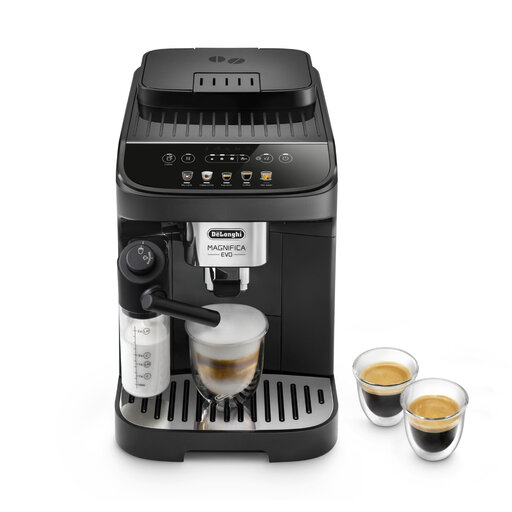 Image unavailable
De'Longhi Magnifica Evo ECAM290.61.B with LatteCrema
The LatteCrema system is worth considering if your household often makes milk-based drinks and you’d rather not use a manual steam wand. Check the rinsing and descaling steps for this model.
View on Joybuy
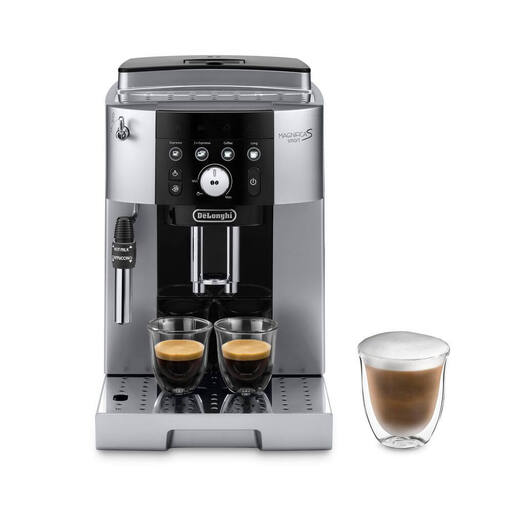 Image unavailable
De'Longhi Magnifica S Smart ECAM250.23.SB
This bean-to-cup machine could suit a household happy to prepare milk by hand using a steam wand. This means frothing the milk and cleaning the wand as part of your routine, so consider whether those steps will work for you if you often make milk-based drinks.
View on Joybuy
 Image unavailable
HiBREW H16 with grinder, 6 drinks
This model has a touchscreen and milk system, making it an option for households that want to try different drinks using whole beans. If you use milk often, check how the milk system works and how to clean it on the H16 before making your choice.
View on Joybuy
 Image unavailable
De'Longhi Magnifica S ECAM22.140.B
This bean-to-cup machine with a steam wand is worth comparing if you mostly drink espresso and are happy to prepare milk by hand. Remember to clean the wand after making milk-based drinks, as well as carrying out the usual maintenance for a bean-to-cup machine.
View on Joybuy
Frequently asked questions
How do you compare the total cost of a bean-to-cup machine, capsules and pods?
Over the same period, add together the cost of the machine, the coffee used per drink and the maintenance consumables required for each option. Adjust the number of cups and the amount of coffee you use: the cost per cup alone won’t tell you whether switching machines will work out better for your household.
Will a bean-to-cup machine be too noisy in a flat?
It depends on the model and when you use it. Que Choisir says a bean-to-cup machine is noisier than a capsule system and, as part of its testing, looks at rinsing, grinding, pouring and vibrations. Look for a review of the model you’re considering rather than relying on a marketing name.
What maintenance does a bean-to-cup machine that makes milk-based drinks need?
You’ll need to empty the grounds container and drip tray, clean the accessible parts and descale the machine as instructed. After making a milk-based drink, follow the cleaning instructions for the wand or milk system too. Compare these steps before choosing a model.
What should you do with capsules and an old machine in France?
ADEME says aluminium or plastic capsules should go in the recycling bin, bag or container for paper and packaging. If you have an old electrical appliance, look into take-back options: the Ministry for the Ecological Transition, for example, explains that retailers can take back an old appliance of the same type when you buy a new one.


