
Livraison le jour même ou le lendemain

Qualité garantie

Débloquez vos offres de bienvenue: Livraison GRATUITE | Jusqu'à -80 % | 30 jours d'essai gratuits à JoyPlus
Téléchargez l'application
Are you looking for an espresso coffee machine to make espresso, cappuccino or latte at home? The number of bars printed on the box isn't enough to make the right choice. Between capsule machines, models with grinders, manual appliances and portable formats, some options can push up the bill without adding much to your daily routine.
Here are the pitfalls to avoid and the criteria to examine before you buy.
A 20-bar coffee machine certainly catches the eye. However, this value most often refers to the maximum pump pressure, not necessarily the pressure actually applied to the coffee throughout extraction. Water temperature, grind, dose and portafilter quality all matter just as much.
Two models showing 15, 19 or 20 bars can therefore offer a very different experience. Instead, look at the heating system, the available settings and the types of coffee accepted.
An automatic espresso machine or a coffee machine with a grinder requires a minimum of upkeep. The coffee grounds container, water tank, brewing unit and milk circuit all need regular cleaning. Automatic rinsing makes the routine easier, but it doesn't replace washing the removable parts or descaling.
For a cappuccino machine, pay particular attention to the steam wand or milk carafe. Milk residue shouldn't be left to sit: it's best to clean these parts straight after each use.
An automatic machine with a grinder generally takes up more space than a capsule model. Measure the available depth, the height under your cabinets and the space needed to access the tank. Also think about consumables: capsules, beans, ground coffee, water filters and descaling product.
A portable coffee machine is handy for camping, hiking or in the car, but its small tank limits the amount you can brew in each cycle.
For family use, a 1.5 to 1.8 litre water tank avoids having to refill it too often. Automatic machines usually have a bean hopper of 250 to 300 g, while compact capsule models often make do with a tank of around 600 ml.
If your worktop is already quite busy, compare the manufacturer's stated dimensions carefully. Also allow space to remove the tank or open the bean hopper.
An adjustable conical burr grinder offers far more flexibility than a single setting. Depending on their design, the models in this selection offer between 3 and 15 grind levels. A coffee machine with a milk frother can include a manual steam wand or an automatic carafe: the former gives you more control, while the latter reduces the steps involved.
For a multifunction espresso machine, check the drinks it actually offers: espresso, long coffee, americano, hot water, cappuccino or cold brew. A long list of recipes is only worthwhile if it matches your habits.
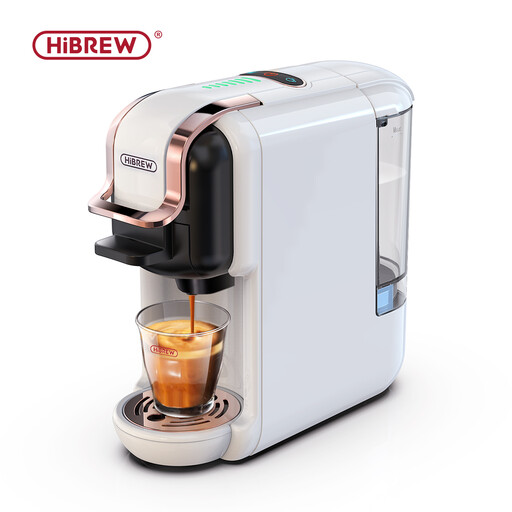
Why this choice suits this profile: This machine accepts several capsule formats, ESE pods and ground coffee. It's ideal for households that want to vary their drinks without accumulating multiple appliances.
The multi-format compatibility means you won't be left with an unusable machine if you change capsule brands. Its 600 ml tank is still fairly limited, though.
Stated pressure of 19 bars, hot and cold drink preparation, compact size of 245 × 110 × 245 mm.
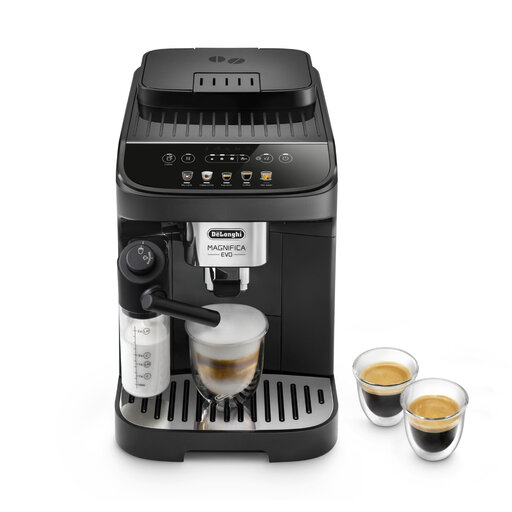
Why this choice suits this profile: Its built-in grinder, one-touch recipes and automatic milk system make it a great option for regularly preparing a variety of drinks.
The dishwasher-safe milk carafe and automatic rinsing simplify maintenance, without eliminating the need for regular cleaning.
1.8 l water tank, 250 g bean hopper, grinder adjustable to 13 levels and pump stated at 15 bars.
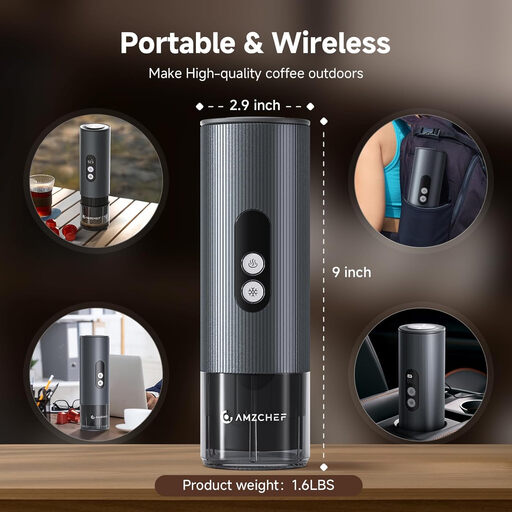
Why this choice suits this profile: Its rechargeable battery and upright design are well suited to campervans, the office, hiking or car journeys.
It heats the water itself, so you don't need a mains socket or a kettle. With a maximum volume of 80 ml, it's still only for single servings.
9,000 mAh battery, 150 W power, compatibility with NS capsules and ground coffee, dimensions of 7.3 × 7.3 × 23 cm.
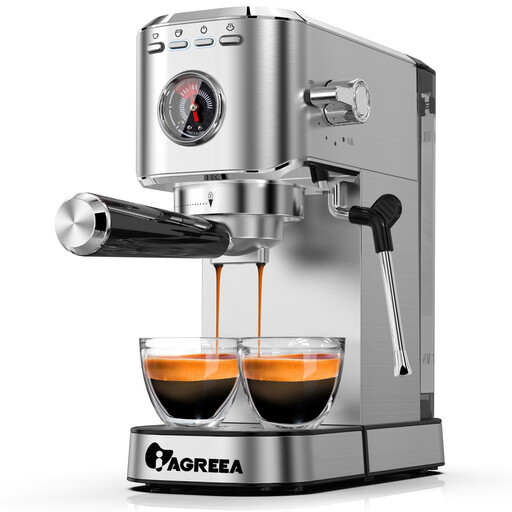
Why this choice suits this profile: The portafilter and steam wand give more freedom to those who enjoy perfecting their espresso, cappuccino or latte.
The pressure gauge helps you monitor the displayed pressure during extraction. The wand is manual, so it takes a bit of practice and must be cleaned after each use.
Removable 1.1 l water tank, 1,350 W power, single or double cup preparation and cup warming tray.
We've selected the products that best meet these strict criteria, while also taking European safety regulations into account. This list is updated in real time.
An automatic coffee machine with a grinder and milk system reduces the steps involved. A steam wand will be more suitable if you want to control the milk foam texture precisely. In both cases, cleaning the milk circuit should be part of your routine.
It depends on how often you use it, the quality of your water and how well you maintain it. Descaling according to the manufacturer's recommendations, rinsing the removable parts and replacing the filters all help to preserve the machine's performance. Before buying, also check the availability of spare parts and the quality of after-sales service.
You need to factor in the coffee, capsules or beans, electricity, filters and cleaning products. Capsules are convenient, but their cost per cup can be higher than that of coffee beans. A grinder requires more maintenance, but lets you choose your coffee freely.