Households that often make espresso with beans
You want to choose your own coffee beans and are happy to make room for a machine with a grinder and maintain it regularly. Que Choisir highlights noise and size as some of the drawbacks to consider.


For regular espressos, start by thinking about the coffee you want to use and how much time you’re willing to spend preparing and maintaining your machine. A grinder lets you choose your beans, capsules and pods keep things simple, while a portafilter gives you more scope to prepare coffee by hand. Then check how much space you have and how many cups you need to serve. If your household mainly drinks larger coffees, a filter coffee machine may be a good fit, but it won’t make the same kind of drink as an espresso machine.
You want to choose your own coffee beans and are happy to make room for a machine with a grinder and maintain it regularly. Que Choisir highlights noise and size as some of the drawbacks to consider.
You prefer a pre-portioned cup with minimal settings. A capsule or pod machine could be worth considering, provided you check the format of the consumables and their running costs.
You want to get involved in dosing, tamping or frothing the milk. A portafilter machine suits you if you like to play a part in making your coffee, though it involves more steps and cleaning than a fully automatic machine.
To choose a home espresso machine, start with your main priority, then check the practical details of the specific model: consumables, space, maintenance and serving capacity.
| Factor | What to check before buying | Who is it for? |
|---|---|---|
| Coffee choice and running costs | Compare the beans, capsules or pods you’d actually buy, and check which formats the machine accepts. | If I make espresso regularly, I want to choose my coffee without overlooking the cost of repeat purchases. Around 31% of consumers would make this their priority. |
| Speed and available space | Measure the space, including the clearance needed to fill or remove the containers, and consider the steps involved in making a drink. | With little time and a crowded worktop, I’m mainly looking for an appliance that’s easy to position and use. This would be the priority for around 31% of consumers. |
| Preparation and milk-based drinks | Check for the settings you want, whether it has a steam wand or milk system, and which parts need cleaning after use. | If I like adjusting my coffee or regularly making milk-based drinks, I’m happy to put in a few extra steps. Around 23% of consumers would prioritise this option. |
| Several cups or longer coffees | Check the water tank, available drink sizes and how well it serves several cups in succession; distinguish between a long coffee and an espresso. | When several people are waiting for coffee, or larger cups are the norm, I want to avoid an appliance that can’t keep up. Around 15% of consumers would put this need first. |
For regular espressos, consumables and maintenance matter too. In its comparison, Que Choisir found a lower cost per cup with a grinder than with a pod machine. However, what makes sense for your household depends on what you buy and how often you use it.
Compare the coffee you’d use and allow for the maintenance products recommended for each model.
According to Que Choisir, a machine with a grinder can be noisier and bulkier than a capsule system or filter coffee machine. You’ll also need to be able to reach the containers and water tank.
Measure the space needed to open, fill and remove these parts. If noise is a deciding factor, check a review of the specific model.
Although making a drink is simple, you’ll still need to buy capsules regularly and dispose of the used ones. ADEME says that capsules thrown away with household rubbish go through that waste stream rather than a dedicated collection scheme.
Check which capsules are compatible, where you can buy them, and the local recycling guidance or the brand’s collection network.
Parts that come into contact with milk mean extra cleaning, even if you rarely use this function.
Think about how often you usually make milk-based drinks, then compare the cleaning involved with a steam wand, a separate milk frother and an automatic milk system.
In France, De’Longhi offers automatic espresso machines with grinders, as well as manual models.
Nespresso offers capsule machines, as well as maintenance and collection services in France.
Philips describes the SENSEO range as a solution that uses soft coffee pods, with no grinder or tamping required.
Sage offers portafilter machines for people who want to get involved in making their coffee.
These Joybuy models show three ways to make espresso at home: with a bean grinder, a portafilter or capsules. Choose according to the coffee you use, how hands-on you want to be and how much space you have.
 Image unavailable
Worth considering if you regularly want to make espresso with beans and are also interested in milk-based drinks.
Check how much room you’ll need to fill and clean the machine, as well as which maintenance accessories are included with this variant.
 Image unavailable
Worth considering if you prefer automatic preparation from beans but would also like to froth milk by hand sometimes.
A steam wand needs to be used and cleaned after making milk-based drinks. Check the dimensions too before deciding where to put it.
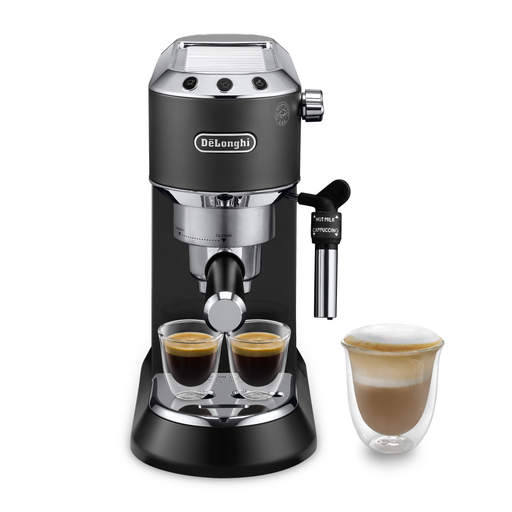 Image unavailable
Worth considering if you prefer to play an active part in making espresso with a portafilter.
The product name indicates a nominal pressure of 15 bar. Check the water tank capacity of the version being sold before buying, as the available information for this model varies.
 Image unavailable
Worth considering for regular espressos if you’re looking for an automatic machine with a grinder.
If you’d also like to make milk-based drinks, factor in the steps and cleaning involved with the steam wand, and measure the space you have available.
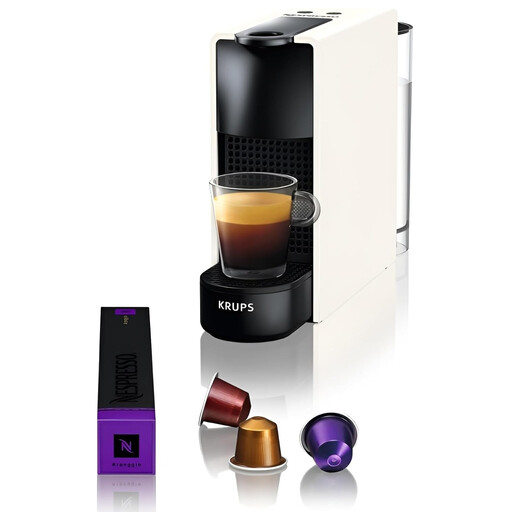 Image unavailable
Worth considering if you want to make espresso with a capsule and minimal settings.
The product name indicates a 0.6 l water tank and a nominal power of 1,200 W. Check which capsules are compatible and available for the way you usually use the machine.
No. The cost for your household depends on the consumables you choose and how often you use the machine. In its comparison, Que Choisir says a pod espresso can cost two to three times more per cup than one made with a grinder. Check your own purchases and maintenance costs before deciding.
Clean the parts you use and descale the machine according to the instructions for your model. The containers, water tank, brew unit (where accessible) and parts that come into contact with milk don’t all need the same care. How often you need to do this depends on the machine and the water you use.
Check your local recycling guidance and, where available, the collection scheme for your capsules. ADEME says that capsules thrown away with household rubbish go through that waste stream; Nespresso says it has more than 2,000 capsule collection points in France.
Yes, if they mainly want larger quantities of longer coffee, but a filter coffee machine doesn’t make the same kind of drink as an espresso machine. If espresso is still the priority, compare the water tank and how well the espresso machines you’re considering can serve several cups in succession.