Teams looking for a full-bodied cup
For a short espresso with a pronounced flavour after a meal, the stated intensity is a useful guide within a range. The coffee you choose must also suit the equipment already in place.


To serve a full-bodied espresso after a meal in a care home, first choose a coffee that suits the machine you use, then compare tasting profiles within the same brand. An intensity rating alone doesn’t tell you how much caffeine the coffee contains; individual requirements may also call for a decaffeinated option.
For a short espresso with a pronounced flavour after a meal, the stated intensity is a useful guide within a range. The coffee you choose must also suit the equipment already in place.
A machine that takes Nespresso Original capsules, an E.S.E. machine and equipment that uses coffee beans all require different coffee formats.
Where an individual requirement calls for it, the service may need a decaffeinated coffee that suits its machine, as well as a full-bodied espresso.
When choosing coffee to serve after a meal in a care home, start with the preparation system available. Then choose a flavour profile while keeping residents’ requirements in mind.
| Criterion | What to check | Relevant considerations |
|---|---|---|
| Full-bodied flavour | The intensity rating on the brand’s scale and the tasting notes; compare products from the same range. | For a small cup with a pronounced flavour after a meal, I’d focus on the flavour profile. Around 42% of consumers would put this need first. |
| Compatibility | The system specified for the machine and the exact coffee format: Nespresso Original capsules, E.S.E. pods or beans. | If the service uses a machine that’s already in place, I want to be able to prepare every cup with the equipment available. Compatibility would be the top priority for around 33% of consumers. |
| Individual requirements | The care home’s requirements and whether a decaffeinated option is available in a compatible format. | If some residents need an alternative, my first priority is being able to meet that requirement. This would come first for around 25% of consumers. |
Lavazza gives Espresso Italiano Intenso E.S.E. a rating of 8/10, illy gives Intenso E.S.E. 5/9 and Carte Noire gives Espresso Puissant N°11 a rating of 11/13. These brand-specific scales don’t measure caffeine content, so they can’t be used to rank the coffees directly against one another.
Compare the tasting notes and, before choosing a coffee to serve, try a small amount using your intended preparation method.
Nespresso Original capsules, E.S.E. pods and coffee beans are designed for different preparation methods.
Check the machine’s model number and confirm the format it accepts on the coffee packaging before placing a bulk order.
According to Anses, the effects of caffeine vary depending on factors including a person’s health, certain medicines and their consumption habits. A fuller-bodied flavour alone doesn’t tell you how much caffeine a coffee contains.
Check the care home’s requirements and have a suitable option available when an individual requirement calls for it. Don’t assume someone has a particular need based on their age alone.
A range of capsules stated to be compatible with Nespresso Original machines, including Espresso Intense N°9, Espresso Puissant N°11 and a decaffeinated option.
Espresso Italiano Intenso is available in E.S.E. pods; Lavazza also offers separate capsules compatible with Nespresso Original machines.
The Intenso E.S.E. pod option is for services with a machine that accepts this format.
Carrefour Extra Espresso is a coffee bean option to consider if your service has equipment that accepts beans.
These capsule and coffee bean options can be considered according to the equipment used for your service. Check the system required for each capsule and, for beans, the preparation equipment before choosing a full-bodied flavour profile.
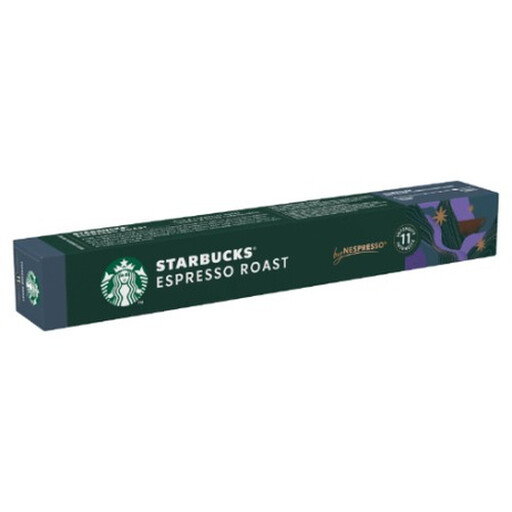 Image unavailable
Worth considering if your service prepares cups using a capsule machine; check which Nespresso system the machine accepts before buying.
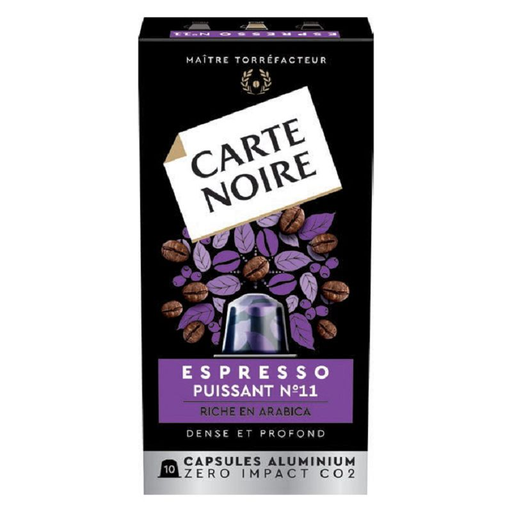 Image unavailable
For a service with a Nespresso Original machine that’s looking for the full-bodied flavour described by Carte Noire.
The brand gives this product an intensity rating of 11/13; this figure doesn’t tell you how much caffeine it contains.
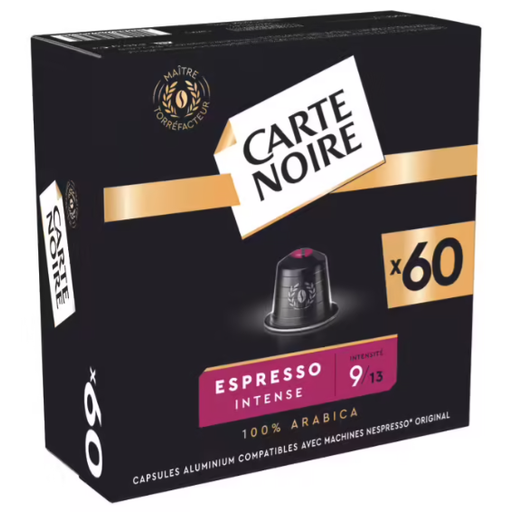 Image unavailable
Consider this for a capsule-based service only after checking the system specified on the box: the Dolce label on this variant shouldn’t be taken to mean it’s compatible with Nespresso Original.
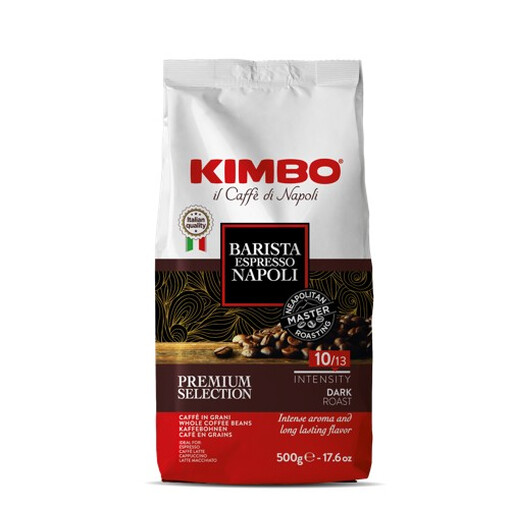 Image unavailable
For a service with equipment suited to coffee beans that wants to try an espresso with a stated intensity of 10/13.
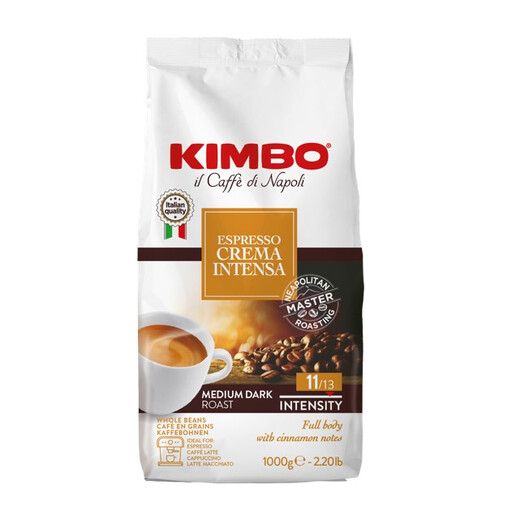 Image unavailable
Worth considering if your service uses beans and is looking for an espresso with an intensity rating of 11/13; check that your machine or grinder accepts this format.
No. The stated intensity of these coffees describes their flavour profile and, on its own, doesn’t let you compare their caffeine content. If there’s an individual requirement to consider, don’t rely on the number on the packet alone.
Choose the format that the machine in place explicitly accepts. Carte Noire Espresso Puissant N°11 capsules are stated to be compatible with Nespresso Original machines, while the Lavazza Espresso Italiano Intenso and illy Intenso pods featured here require an E.S.E. machine. These formats aren’t interchangeable.
Have a decaffeinated option available when an individual requirement or the way your service is organised calls for one, and check that it’s available in a format compatible with your machine. Anses notes that the effects of caffeine vary depending on several factors; Carte Noire and Lavazza offer decaffeinated options in their ranges of capsules compatible with Nespresso Original machines.