How do capsule and grinder machines compare?
If your household is already used to making individual espressos, start by considering how much space you have and which daily steps you’re happy to take. Then check the portion format or, for a grinder, the choice of coffee and available settings.
Capsule machine
Worth considering: if you want to keep using pre-portioned coffee and save space in your kitchen.
What to bear in mind: your choice of coffee depends on which capsule system is compatible with the machine, and each drink uses an individually wrapped portion.
Bean-to-cup espresso machine
Worth considering: if you regularly want to make espresso using beans of your choice.
What to bear in mind: Que Choisir notes that these machines take up more space and make more noise than capsule systems, and also need regular maintenance.
| What matters to you |
What to check |
Who this matters to |
| Buying consumables |
Compare the portions or beans you’d buy for the number of cups you usually make, along with the cleaning products recommended for the model. |
When making several espressos a day, I want to plan ahead for the consumables I’ll need to replace. Around 33% of consumers would make this a priority. |
| Convenience and space |
Measure the space needed to access the water tank and, for a grinder, the bean hopper; also consider the noise of grinding. |
In a small kitchen, I want to make coffee without cluttering the worktop or adding too many daily steps. This would be a priority for around 27% of consumers. |
| Choice of coffee |
Check the exact capsule or pod system; for a grinder, look at the settings available on the model. |
I’d like to change my beans or adjust my espresso rather than rely on a single portion format. Around 27% of consumers would put this choice first. |
| Waste and maintenance |
Find out how used portions should be sorted and how easy it is to access the parts that need cleaning, then check the descaling instructions. |
I want to reduce the number of individually wrapped portions I use, but only if I can keep up with the regular cleaning a grinder needs. This would be the main concern for around 13% of consumers. |
A pod machine can still offer pre-portioned coffee, as long as you choose a format the machine accepts. A portafilter with a separate grinder also gives you access to whole beans, but requires more steps and room for both pieces of equipment. Neither option offers quite the same simplicity as capsules or the automation of a bean-to-cup machine.
Machines for different needs
These Joybuy models showcase three ways to make coffee at home: bean-to-cup espresso, Original or Vertuo capsules, and SENSEO pods. Start by choosing the system and considering its maintenance, then check which model suits your habits.
 Image unavailable
Philips 2200 Series EP2230/10 LatteGo, black
Worth considering if you’d like to switch from portions to beans and make milk-based drinks too. Check the cleaning routine for the LatteGo system and brewing unit before choosing this model.
The selection mentions an AquaClean filter that’s compatible but not included. Check the filter’s usage instructions and what maintenance is required without it.
View on Joybuy
 Image unavailable
De'Longhi Magnifica S ECAM22.140.B, black
Worth a look if you want to choose your beans while keeping espresso preparation automated. If you plan to use the steam wand, remember to clean it regularly too.
Measure the available space and check the manual for access to the grounds container and details of the descaling process.
View on Joybuy
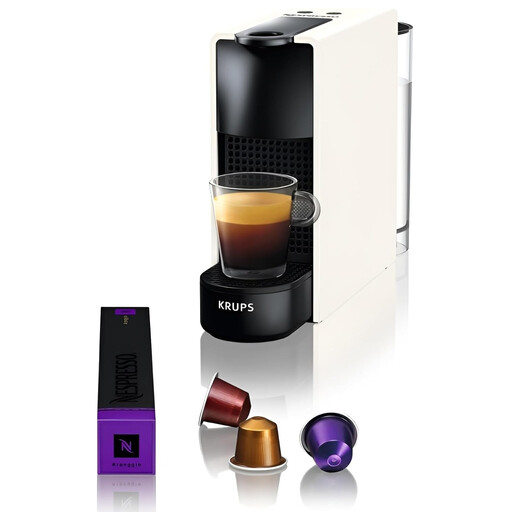 Image unavailable
Krups Nespresso Essenza Mini, 0.6 L, 1,200 W, white
This capsule machine is worth considering if you want to keep making coffee with pre-portioned capsules in a compact design. Check that your capsules are compatible with the Nespresso Original system; capsule formats aren’t interchangeable.
The product name specifies a 0.6 L tank. You’ll also need to empty the used capsule container according to how often you use the machine.
View on Joybuy
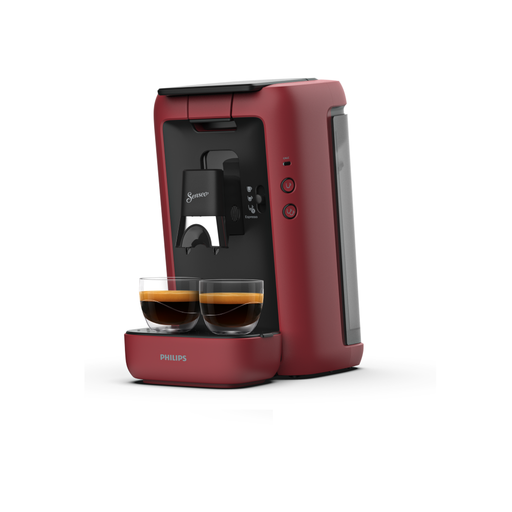 Image unavailable
Philips SENSEO Maestro CSA260/91, deep red
A pod option if you’d rather stick with pre-portioned coffee than switch to beans. Make sure your usual pods are in the SENSEO format and check the manual for descaling instructions.
This machine doesn’t let you brew from whole beans: your choice of coffee depends on the pod format it accepts.
View on Joybuy
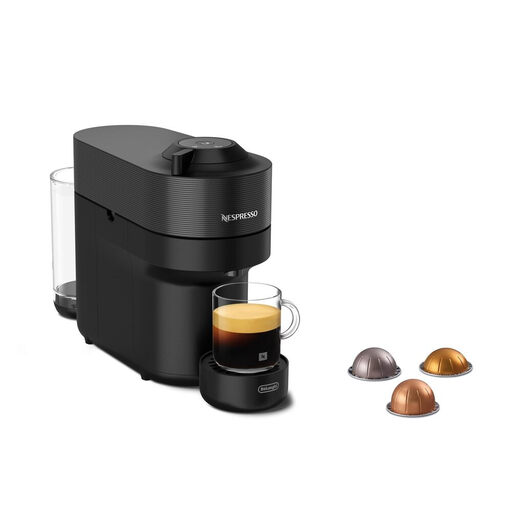 Image unavailable
Nespresso Vertuo Pop ENV90.B, 0.6 L, black
Worth considering if you want to keep using capsules and are interested in the Vertuo system. Check this specific format before buying rather than assuming an Original capsule will fit.
The product name specifies a 0.6 L tank. If drink size matters to you, confirm the volumes this model offers.
View on Joybuy
Frequently asked questions
Does a machine with a grinder need more cleaning than a capsule machine?
A bean-to-cup espresso machine generally needs more regular maintenance, particularly around its trays and, depending on the model, the brewing unit. Check the manual to find out which parts need cleaning and when to descale the machine. De'Longhi says descaling frequency depends in part on water hardness and how often the machine is used.
Can I use the same capsules if I switch machines?
Not necessarily. Check the new machine’s exact system before relying on your usual purchases. For example, Nespresso says its Vertuo Up uses only Nespresso Vertuo capsules, so the brand name alone doesn’t guarantee compatibility across its ranges.
What should I do with used capsules in France?
Follow the sorting guidance for the material your capsules are made from and the rules in your local area, or use a collection point that accepts your format. Nespresso says it has collection points in France; check where they are if you plan to use this option for your capsules.
Can a pod machine replace a bean-to-cup espresso machine?
Not if you want to choose whole beans: a pod machine still uses pre-portioned coffee. It may suit you if you want to keep making coffee this way, provided you check which pod format the model accepts.


