What sets these machines apart?
For consistently good espresso at home, start with what matters most to you, then check how much space, hands-on preparation and maintenance each model requires.
| Criteria |
What to check |
Who is it for? |
| Coffee and consumables |
Types of coffee accepted; availability of beans, capsules or compatible pods. |
If I make espresso every day, I want to be able to buy the coffee format I’ve chosen without changing my routine. Around 29% of consumers put this need first. |
| Space and simplicity |
Dimensions, including the clearance needed; preparation steps and noise. |
In a small kitchen, I look for a machine that fits neatly and is quick to use. This is the main priority for around 29% of consumers. |
| Drinks and settings |
Recipes available on the model; whether it has a steam wand or milk system. |
If my household switches between espresso and milk-based drinks, I want features suited to the drinks we actually make. Variety of drinks comes first for around 21% of consumers. |
| Maintenance and waste |
Cleaning and descaling requirements; access to a suitable collection scheme for used capsules. |
I prefer to know what maintenance is involved and how to dispose of consumables before choosing a machine. Around 21% of consumers prioritise this. |
UFC-Que Choisir notes that a machine with a grinder takes up more space and makes more noise than a capsule system. These differences matter most if the machine sits on a shared worktop or is used early in the morning. With soft coffee pods, check which formats are compatible. For a portafilter machine, consider the steps involved in making each espresso.
Machines for making espresso at home
These Joybuy models let you compare two ways to make espresso without rigid capsules: a machine with a built-in grinder and one that uses ground coffee. Focus on the preparation steps and maintenance involved with each.
 Image unavailable
Philips Series 2200 EP2230/10 LatteGo
Worth considering if you want to make espresso with a grinder and would like the LatteGo variant. Check the maintenance requirements for the EP2230/10, especially if you use the milk system.
View on Joybuy
 Image unavailable
De’Longhi Magnifica Start ECAM220.21.WW, white
This bean-to-cup espresso machine is worth comparing if you’re looking for a routine without capsules. Before choosing it, check how much room you’ll need to fill and maintain the machine.
View on Joybuy
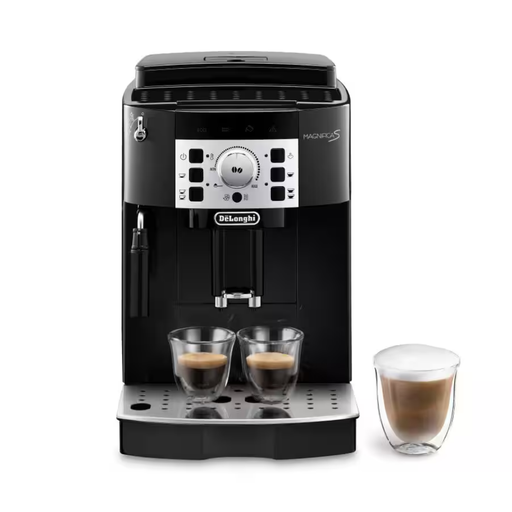 Image unavailable
De’Longhi Magnifica S ECAM22.140.B, black
Its built-in grinder makes it worth considering if you want to make espresso from beans. Measure the space you have available and check the model’s maintenance instructions before choosing.
View on Joybuy
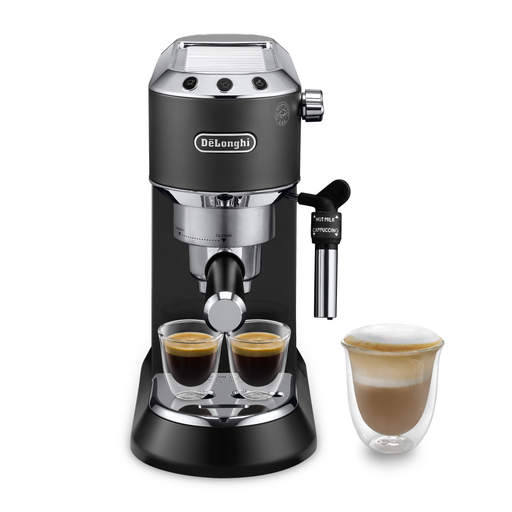 Image unavailable
De’Longhi Dedica Style EC685.BK, black
This portafilter machine is an option if you prefer to be more involved in making your espresso. The product name states 15 bar; confirm the tank capacity for the variant on sale, as the available specifications differ.
View on Joybuy
 Image unavailable
HiBREW H13A 3 in 1, 20 bar
Worth considering if you’d like to make espresso with ground coffee rather than using a built-in grinder. The machine is described as semi-automatic and has a milk-frothing function. Check the preparation steps and dimensions to make sure it suits your kitchen.
View on Joybuy
Frequently asked questions
How do you maintain a machine with a grinder?
Rinse the trays and descale the machine according to its instructions. If you make milk-based drinks, clean the steam wand or milk circuit as directed by the manufacturer. JURA notes that milk residue contains proteins and fats, among other things.
Are used capsules automatically recycled?
No. ADEME states that capsules thrown away with household rubbish go through the household waste disposal route. Check what your capsules are made from and what local collection options are available.
Can you use the repairability index to compare these machines in France?
Not based on the list of product categories published by the ministry responsible for the ecological transition on 8 July 2025: coffee machines are not included. Instead, ask about spare parts and repair options for each specific model.


