If you regularly make espresso at home, start by choosing between pre-portioned coffee, the hands-on process of using a portafilter, and the automation of a bean-to-cup grinder. Capsules and pods mean less handling, but the format accepted by the machine limits your choice of coffee. A portafilter gives you more control over the preparation, while a grinder will generally need more space and maintenance. Also check which drinks you actually want to make, especially if they contain milk.
Which coffee-making method is right for you?
For households looking to keep things simple
If you want to make a cup without measuring or tamping the coffee, start by comparing capsules and pods. However, check that the coffees available in the format your machine accepts suit your taste, particularly if you prefer a short espresso to a longer coffee.
For lovers of beans and a variety of drinks
An automatic grinder lets you use the beans you choose and make the drinks offered by the model. In return, you’ll need to make room for it and put up with the noise of grinding, as well as the maintenance. UFC-Que Choisir highlights these differences compared with capsule systems.
For anyone who enjoys making their own espresso
A portafilter is for those who want to control the ground coffee, dosage and tamping themselves. If you also make milk-based drinks, look for a model with a steam wand and factor in the cleaning it requires.
What sets the machines apart?
The four machine types identified by UFC-Que Choisir suit different habits. First decide which steps you’re happy to do each day, then look at the coffee format and the machine’s requirements.
Capsules
Worth considering: if you want to make espresso with minimal effort.
Bear in mind: the capsules must be compatible with the machine’s system.
Soft pods
Worth considering: if you prefer pre-portioned coffee and don’t want a grinder.
Bear in mind: check that the drinks suit your preference for a short espresso. A soft pod won’t necessarily produce the result you’d expect from an espresso machine.
Portafilter
Worth considering: if you want to measure and tamp the ground coffee yourself.
Bear in mind: each drink takes more hands-on effort, and the grind and tamping affect the result.
Bean-to-cup grinder
Worth considering: if you want to choose your own beans while automating the preparation.
Bear in mind: according to UFC-Que Choisir, these machines generally take up more space and make more noise than capsule systems.
| Consideration |
What to check |
Who it matters to |
| Speed and daily effort |
Compare the steps involved in making a cup, both before and after brewing. |
I want to make a coffee every morning without grinding, measuring or tamping. Around 31% of consumers rank this simplicity as their top priority. |
| Choice of coffee |
Find out which capsule or pod system the machine accepts. For a grinder, check how easy it is to access the bean hopper. |
I want to choose the coffees I’ll drink regularly, without discovering the limitations of a format too late. This freedom is the priority for around 31% of consumers. |
| Manual preparation and milk |
Choose between a portafilter and automatic controls. Check whether the specific model has a steam wand or milk system. |
I enjoy controlling the preparation myself, or I want to make milk-based drinks with the right equipment. These options come ahead of other considerations for around 19% of consumers. |
| Space, noise and maintenance |
Measure the space needed to use and fill the machine. Check the manual for cleaning instructions and, if needed, comparable noise measurements. |
In a small kitchen, or if noise and cleaning affect my routine, I want a machine I can use without too much disruption. These considerations are a priority for around 19% of consumers. |
What should you look out for before buying?
-
Assuming all capsules or pods will fit
Pre-portioned coffee depends on the system accepted by the machine. Coffee sold in a different format may not be compatible, even if it’s also a capsule or pod.
Check the exact name of the system and find out which coffees are available in that format before choosing your machine.
-
Thinking descaling is all a grinder needs
Depending on the model, a grinder may also need you to empty and clean containers or maintain the brewing unit. A milk system adds extra steps: De’Longhi says that its relevant automatic milk systems must be cleaned after every drink.
Read the manual for the model you’re considering to find out which parts you can access and what you need to do after making a milk-based drink.
Allow time in your routine to rinse, empty and clean the relevant parts.
-
Measuring only the width of a grinder
You’ll also need to be able to reach the machine to fill it with water and beans. If it’s near a living area, grinding noise may matter as much as its dimensions. UFC-Que Choisir, for example, assesses noise during rinsing and grinding.
Measure the space, including the access you’ll need, and compare the dimensions and test results for the models you’re interested in.
-
Assuming every model in a category has the same features
A compact width, milk-based recipes or particular controls are features of specific models. They aren’t guaranteed on every portafilter or grinder.
Check the product details and manual for the exact model, particularly for drinks, accessories and parts that need cleaning.
Brands to know
These brands represent different types of coffee machine, but features vary by model.
Nespresso
A brand to consider if you’re looking at capsule machines and want to know how used capsules can be collected.
- Nespresso France says it has more than 2,000 collection points for used capsules in France.
- Before buying, check which capsule system the machine you’re considering accepts.
Philips
Philips offers Senseo pod machines and automatic grinders in its LatteGo range, among other products.
- Philips says the Senseo Switch HD6592/65 can make one or two cups in under a minute, while the 5500 Series EP5549/70 offers coffee and milk-based drinks.
- These features apply to the models mentioned. Check the drinks available and maintenance requirements for the model you choose.
De’Longhi
The brand offers manual portafilter machines as well as automatic models.
- De’Longhi lists the Dedica Style EC685.W as 15 cm wide, which may be useful if worktop space is limited.
- For its relevant automatic milk systems, De’Longhi says the circuit must be cleaned after every drink.
Krups
The documentation for the automatic EA815–EA817 series describes how to make espresso, coffee and ristretto.
- This series is an example of automated coffee preparation using beans.
- Check the specific model for milk-based drinks, size and maintenance requirements. The features of this series don’t apply to every Krups machine.
Machines for these needs on Joybuy
These models include bean-to-cup grinders, portafilter machines and a capsule machine. First choose the preparation method that suits you, then compare the features of the specific model.
 Image unavailable
Philips 2200 Series EP2230/10 LatteGo, glossy black
Worth considering if you want to make espresso from beans without using a portafilter. LatteGo is included in the name of this version. Check which drinks it offers and what cleaning steps you’ll need to follow when using milk.
View on Joybuy
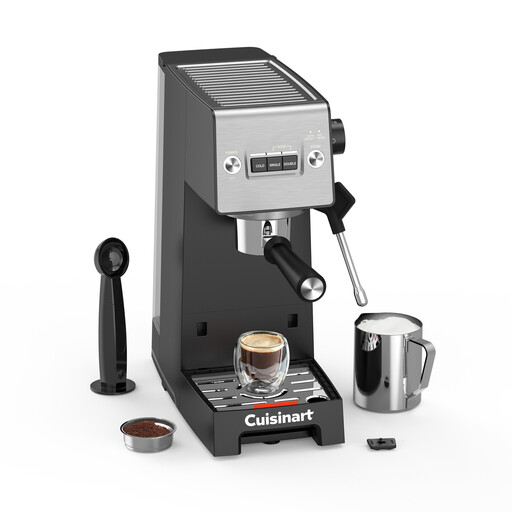 Image unavailable
Cuisinart EM160E Slim espresso machine
An option for anyone who prefers to make espresso with a portafilter rather than start a fully automatic cycle. If the word ‘Slim’ is what catches your eye, check the machine’s dimensions and the space you’ll need around it.
View on Joybuy
 Image unavailable
HiBREW H16, grinder and milk system
This automatic machine is for households that want to make coffee from beans and are also considering milk-based drinks. Its name indicates six coffee varieties and a touchscreen. Check that the drinks on offer, noise levels and milk-system maintenance suit your routine.
View on Joybuy
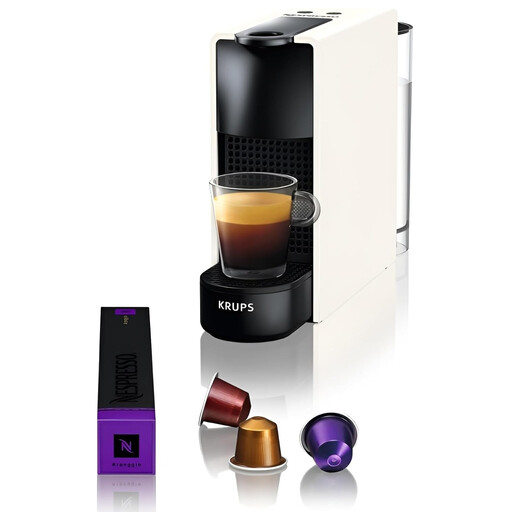 Image unavailable
KRUPS Nespresso Essenza Mini, white, 0.6 L
Worth considering if you want to make coffee from capsules with minimal effort. The product name lists a 0.6 L tank and 1200 W power. Check which capsule system it accepts before choosing your coffee.
View on Joybuy
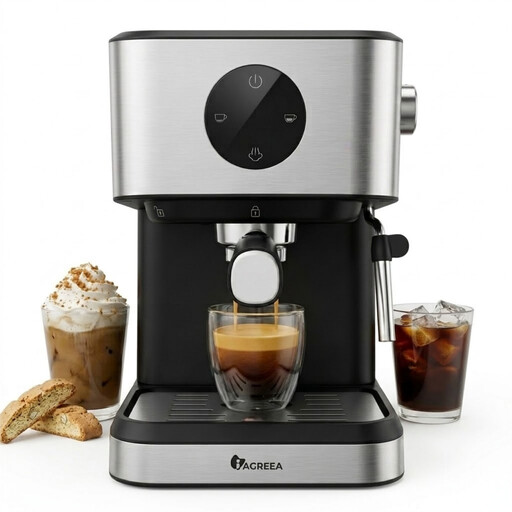 Image unavailable
IAGREEA 20 Bar, steam wand, 50 Oz tank
A portafilter option for anyone who wants to be involved in making their coffee and froth milk with a steam wand. The name lists a nominal pressure of 20 Bar and a 50 Oz tank, but these figures alone aren’t enough to judge the coffee in the cup. Also check the dimensions and steam wand maintenance.
View on Joybuy
Frequently asked questions
Can a portafilter machine use pods?
Yes, some models accept ESE pods, but this isn’t a standard feature on all portafilter machines. Check the manual for the exact model before choosing your pods.
How often should you clean the milk system?
The frequency and steps depend on the system. De’Longhi says that the circuit in its relevant automatic milk systems must be cleaned after every drink. Check your model’s manual to see what needs rinsing, which parts need washing and what other maintenance is required.
Do used capsules need to be taken to a shop for recycling in France?
Not necessarily. ADEME says aluminium and plastic capsules can go in the sorting bin, bag or container for paper and packaging. Some brands also offer a dedicated collection service. Check the guidance for where you live.
What should you do with an electric coffee machine at the end of its life?
If it’s still usable, consider donating or repairing it before recycling. Ecosystem offers guidance on repairing, donating and collecting electrical equipment. Look for a suitable option near you.


