If you regularly make espresso from coffee beans and want to keep hands-on steps to a minimum, an automatic machine with a grinder is worth considering, provided you have room for it and can keep up with the maintenance. A portafilter machine gives you more control over the preparation, while capsules offer a format designed to work with the machine. A filter coffee machine is suited to a different kind of coffee. According to Que Choisir, machines with grinders are noisier and take up more space than capsule systems or filter coffee machines.
Who are these options for?
Households that make several espressos a day
An automatic machine with a grinder lets you use whole beans instead of pods and make coffee with minimal effort. Before making room for one in your kitchen, check how easy it is to access the containers, run rinsing cycles and descale the machine. According to Que Choisir, cleaning is an important part of keeping these machines in good working order over time.
Regular cappuccino and latte drinkers
Your choice depends as much on how the milk is prepared as on how the system is cleaned. Compare a steam wand with a carafe or automatic milk system, depending on how involved you want to be and which parts you’re happy to wash after use.
Households short on space or sensitive to noise
Measure the space available, including the room needed to fill or remove the reservoirs. Que Choisir reports that a machine with a grinder takes up more space and makes more noise than a capsule system or filter coffee machine. When comparing two grinder machines, look for noise measurements taken under comparable conditions.
What sets the machines apart?
Start with the coffee you actually make: espresso, milk-based drinks and filter coffee each call for different preparation and maintenance.
Automatic machine with grinder
Worth considering: if you regularly make espresso from beans and want to keep hands-on preparation to a minimum.
The trade-off: you’ll need to allow for the space it takes up, grinder noise and regular cleaning and descaling.
Portafilter machine
Worth considering: if you want to be involved in making every espresso, using ground coffee or a separate grinder.
The trade-off: dosing, extraction and cleaning involve more hands-on steps than with an automatic machine.
Capsules or pods
Worth considering: if you want a compact machine that takes a compatible coffee format.
The trade-off: this option won’t suit you if you want the freedom to make espresso from whole beans.
Filter coffee machine
Worth considering: if you mainly serve filter coffee rather than espresso.
The trade-off: it won’t replace an espresso machine if espresso is what you’re after.
| Criterion |
What to check |
What matters to me |
| Maintenance and milk |
Check how easy it is to access the containers and the brew group, if it’s removable. Read the instructions for rinsing, descaling and cleaning the milk system in the model’s manual. |
If I often make cappuccinos, I want to know which parts need washing after each use, not just which drinks are on the menu. |
| Drinks and settings |
Check the exact list of drinks and the length or strength settings. Make sure you know whether the machine has a manual steam wand or prepares milk automatically. |
I mainly drink espresso, so extra milk-based recipes won’t help if I rarely use them. |
| Coffee format |
Check whether the machine uses beans, ground coffee, capsules or pods. For capsules and pods, check the compatible formats and the materials they’re made from. |
I’d like to choose my own beans without relying on a capsule format. If I stick with capsules, compatibility and recycling matter in everyday use. |
| Space, noise and capacity |
Measure the machine and the clearance needed to fill it with water and beans or empty its containers. Compare noise measurements taken using the same method, and choose a capacity to suit the number of coffees you make. |
In a small kitchen, I need to be able to use the machine without moving it. If I make coffee early, grinder noise also matters. |
Which choices could make things more complicated?
-
Choosing an automatic carafe for the occasional milk-based drink
A carafe or milk system means extra parts to clean, even if you only use it now and then. JURA, for example, provides a dedicated programme and cleaning product for its milk system.
Think about the drinks you make in a typical week. If you only use milk occasionally, compare the steps involved with a steam wand. If you use it often, check the cleaning instructions for the carafe or milk system.
-
Comparing machines without factoring in consumables
Choosing between beans and capsules determines what you’ll need to buy again and which formats you can use. A grinder machine also requires you to keep track of the maintenance products specified for that model.
Note how many drinks you usually make, which coffee format you use, and which filters or cleaning products the manual recommends. Then compare your options over the same period of use.
-
Focusing on the recipes without measuring the space available
According to Que Choisir, machines with grinders take up more space and make more noise than capsule systems or filter coffee machines. The machine’s dimensions alone won’t always tell you whether you can remove a container from beneath a cupboard.
Measure your worktop and the clearance needed around the model you’re considering. If noise is a deciding factor, look for tests with comparable measurements.
-
Putting off descaling
Descaling is part of maintaining an automatic machine; rinsing cycles are no substitute. The process depends on the model and the instructions in its manual.
Before you buy, check the manual for the exact model to find out what the process involves, which products are compatible and how the machine lets you know when it needs attention.
Which brand ranges are worth looking at?
These examples can help you compare different preparation and maintenance systems. The features of one model won’t necessarily apply to the whole brand.
De’Longhi
De’Longhi France showcases automatic machines that prepare drinks using beans ground by the machine.
- The range lets you compare models with a steam wand and those with an automatic milk system separately.
- De’Longhi says daily rinsing is still required. Check the descaling requirements for the model you choose, too.
Philips
Philips France’s product pages let you compare a Series 2200 EP2224/10 model with a milk frother and an EP3347/90 model with a LatteGo carafe.
- Philips lists strength and volume settings for the EP2224/10. Its EP3347/90 page describes a two-part LatteGo carafe with no tubes.
- The milk system and recipes vary by model, so check the details for the exact model you’re considering.
JURA
JURA France provides information about maintaining its milk systems and offers customer service in France.
- The brand describes a cleaning programme and detergent designed for its milk system.
- This programme involves a dedicated routine and product, so check the model’s instructions before choosing a milk function.
Grinder coffee machines available on Joybuy
These models are designed for making coffee at home with an automatic grinder machine. To compare them, focus on how they prepare milk, the maintenance involved and the space they need. This selection doesn’t include portafilter, capsule or filter coffee machines.
 Image unavailable
Philips Series 2200 EP2230/10 LatteGo
If you enjoy milk-based drinks with your bean-to-cup coffee, consider whether the LatteGo carafe suits how often you’ll use it and the cleaning steps you’re happy to take. Check the exact recipes available on this model before choosing.
View on Joybuy
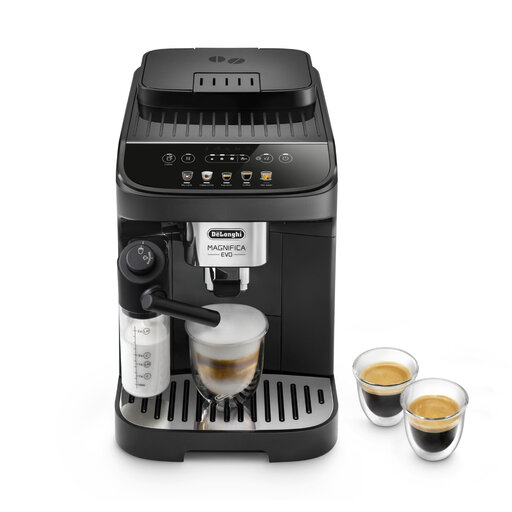 Image unavailable
De’Longhi Magnifica Evo ECAM290.61.B LatteCrema
The LatteCrema system is worth considering if you often make milk-based drinks. Check the manual for how to clean the carafe, and confirm which recipes are available on this model.
View on Joybuy
 Image unavailable
De’Longhi Magnifica Start ECAM220.21.WW
This bean-to-cup machine is worth considering if you mainly make coffee and don’t mind preparing milk-based drinks by hand. Check the manual to see how to use and clean the steam wand.
View on Joybuy
 Image unavailable
De’Longhi Magnifica S ECAM22.140.B
If you make espresso from beans and only froth milk now and then, compare the steps involved with using its steam wand to those for an automatic carafe. Measure the space you have available, too, making sure there’s room to access the reservoirs.
View on Joybuy
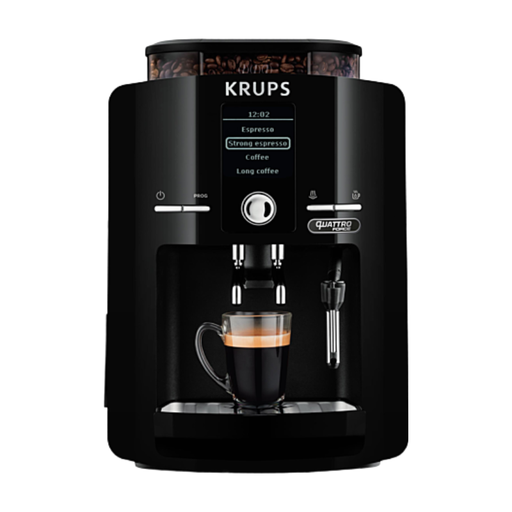 Image unavailable
Krups EA82F0, 1.7 L, 1450 W
If you make several coffees in a row, check whether the 1.7 L reservoir is big enough for your household. Before deciding, read the instructions for the EA82F0 model, including details about milk-based drinks and regular maintenance.
View on Joybuy
Frequently asked questions
What maintenance does an espresso machine with a grinder need?
Empty and clean the coffee grounds and drip trays, and run rinsing and descaling cycles as directed in the model’s manual. Check how to clean the brew group or brewing chamber, too. A steam wand, carafe or milk system means extra steps after making milk-based drinks.
Does a water filter mean I won’t need to descale?
No. Don’t assume the filter replaces the descaling recommended by the machine. Check the manual for the compatible filter, when to replace it and the descaling procedure for your model.
Steam wand or automatic milk system for regular cappuccinos?
An automatic system is worth considering if you’ll use it often and can keep up with the cleaning. A steam wand involves more manual steps. Cleaning procedures vary: Philips France describes the EP3347/90 LatteGo carafe as having two parts and no tubes, while JURA France provides details of a cleaning programme and detergent for its milk system. Always check the instructions for the exact model you choose.
How should I sort capsules if I keep a capsule machine?
In France, ADEME says aluminium and plastic capsules can go in the recycling bin, bag or container for paper and packaging. Check what your capsules are made from, and consult your local guidance for any other format.


