
Livraison le jour même ou le lendemain

Qualité garantie

Débloquez vos offres de bienvenue: Livraison GRATUITE | Jusqu'à -80 % | 30 jours d'essai gratuits à JoyPlus
Téléchargez l'application
An ergonomic memory foam pillow can genuinely transform how supported you feel throughout the night. The key is choosing a model suited to your body shape and sleeping position. Height, firmness, shape and ease of care matter far more than a simple promise of “premium comfort”.
Whether you sleep on your back or side, the goal is straightforward: keep your head aligned with your spine without placing excessive pressure on your neck. Here are the main criteria to assess before buying, along with a selection of models designed for different needs.
A very thick pillow is not necessarily more supportive. When sleeping on your side, sufficient height can fill the space between your shoulder and head. On your back, however, a pillow that is too thick may push your head forward and disrupt your neck’s natural alignment. Your body shape, shoulder width and mattress firmness all play a role.
Always check the precise dimensions instead of relying solely on terms such as “ergonomic” or “cervical”. For example, a thickness of 12 cm will feel different depending on whether the pillow contains a compact foam block, contoured foam or shredded foam.
Viscoelastic foam generally cannot be machine-washed. If the cover is not removable, keeping the pillow clean can quickly become inconvenient, particularly for people sensitive to dust or allergens.
Choose a washable cover and clearly detailed care instructions. Also check whether the pillow needs to be aired before first use: some foams may temporarily retain an odour from their packaging.
A pillow can improve your sense of comfort and support, but it is not a substitute for treatment of neck pain. Claims such as “relieves cervical pain” should therefore be treated with caution. If discomfort persists, it is best to seek advice from a healthcare professional.
The certifications highlighted by manufacturers should not be confused with a medical result either. A textile certification, for example, may confirm that certain substances have been tested without demonstrating any therapeutic effectiveness.
An ergonomic pillow should accommodate your usual sleeping position, not force you into a single posture.
Viscoelastic foam gradually conforms to the contours of your head and neck. It limits abrupt changes in position, but some formulations tend to retain more heat. Perforated models or those with ventilation channels promote more consistent airflow.
A breathable pillow cannot eliminate every sensation of warmth, however. This also depends on the pillowcase, bedroom temperature and the rest of your bedding. Examine both the foam structure and the materials used for the cover.
A removable, washable cover makes maintenance considerably easier. Certifications such as STANDARD 100 by OEKO-TEX, CertiPUR and other labels should be verified on the product page and considered in context: they cover specific criteria, not an overall promise of comfort.
When choosing a hypoallergenic pillow, also examine its composition, whether it has an inner casing and the washing instructions. The foam core itself should generally not be machine-washed.
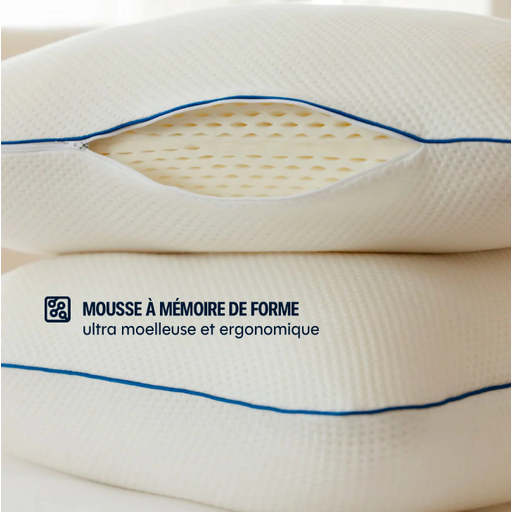
Why it suits this profile: Its rectangular shape fits most standard bedding. It may suit back or side sleepers looking for a memory foam pillow in a classic size.
The product page details the size, thickness, perforated foam and cover care instructions. This makes it easier to compare the product based on tangible features rather than marketing claims alone.
Perforated viscoelastic foam, removable washable cover and 50 × 70 cm format.
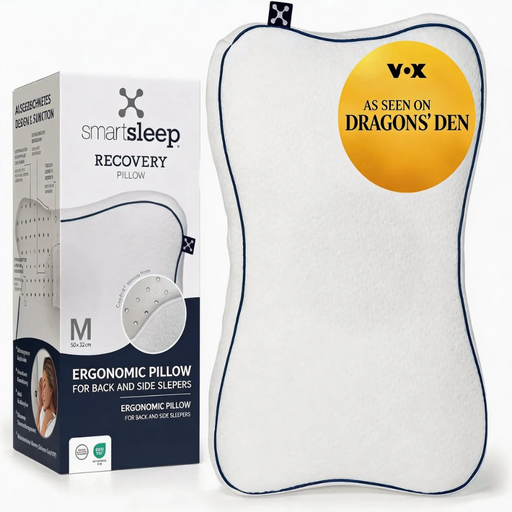
Why it suits this profile: Its dedicated head-resting area is designed for adults who sleep on their back or side. Its design also focuses on airflow and materials suited to sensitive users.
The product page mentions ventilation channels and OEKO-TEX certification. These details describe specific features, but they do not constitute a medical guarantee.
Ergonomic shape with head recess, viscoelastic foam and materials described as breathable.
Why it suits this profile: Its square 60 × 60 cm shape is ideal for people who prefer a generous resting surface. The perforated foam also promotes improved airflow.
The product page distinguishes between the perforated core, the filling and the different covers. You can therefore identify precisely which components are machine-washable.
60 × 60 cm format, 12 cm thickness and removable outer cover that is machine-washable.
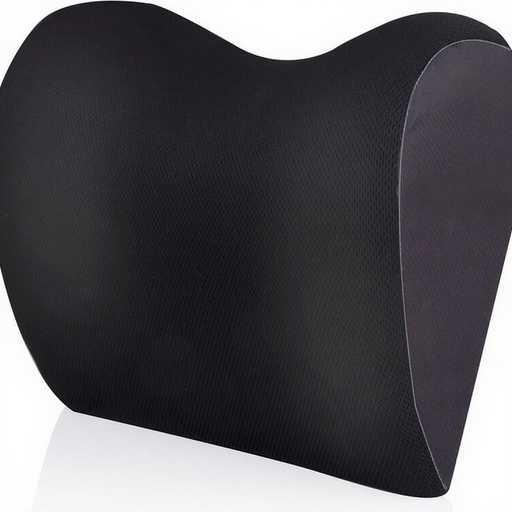
Why it suits this profile: This model is not intended to replace a bed pillow. It is designed for drivers and passengers seeking neck support during long journeys by car, van, motorhome or camper van.
The product page specifies its automotive use, adjustable strap and compatibility with most headrests featuring two posts. Position it at neck level without obstructing the seat adjustments.
100% memory foam, 23 × 10 × 20 cm dimensions and removable, washable mesh cover.
When your pillow arrives, allow it to air according to the manufacturer’s instructions. Then position it so that your head rests centrally and your neck is neither raised too high nor left without adequate support. After switching from a soft pillow to viscoelastic foam, you may need a few nights to adjust.
To help preserve your pillow:
We have brought together an up-to-date selection of products that meet these criteria, including their dimensions, materials and care information.
There is no single ideal height for everyone. Side sleepers often need more thickness than back sleepers, but shoulder width and mattress firmness also matter. Compare the stated dimensions and check the return conditions before placing your order.
It depends on the foam density, frequency of use and level of care. Pay particular attention to loss of shape, areas that become compressed and changes in support. A washable cover contributes to good hygiene, but it cannot preserve the foam’s properties indefinitely.
Some product pages mention tested materials or properties intended to help limit the presence of dust mites. This is not, however, a guarantee suitable for every sensitivity. Check the composition, stated certification and care instructions. If you have a known allergy, seek advice from a healthcare professional before buying.