
Livraison le jour même ou le lendemain

Qualité garantie

Débloquez vos offres de bienvenue: Livraison GRATUITE | Jusqu'à -80 % | 30 jours d'essai gratuits à JoyPlus
Téléchargez l'application
Waking up with a stiff neck or an aching back? It’s probably time to rethink your bedding, and especially your pillow. The ergonomic pillow is often touted as a miracle solution, but in a market saturated with promises, it's easy to get lost. Our mission: to help you cut through the noise and make the right choice.
Before you dive in, let's break down the common pitfalls to avoid, so your promising purchase doesn't become a costly disappointment.
To avoid being misled, focus on a few objective technical specifications. They will give you a solid foundation for comparing products, beyond the marketing jargon.
Your sleeping position is the primary factor in choosing your pillow's firmness and height.
The pillow's material has a direct impact on support, breathability, and its hypoallergenic properties.
The traditional square format, like the 65x65?cm pillow, remains a classic in France for its versatility. However, for targeted cervical support, a rectangular cervical pillow with its signature ergonomic wave shape is often more effective, as it's designed to follow the curve of the neck.
The goal isn't to find a miracle pillow, but the one that's right for YOU.
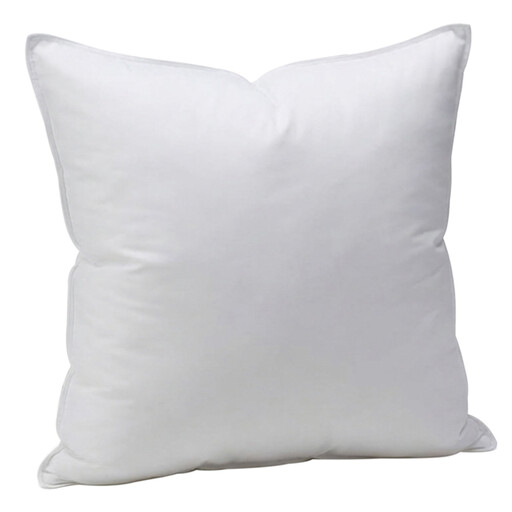
Why we chose it: This set promises to bring back the plush comfort and loftiness of luxury hotel pillows. Its classic 65x65 cm square format is a timeless choice, while its synthetic filling makes it a great option for allergy sufferers.
It doesn't present itself as a medical solution, but instead focuses entirely on comfort and a premium feel. Its soft filling suits many sleeping positions without the constraints of a rigid shape.
Offered as a 2-pack of pillows, it delivers excellent value for money when outfitting a double bed. Its hypoallergenic filling is a real bonus.
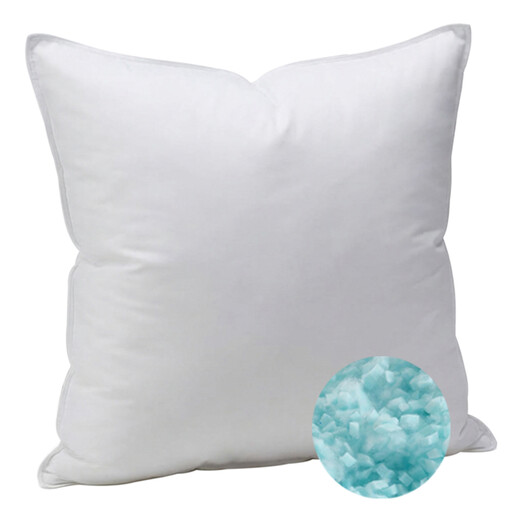
Why we chose it: For those who want the benefits of a memory foam pillow without the rigidity of a solid block. The shredded foam allows you to mould the pillow to your liking for truly personalised support.
It solves the "one-size-fits-all" problem with its adjustable design. Its aerated structure helps to better dissipate heat, a common flaw in low-end, dense foams.
It combines the contouring support of memory foam with the flexibility of a traditional pillow. Its filling is also hypoallergenic.
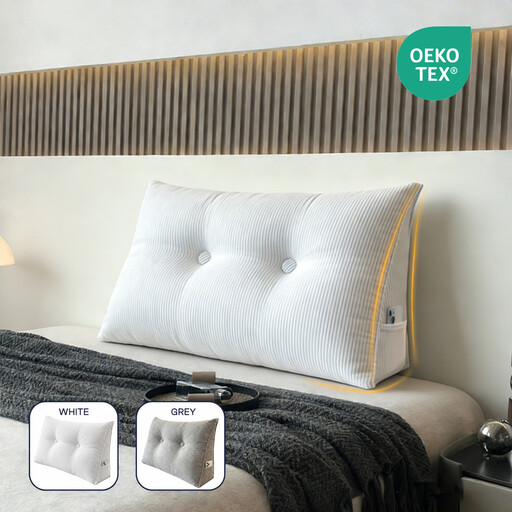
Why we chose it: Note that this isn't a pillow for sleeping, but a dedicated reading cushion for bed. Its triangular (*wedge*) shape provides perfect back and lumbar support for sitting up comfortably to read or watch a series in bed.
Its function is very clear, which avoids any confusion with a sleeping pillow. It meets a specific need that traditional pillows don't, without making false promises.
Ultra-versatile, it can be used as a backrest, a leg elevator, or an extra cushion. Its removable and machine-washable cover is a real plus for easy maintenance.
We have curated a selection of products that meet demanding quality and comfort criteria.
It all depends on its composition and manufacturing quality. On average, it's recommended to replace your pillow every 2 to 3 years. A high-density latex or memory foam model will last longer than a synthetic fibre pillow. The warning sign? If it loses its loft, becomes lumpy, or your morning aches and pains return.
Absolutely no washing machine! The water and spin cycle could destroy the foam's structure. Generally, only the cover is machine-washable. For the pillow core, be sure to air it out regularly and spot-clean any stains with a damp cloth and a little mild soap. In any case, always follow the manufacturer's recommendations on the care label.
Its purpose is to promote proper spinal alignment during the night. By maintaining a neutral posture, it helps release muscle and joint tension, which are often the cause of pain upon waking. However, it is not a medical device and cannot, on its own, guarantee an end to your pain. For chronic or severe pain, consulting a healthcare professional (doctor, physiotherapist, etc.) is essential.