
Livraison le jour même ou le lendemain

Qualité garantie

Débloquez vos offres de bienvenue: Livraison GRATUITE | Jusqu'à -80 % | 30 jours d'essai gratuits à JoyPlus
Téléchargez l'application
An ergonomic pillow isn’t just about softness or price. Its height, firmness, material and care routine all affect your everyday comfort. Too thick, and it can tilt your head forward; too flat, and it may lack support – especially if you sleep on your side.
Before you buy, watch out for three common pitfalls:
To compare models effectively, it’s better to rely on verifiable features rather than marketing claims alone.
For a pillow designed for side sleeping, enough height helps fill the gap between your shoulder and head. A model of 10 to 12 cm may suit some sleepers, but the feel also depends on your shoulder width and the softness of the filling.
For a pillow designed for back sleeping, a medium height and balanced firmness are generally easier to position. Adjustable models let you remove or add filling to fine-tune the volume precisely.
People who sleep on their stomach often look for a soft, relatively low pillow to limit neck rotation. In this position, a very firm or particularly bulky model can quickly become uncomfortable.
Firmness should also be judged carefully: a firm pillow gives a stable, supportive feel, while a softer one adapts more easily as you change position. There’s no one ideal firmness level for everyone.
A memory foam pillow gradually moulds to the weight of your head. Perforated models encourage air circulation, even if they can feel more enveloping than a fibre or feather pillow.
A cervical foam pillow offers more structured support. Check its shape, height and whether the cover is removable. The foam shouldn’t be washed if the instructions say only the cover is washable.
Synthetic fibres are often easy to care for and can suit people looking for a hypoallergenic pillow. Duck feathers provide a different loft, with a softer, airier feel. You’ll need to check the exact composition, whether there’s a cotton cover, and the washing instructions.
The most common sizes in France are:
A washable pillow should be cared for according to the label instructions. A removable, washable cover makes everyday maintenance easier, but that doesn’t mean the filling can go in the machine. Certifications like STANDARD 100 by OEKO-TEX show that certain substances are controlled in the textiles; they aren’t a medical promise.
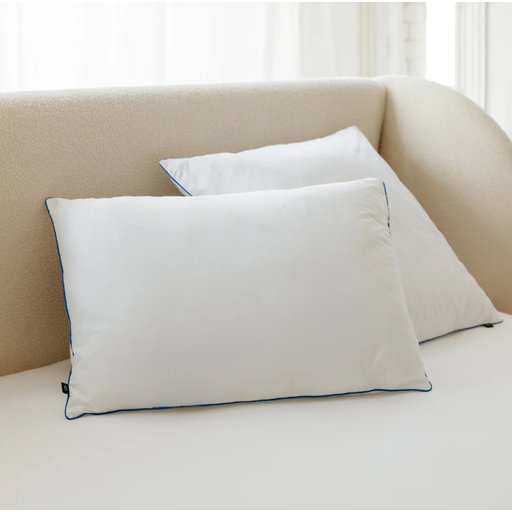
Why this choice suits this profile: its 60 x 60 cm size and 5 cm thickness make it a simple option for a first purchase, with synthetic filling and a cotton and polyester cover.
The stated height is clearly given and the machine-washing conditions are specified. This helps you avoid choosing based purely on a promise of loft.
60 x 60 cm size, 5 cm thickness, synthetic filling and certifications mentioned on the product page.
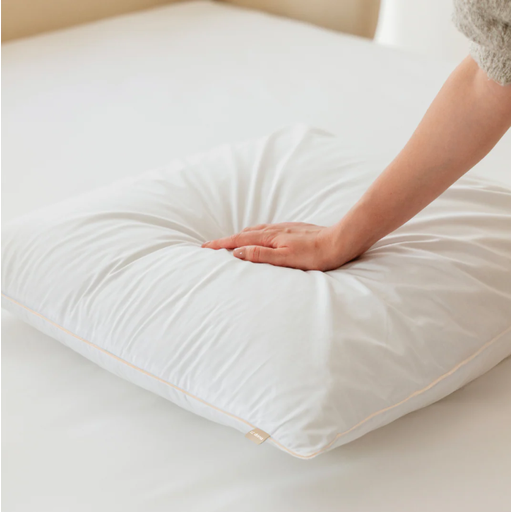
Why this choice suits this profile: this model is aimed at people who appreciate the loft of natural filling and the breathability of a cotton cover.
The composition is detailed: 90% duck feathers and 10% down. The page also states that the pillow can be machine-washed at up to 40°C.
60 x 60 cm size, 20 cm thickness, 100% cotton cover and filling made of duck feathers and down.
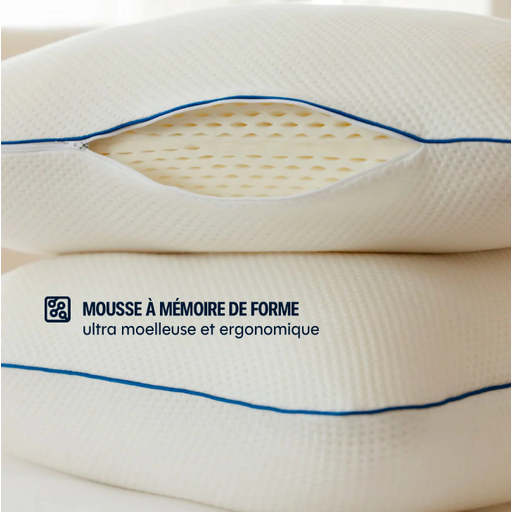
Why this choice suits this profile: its rectangular shape, perforated foam core and removable cover suit people who want structured support and regular maintenance.
The product page clearly distinguishes the washable cover from the foam core. So there’s no risk of confusing “washable pillow” with washing the whole product.
Dimensions of 50 x 70 cm, 12 cm thickness, perforated foam and removable, machine-washable cover.
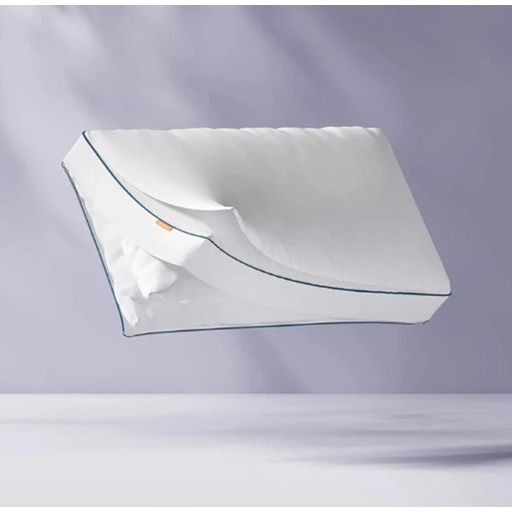
Why this choice suits this profile: this model combines adjustable filling, a breathable design and a thermoregulating function aimed at people who get hot during the night.
Height and firmness are adjusted by removing or adding filling. So you’re not limited by a fixed size.
60 x 60 cm size, adjustable height, materials described as breathable, machine-washable care and hypoallergenic features stated by the brand.
We’ve put together a comprehensive list, updated in real time, of products that meet these demanding selection criteria and European safety regulations.
The height mainly depends on your sleeping position, shoulder width and mattress firmness. On your side, a larger volume is often needed. On your back or stomach, a thinner model can be easier to position. Pillows with adjustable filling let you fine-tune the result gradually.
How long a pillow lasts varies by material, how often it’s cared for and the condition of the filling. Replace your pillow when it stays flat, has persistent lumps, loses its shape or no longer keeps you in a comfortable position. Regularly air and fluff fibre or feather pillows, while following the care instructions for foam models.
Check the label before any washing. A removable cover can be washed more often than the filling. For a memory foam pillow, never put the core in the machine unless the manufacturer explicitly says you can. Use a suitable pillowcase, air the pillow and dry it completely after washing to limit residual moisture.