
Livraison le jour même ou le lendemain

Qualité garantie

Débloquez vos offres de bienvenue: Livraison GRATUITE | Jusqu'à -80 % | 30 jours d'essai gratuits à JoyPlus
Téléchargez l'application
Waking up with a stiff neck or sore shoulders is often a sign that your bedding is no longer suitable. Truly restorative sleep depends on proper spinal alignment, and your pillow plays a crucial role in this balance. The ergonomic pillow is not just a comfort accessory but a genuine health tool, designed to conform to the shape of your head and neck, thereby promoting a healthy posture throughout the night.
Faced with an overwhelming number of options, it's easy to feel lost. As the Head of Product Selection at Joybuy, my role is to separate fact from fiction and guide you toward an informed choice, beyond the sometimes-excessive marketing promises. This guide breaks down the essential criteria and offers a selection of products for different user profiles.
Before you start shopping, it's essential to understand a few key concepts that will make all the difference to your comfort. Here are three points to check to find the pillow that perfectly matches your body type and sleeping habits.
The signature feature of an ergonomic pillow is its shape, often wave-like or with a central dip. Its purpose: to provide optimal neck support.
The material directly impacts the comfort, support, and lifespan of your pillow.
Here, it's all about balance. A pillow that's too soft won't provide enough support, while one that's too firm can create pressure points and tension. The ideal scenario: your head should neither sink in completely nor 'float' on the pillow. It should simply rest in perfect alignment with your spine.
To guide you, we have selected three products that cater to distinct profiles and needs.
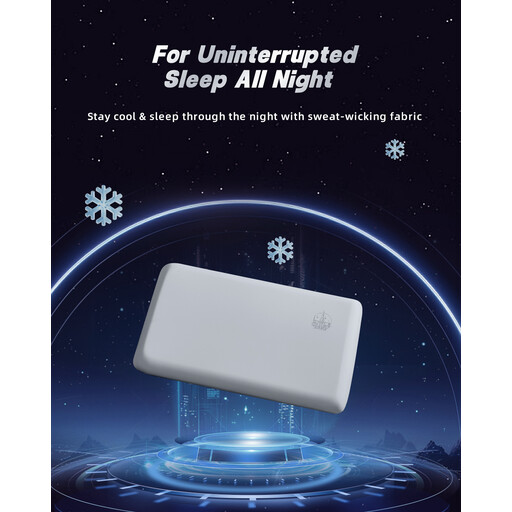
Highlights: This pillow combines memory foam with temperature-regulating technology. Its shape is designed to suit multiple sleeping positions.
What we love:
Ideal for: Those who often get too hot at night and are looking for a versatile model that can adapt to their changing positions.
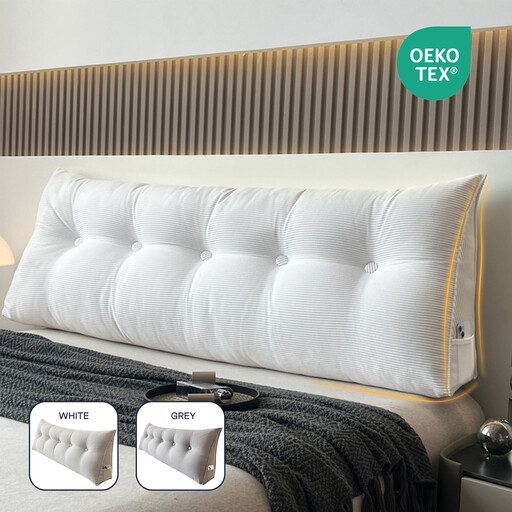
Highlights: Note, this is not a sleeping pillow, but a multi-functional backrest cushion. Its triangular shape is perfect for leaning back comfortably in a seated position.
What we love:
Ideal for: Anyone who loves to read, work, or relax in bed or on the sofa and is looking for firm yet comfortable back support.

Highlights: Here, everything is designed for spinal alignment, with a central cavity for the head and reinforced support for the neck.
What we love:
Ideal for: Back or side sleepers who require a cervical pillow with ultra-precise neck support for perfect alignment.
This selection is, of course, just an overview of the solutions available to you. Every sleeper is unique, with specific needs for comfort and support. If none of these models seem right for you, feel free to explore our full collection.
Discover our complete collection of shaped pillows
As a general rule, it's recommended to replace your memory foam pillow every 2 to 3 years. Over time, the foam inevitably loses its elasticity and no longer provides optimal support. Visible sagging or a loss of firmness are tell-tale signs that it's time for a replacement.
Check the position of your head. When on your side, if your head is tilted towards the ceiling, the pillow is too high. If it leans towards the mattress, it's too low. When on your back, if your chin is tucked into your chest, it's too high. The goal remains the same: to keep your neck and head in perfect alignment with your spine.
Yes, a well-chosen pillow can greatly help reduce tension by ensuring better spinal alignment during the night. By properly supporting the neck and head, it prevents poor posture, which is often responsible for stiffness upon waking. However, please note: it is not a substitute for medical advice for chronic or severe pain.