
Livraison le jour même ou le lendemain

Qualité garantie

Débloquez vos offres de bienvenue: Livraison GRATUITE | Jusqu'à -80 % | 30 jours d'essai gratuits à JoyPlus
Téléchargez l'application
Starting the first year of school is a key milestone in a child's life: learning to write. As parents, we all want to provide the best tools to make this transition easier. Choosing a child's first pen is often more complex than it seems. Faced with a multitude of options, it's essential to focus on objective criteria like comfort, grip, and practicality, rather than marketing claims.
This guide is designed to shed light on the important factors to consider when choosing an ergonomic pen for children, helping your young student achieve smooth, frustration-free handwriting.
Before looking at specific models, it's helpful to know the criteria that make a difference. A good handwriting learning pen must meet specific needs to prevent fatigue and encourage proper hand posture.
Ergonomics is the primary criterion. A pen suited to the shape of a child's hand should have a grip section designed to guide finger placement. Look for models with:
The debate between the ergonomic rollerball and the learning fountain pen is a common one. Each has its advantages:
For daily school use, practicality is essential. An erasable ink pen is a significant asset. It allows the child to correct mistakes cleanly, without messy cross-outs, which builds their confidence. Furthermore, choosing a refillable model is both a cost-effective and more environmentally friendly choice.
Taking these criteria into account, here are two options that stand out for their design, which is tailored for young writers.
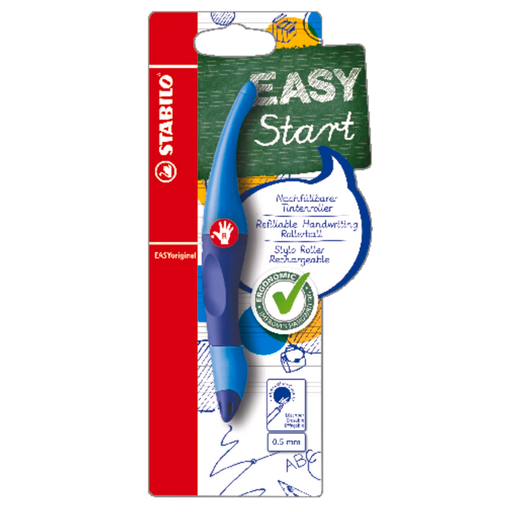
Why We Recommend It
The STABILO EASYoriginal is often recommended by teachers for children starting school. Its design is entirely focused on the learning process. This ergonomic rollerball combines the ease of use of a ballpoint pen with the benefits of a guided grip. It represents an ideal transition from a pencil, offering an effortless glide that prevents hand strain.
Advantages
Who Is This Product For? This pen is particularly suitable for children aged 5 to 7 who are beginning to learn cursive writing in their first year of school. It is ideal for those who need a simple and reassuring tool to automate correct finger positioning and develop fluency.
See the STABILO EASYoriginal on Joybuy.fr
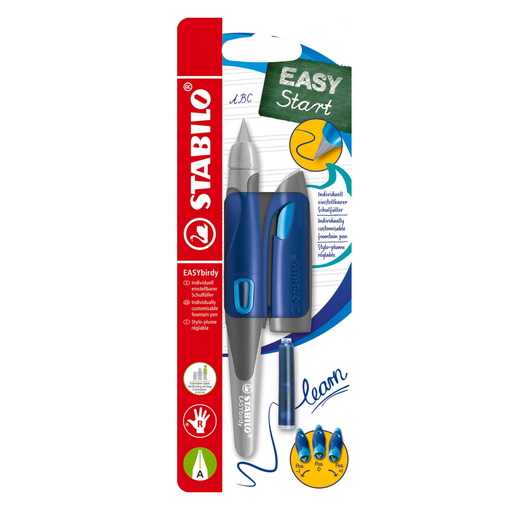
Why We Recommend It
The STABILO EASYbirdy is an innovative learning fountain pen. It takes customisation a step further by offering a nib with an adjustable angle. This unique feature allows the pen to be perfectly adapted to each child's individual writing posture, which is a significant advantage for tailored comfort. It is designed for those who are ready to move on to the next stage of writing with ink.
Advantages
Who Is This Product For? The STABILO EASYbirdy is an excellent option for children in their second year of school or for those in their first year who already show a certain ease with writing. It is suitable for parents who want to introduce their child to using a fountain pen in a gradual and comfortable way.
See the STABILO EASYbirdy on Joybuy.fr
The models featured here are specifically designed for learning. However, the world of writing is vast, and every child has their own preferences. If you wish to explore a wider range of rollerballs, fountain pens, or other quality writing instruments, many other possibilities are available.
? Discover our complete selection of ink pens to find the right model.
1. At what age should a child start using an ergonomic pen? Using an ergonomic pen for children is generally recommended from the beginning of formal handwriting education, typically in the first year of school (around ages 5-6). This is when good grip habits are formed. The goal is to prevent poor posture that can lead to fatigue and pain.
2. Is a rollerball or a fountain pen better for a beginner? There is no single answer. The ergonomic rollerball is often easier to master at first, as it requires less pressure control. The learning fountain pen is excellent for developing neat handwriting and good technique over the long term. Some teachers recommend starting with a rollerball at the beginning of the first year, then switching to a fountain pen towards the end of the year or in the second year.