
Livraison le jour même ou le lendemain

Qualité garantie

Débloquez vos offres de bienvenue: Livraison GRATUITE | Jusqu'à -80 % | 30 jours d'essai gratuits à JoyPlus
Téléchargez l'application
A comfortable setup is about more than just a well-padded chair or a modern-looking desk. Whether you're a remote worker, a student, a gamer or a professional, ergonomic office furniture must first and foremost adapt to your body shape, the space you have available, and the time you spend in front of a screen.
Some marketing promises can, however, inflate the bill without offering any real benefit. Here are the most common pitfalls and the criteria to examine before choosing an ergonomic office chair, an electric sit-stand desk or a complete home office setup.
A headrest, a footrest or a recline mechanism are only worthwhile if they are adjustable and suited to how you use them. A chair with a fixed lumbar support, for example, may not suit every body type. So check the adjustment range of the seat, backrest, armrests and lumbar support.
A desktop that is too narrow quickly becomes uncomfortable when you need to fit a screen, keyboard, documents and a lamp on it. Conversely, a large desk can take up all the space in a bedroom or a small remote-work nook. Compare the stated dimensions with the space you actually have available, and don't forget to allow enough room behind the chair.
The maximum weight capacity applies to both the chair and the desk. A high-capacity office chair rated for 120 or 150 kg must not be used beyond this limit. For a height-adjustable desk, add up the weight of your screens, computer, accessories and anything else that will remain on the desktop.
For prolonged use, examine the shape of the backrest, the presence of an adjustable lumbar support, the seat height and whether the armrests can be adjusted. A mesh backrest improves air circulation, while a padded seat offers a more enveloping feel.
The chair must also remain stable when you move. So the castors, base, gas lift and recline mechanism deserve a close look in the product specification. When the manufacturer mentions SGS or BIFMA references, these correspond to standards or certifications claimed for the product: they do not replace the need to check the dimensions and weight capacity.
An electric sit-stand desk should offer a height range that suits your height and your chair. The models featured here can be adjusted from 72 to 118 cm or from 72 to 120 cm. The memory presets allow you to quickly return to a sitting or standing position.
A desktop of 120 × 60 cm is generally sufficient for a laptop, a screen and everyday accessories. For two screens or a desktop computer, a size of 160 × 70 cm or 180 × 80 cm offers more flexibility. Always respect the maximum static load, especially during height changes.
Before placing your order, check whether assembly is required, whether tools are supplied, and whether the desk needs to be installed on a perfectly level floor. With a motorised model, keep electrical components away from liquids and make sure the desktop cannot hit a wall or piece of furniture.
For maintenance, a soft, slightly damp cloth is usually sufficient. Abrasive products can damage a melamine surface, a mesh covering or faux leather. Also remember to regularly check that screws are tight, and never use the armrests to sit down or stand up.
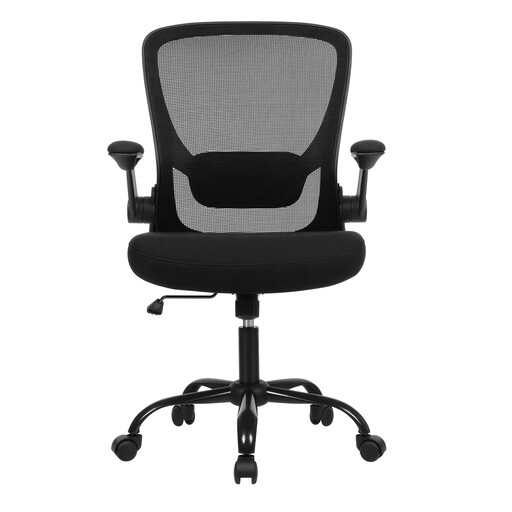
Why this choice suits this profile: This office chair with lumbar support provides a solid foundation for working, studying or setting up a remote-work space.
The seat height, lumbar support and foldable armrests avoid adding unnecessary features, while making it easier to store the chair under the desk.
Padded seat, breathable fabric covering, recline function and a stated maximum weight capacity of 120 kg.
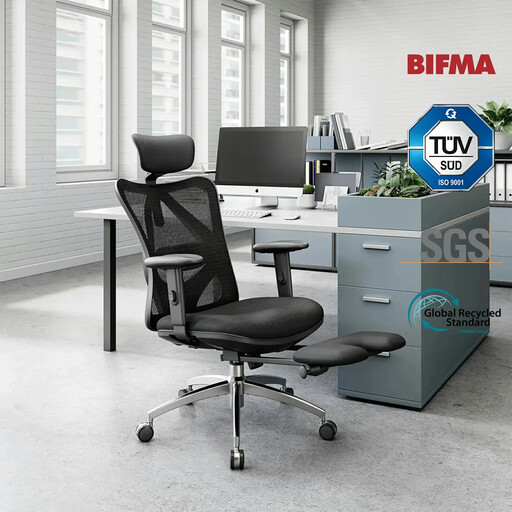
Why this choice suits this profile: Its high backrest and numerous adjustments are designed for those who want to fine-tune their working position.
The adjustments for the backrest, headrest, height, recline and armrests are detailed in the product specification, rather than being reduced to a simple aesthetic selling point.
Breathable mesh backrest, adjustable footrest, aluminium base and a stated maximum weight capacity of 150 kg.
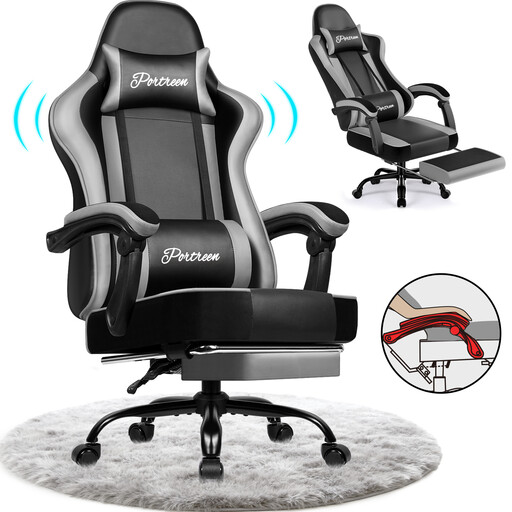
Why this choice suits this profile: This gaming chair with footrest is suitable for gamers and users who alternate between work, reading and extended breaks.
The telescopic footrest must be locked before use. The specification also states the 150 kg limit and the recline angle, which ranges from 90 to 170 degrees.
Lumbar support and headrest, water-resistant faux leather covering according to the specification, 10 cm height adjustment and a stated weight capacity of 150 kg.
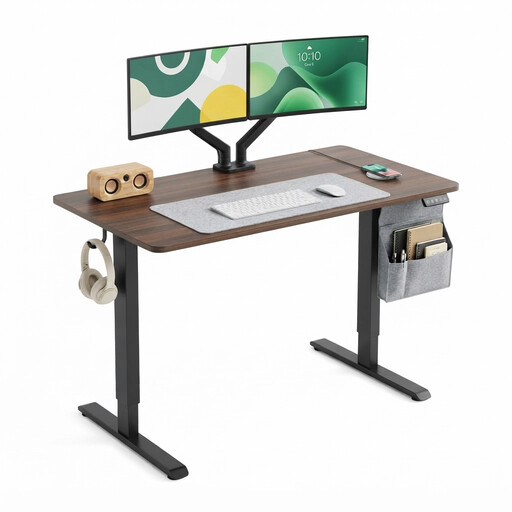
Why this choice suits this profile: Its compact size fits easily into a bedroom, shared office or remote-work space where every centimetre counts.
The specification clearly states the dimensions, the adjustment range of 72 to 118 cm and the maximum static load of 70 kg.
Two memory positions, digital display, 120 × 60 cm desktop and two storage hooks. The specification also mentions CE marking and a certification compliant with European standards.
We have compiled a complete, real-time updated selection of products that meet these demanding criteria and European safety standards.
Adjust the desktop so that your forearms remain roughly horizontal and your shoulders are relaxed. When sitting, your feet should rest flat on the floor and your knees should form a comfortable angle. The ideal height depends on your own height, your chair and the accessories you have on the desk.
It depends on the motor power and how often you adjust it. The motor only runs while the desk is going up or down, not throughout the working day. To avoid unnecessary adjustments, save two suitable positions and limit repeated changes.
This varies depending on the weight supported, how often it is used, the type of floor and how well it is maintained. Respecting the maximum weight capacity, avoiding sudden rocking movements and regularly tightening the fixings all help to preserve the mechanism. Fabric, mesh and faux leather coverings also require appropriate care.