
Livraison le jour même ou le lendemain

Qualité garantie

Débloquez vos offres de bienvenue: Livraison GRATUITE | Jusqu'à -80 % | 30 jours d'essai gratuits à JoyPlus
Téléchargez l'application
Whether you're working from home or in the office, spending hours glued to a chair has become the new normal. The problem? This sedentary lifestyle takes a toll on our bodies, leading to discomfort, tension, and back pain. An ergonomic office chair is often seen as the obvious solution, but the market is a real jungle, saturated with models making often-misleading marketing promises.
As the Head of Product Selection at Joybuy, my mission is to help you make sense of it all. Before unveiling our top picks, let's break down the 3 most common traps that can turn a promising investment into a costly mistake.
Many chairs proudly feature "lumbar support" that often amounts to nothing more than a fixed cushion or a plastic bump. Ill-fitting and non-adjustable, this type of support creates pressure points and ends up worsening discomfort instead of relieving it. True lumbar support must be dynamic or, at the very least, adjustable in height and depth to perfectly conform to the natural curve of your spine.
An office chair with a premium look, often made of PU leather, can be very appealing at first glance. The catch? After just an hour, these non-breathable materials turn your seat into an oven. Conversely, a mesh back promotes air circulation, but be warned: not all mesh is created equal. A poor-quality mesh will quickly sag, losing all its supportive properties.
"12-way adjustable!" This marketing claim often hides counter-intuitive mechanisms that are difficult to operate or don't lock properly. It's not about the quantity of adjustments, but the quality and relevance of the fundamental ones—those that truly allow you to tailor the chair to your body.
To avoid these traps, focus on the few technical features that truly make a difference for your posture and daily comfort.
The true heart of a good ergonomic office chair is its mechanism. Forget basic systems where only the backrest tilts. Aim for a synchronous mechanism: when you lean back, the seat also tilts, but at a different angle. This coordinated movement supports your body, stimulates blood circulation, and prevents spinal compression.
Add to that a dynamic and adjustable lumbar support—a non-negotiable feature if you're looking for an office chair to relieve back pain. It must be able to move up and down to fit into the small of your back and, ideally, adjust in depth to offer more or less pronounced support.
Fixed or height-only adjustable armrests are a common cause of shoulder and neck tension. 3D armrests (adjustable in height, forward/backward, and side-to-side) or, even better, 4D armrests (which add rotation) allow you to perfectly align your forearms with your desk surface.
Adjustable seat depth is another feature that's too often overlooked. Yet, it's crucial for leaving a two-to-three-finger gap between the edge of the seat and the back of your knees, thus preventing compression of blood vessels.
An adjustable headrest is a real bonus for relieving neck strain during breaks. Similarly, an office chair with a footrest can transform your workstation into a true haven of relaxation. If your chair doesn't have one, a separate ergonomic footrest is an excellent addition to perfect your posture.
Instead of an endless list, we've matched specific models to user profiles to help you find the chair that truly meets your needs.
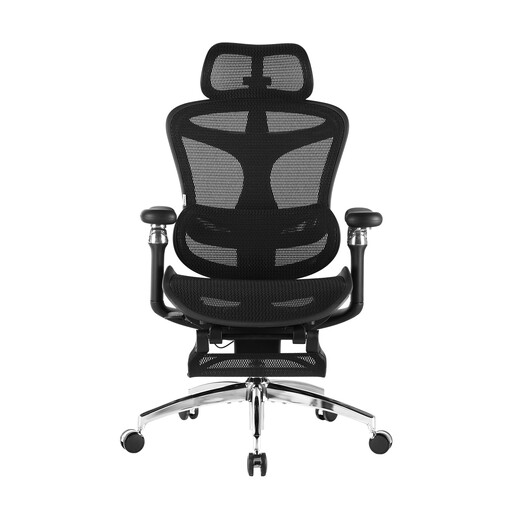
Why we chose it: For those who spend 8+ hours a day in front of a screen, every micro-adjustment counts. This model is built for intensive use and flawless postural support.
It features true dynamic lumbar support that follows your body's movements, a far cry from a simple fixed cushion. Its 6D armrests don't fall into the trap of useless complexity; every adjustment has a direct, beneficial impact on relieving shoulder strain.
The 6D armrests and seat depth adjustment allow for fine-tuned customisation, ensuring optimal comfort throughout the day.
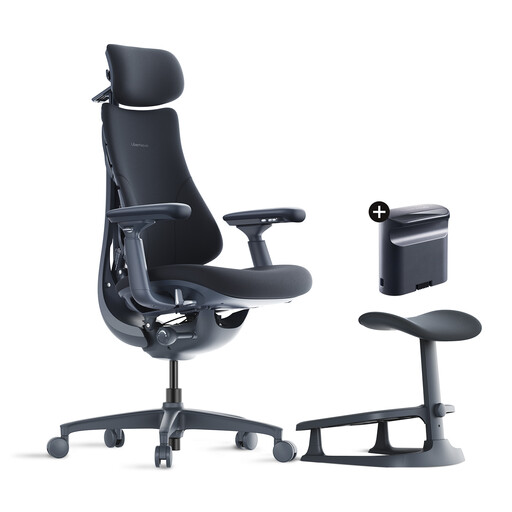
Why we chose it: Ideal for remote work, where the same chair needs to perform for both work and relaxation. It combines serious ergonomics with thoughtful comfort features for breaks.
Far from being a gimmick, the footrest is solidly built and deploys effortlessly. The lumbar support is adaptive, and the deep recline offers real postural benefits during moments of relaxation.
The deep 160° recline, combined with the integrated footrest, lets you switch from an active work posture to a near-horizontal relaxation position in seconds.
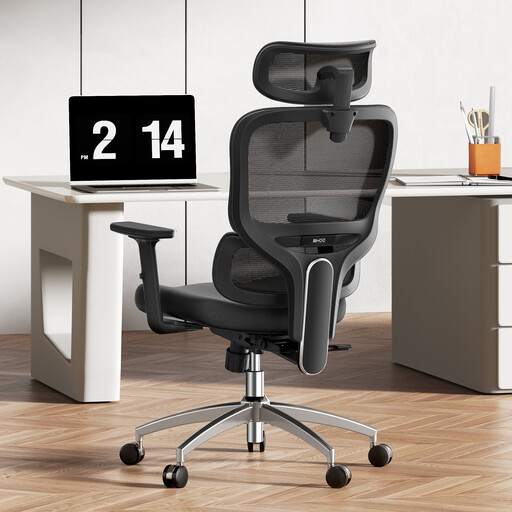
Why we chose it: For those ready to take the leap into ergonomics without breaking the bank. This model focuses on the essential adjustments for an immediate comfort upgrade over a standard chair.
There are no useless frills here. It focuses on the essentials: a breathable mesh back and 3D dynamic lumbar support. It delivers on the fundamentals without getting lost in superfluous adjustments.
Excellent value for money that doesn't skip any of the fundamental ergonomic adjustments: lumbar support, headrest, and adjustable armrests.
Even with the best chair in the world, your feet can end up dangling or poorly positioned. An ergonomic footrest like the dual-layer LiberNovo Omni elevates your legs to improve circulation, reduces pressure on your lower back, and encourages micro-movements with its rocking feature. It's the finishing touch that perfects an ergonomic setup.
We have curated a full range of products that meet our strict selection criteria and current safety standards.
It all depends on the quality of the materials and your usage. An entry-level model might last 2-3 years, whereas a high-quality ergonomic office chair with a steel frame and durable mesh can easily last 7-10 years or more. A good indicator? The length of the warranty, which reflects the manufacturer's confidence in their product.
Each material has its pros and cons. Mesh is prized for its breathability, a clear advantage during long workdays, especially in the summer. Fabric offers a softer feel and a wider range of colours but can be harder to clean. The final choice depends on your personal preferences and environment.
It's not mandatory, but it is highly recommended. An ergonomic footrest helps maintain a healthy angle (around 90°) at your knees and ankles, especially for shorter individuals whose feet may not touch the floor even with the seat at its lowest setting. It also promotes blood circulation and relieves pressure on the lower back.