
Livraison le jour même ou le lendemain

Qualité garantie

Débloquez vos offres de bienvenue: Livraison GRATUITE | Jusqu'à -80 % | 30 jours d'essai gratuits à JoyPlus
Téléchargez l'application
An ergonomic office chair isn’t just about looks or the number of features the manufacturer lists. Whether you’re working from home, studying or employed, certain details make all the difference when you spend several hours sitting each day.
Three common pitfalls keep cropping up. A backrest marketed as ergonomic may only offer a fixed lumbar support that can’t be adapted to your body shape. A well-padded seat might feel comfortable at first, then become too warm or lose its firmness over time. And dimensions are often underestimated: a chair that’s too high, too deep or too wide can stop you from keeping your feet flat and your forearms properly aligned.
Here are the criteria to examine before choosing an ergonomic chair for home working or a seat intended for professional use.
An adjustable office chair should at the very least allow you to change the seat height. The goal: to keep your feet flat on the floor and your knees at roughly a right angle. Also check for a tilt mechanism, a tension adjustment and a backrest that can follow your changes in position.
Lumbar support deserves special attention. An office chair with adjustable lumbar support lets you position the support zone precisely in your lower back, rather than relying on a cushion that slips or sits awkwardly. A headrest is mainly useful if you regularly work in a reclined position or like to take breaks in your chair. However, it won’t compensate for a poorly positioned screen.
Compare the minimum and maximum seat height with that of your desk. A seat that’s too high can compress the back of your thighs, while one that’s too deep may push you away from the backrest and cause you to lose lumbar support.
Also remember to measure the seat width, the overall height of the chair and the space available behind it. This is particularly important in a room converted into an office or in a small flat. The stated weight capacity must match the user’s weight, without being exceeded. The castors and base should also be suited to your floor: parquet, carpet and tiles don’t offer the same level of grip and don’t wear in the same way.
A breathable mesh office chair allows air to circulate and feels pleasant in a warm room. However, comfort depends a lot on the tension of the covering and the density of the padding. A fabric seat with thick foam generally offers a softer feel, but may retain more heat.
A footrest can be welcome during breaks in a reclined position. But it shouldn’t encourage you to turn your work chair into a relaxation seat. As for foldable armrests, they’re handy in tight spaces: a swivel chair with foldable armrests can easily slide under the desk after use.
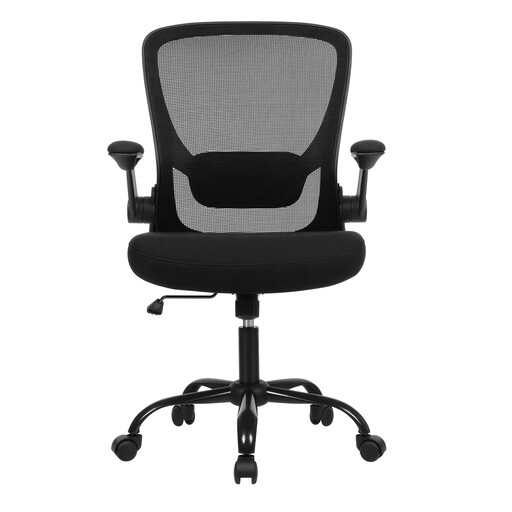
Why this choice suits this profile: This fabric chair is ideal for a first home office setup. It combines a padded seat, adjustable height and foldable armrests to free up space.
The lumbar support and seat height are adjustable, unlike models where the backrest remains completely fixed.
Seat with thick foam, breathable fabric, rocking function and a stated maximum load of 120 kg.
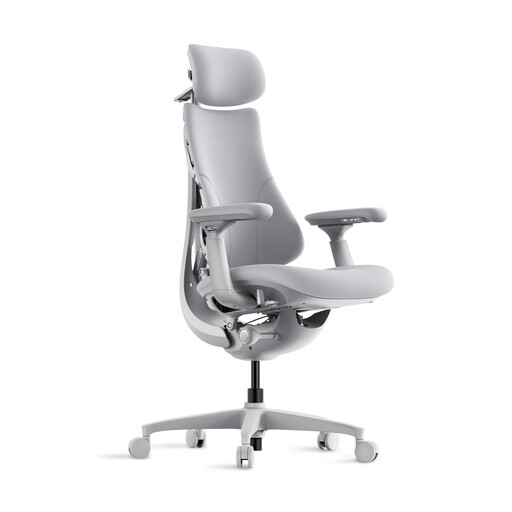
Why this choice suits this profile: With its mesh backrest, 48 cm seat width and height and tilt adjustments, this model targets users looking for a sleek finish for a professional office.
The product page details the main adjustments and the backrest material, rather than relying solely on a vague promise of comfort.
Monobloc structure, mesh backrest and height and tilt tension adjustments.
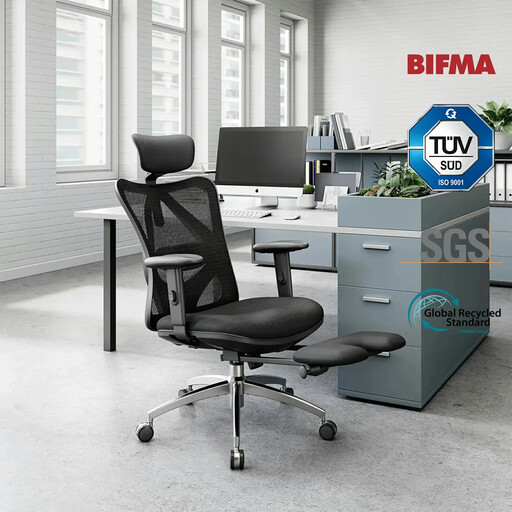
Why this choice suits this profile: This model combines a headrest, lumbar support, footrest and a high mesh backrest. It suits those who alternate between periods of concentration, reclined work and extended breaks.
The five stated adjustments allow you to adapt the backrest, headrest, seat, tilt and armrests to different uses.
Recommended maximum load of 150 kg, breathable backrest, adjustable footrest and castors described as quiet.
We’ve put together a comprehensive, real-time updated list of products that meet these demanding selection criteria as well as European safety standards.
Once assembly is complete, check that every screw is properly tightened and that the various adjustments lock securely. Place the chair facing your desk, then adjust its height so you can keep your feet flat. The top of your screen should be at a height that stops you from constantly tilting your head.
Dust the base, castors and mechanism regularly. To clean a mesh or fabric seat, use a slightly damp cloth and a gentle product that’s compatible with the covering. Avoid sitting on the armrests and never exceed the maximum load stated by the manufacturer.
The price mainly depends on the number of adjustments, the materials, the quality of the structure and the accessories included. A simple chair with adjustable height and lumbar support can be perfectly suitable for moderate use. For long working days, it’s better to compare the available adjustments, weight capacity and dimensions rather than relying on the price alone.
It depends on how often it’s used, the weight it supports, the quality of the mechanism and how well it’s maintained. In daily use, the gas lift, castors and tilt mechanism take the most strain. Examine these parts and check the warranty conditions before placing your order.
Not necessarily. A headrest is mainly useful if you often work in a reclined position or regularly take breaks in your chair. A footrest can improve comfort when the backrest is tilted, but it doesn’t replace a properly adjusted seat for working at a keyboard.