
Livraison le jour même ou le lendemain

Qualité garantie

Débloquez vos offres de bienvenue: Livraison GRATUITE | Jusqu'à -80 % | 30 jours d'essai gratuits à JoyPlus
Téléchargez l'application
An ergonomic office chair can completely transform the comfort of a working day, whether you're studying, gaming or at your desk. But a professional look or the mere mention of "ergonomic" on a product page doesn't guarantee the model will suit you. Height, back support, seat depth and the quality of the mechanisms have a far more tangible impact on a daily basis.
Before buying an ergonomic office chair, here are the common mistakes to avoid, the criteria to examine and a few models suited to different profiles.
A chair equipped with a headrest, footrest, armrests and a tilt mechanism can seem particularly comprehensive. But these elements need to be well positioned and easy to lock into place. A footrest that's too short, a fixed headrest or armrests that prevent you from pulling the chair close to your desk can ruin everyday comfort.
An adjustable office chair must suit your height, but also the height of your desk. In particular, check the seat height adjustment range, the seat width and the overall height including the headrest. A seat that's too deep can stop your back from resting properly against the backrest, while a seat that's too short provides less effective support for your thighs.
A breathable mesh office chair allows air to circulate, which can make a real difference in a heated room or during long sessions. Faux leather is easier to clean, but it retains more heat. Fabric offers a softer feel, provided you're happy with potentially more demanding maintenance and a greater susceptibility to stains.
Lumbar support shouldn't be presented as a medical solution. It's first and foremost a design feature intended to support the lower back. Where possible, choose a backrest where the support can be adjusted in height or depth.
A seat with a waterfall front edge, like the W-shaped seat with a "waterfall" edge featured on the SIHOO M18, can change the pressure distribution under your thighs. However, the result depends on your body shape and your position at the desk.
For a versatile chair, look at the tilt range and whether there's a locking system. A reclining office chair with multiple positions suits people who switch between focused work, reading and breaks. The GTIMEX claims a range of 90 to 170 degrees, while the SIHOO B100JT offers three angles: 110°, 123° and 135°.
A steep recline alone doesn't turn a chair into a good work chair. The backrest needs to remain stable, and the footrest, if present, must be fully extended before use.
The maximum weight capacity should be considered alongside your own weight and intended use. Several models featured here claim a capacity of up to 150 kg. This information obviously doesn't replace the need to follow the assembly and usage instructions.
The mentions of BIFMA and SGS appear in the descriptions of some products. Treat these as information stated on the product page and, where possible, check the corresponding documents. Also check for the presence of an instruction manual, the identity of the manufacturer or the responsible party established in the European Union, as well as the return conditions.
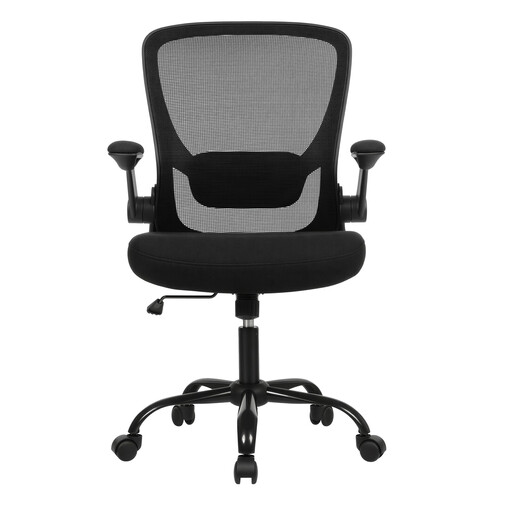
Why this choice suits this profile: This chair, designed for working from home, offers adjustable height, adjustable lumbar support, foldable armrests and a breathable fabric upholstery. It will easily find its place in a simple, compact workspace.
The stated adjustments are clearly detailed and a rocking function is included for breaks. The maximum weight capacity stated is 120 kg.
Padded seat, breathable fabric, foldable armrests and castors described as quiet.
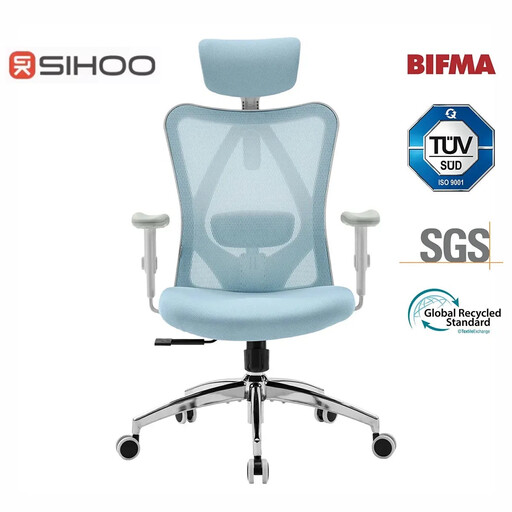
Why this choice suits this profile: Its high backrest, adjustable headrest, adjustable armrests and lockable tilt at 126° allow for a more personalised setup, ideal for a main desk.
The product page states an adjustable height of 8 cm, 360° rotation and a maximum capacity of 150 kg, rather than relying on a vague promise of comfort.
Breathable mesh, high-density foam, adjustable lumbar support and stated BIFMA and SGS certifications.
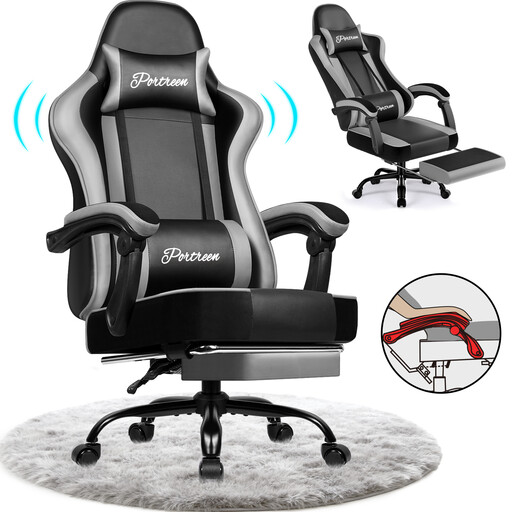
Why this choice suits this profile: This ergonomic gaming chair is aimed at those who switch between gaming, work, reading and relaxing. The backrest reclines from 90 to 170° and the footrest supports you during breaks.
The footrest is built on a metal frame and must be fully extended and locked before use. The PU upholstery can be simply cleaned with a cloth.
Stated recline from 90 to 170°, headrest, lumbar support, high-density foam seat and maximum weight capacity of 150 kg.
We've put together a comprehensive, real-time updated selection of products that meet these demanding criteria, while also taking European safety regulations into account.
When it arrives, take a few minutes to check the following points:
A chair designed for long sessions doesn't mean you can skip changing position regularly or taking breaks. Comfort also depends on the height of your screen, the distance between you and your desk, and the space available around the seat.
Start by placing your feet flat on the floor. Your knees should be at a height close to, or slightly below, your hips. Then adjust the armrests so that your shoulders remain relaxed and you can pull the chair close enough to your desk.
No. The shape and position of the lumbar support must match your body shape and the way you sit. Support that is too pronounced can become uncomfortable. Test several adjustments and consult the manual to find out what adjustment options are available.
It all depends on how often it's used, the weight it supports, the type of floor and the level of maintenance. Sticking to the maximum weight capacity, avoiding sitting on the armrests and regularly checking the fixings can help prevent premature wear.