
Livraison le jour même ou le lendemain

Qualité garantie

Débloquez vos offres de bienvenue: Livraison GRATUITE | Jusqu'à -80 % | 30 jours d'essai gratuits à JoyPlus
Téléchargez l'application
An ergonomic office chair can significantly improve your comfort at work, but marketing promises alone aren’t enough to make the right choice. Remote workers, students, office employees and managers often run into the same problems: a seat that’s too firm, a backrest that doesn’t move with you, or adjustments that aren’t practical for daily use.
Before you place an order, three pitfalls deserve your attention.
An adjustable office chair should at least let you change the seat height and the backrest angle. Adjustable armrests are also very practical: they allow you to bring your forearms closer to the desk and avoid working with your shoulders constantly raised.
Depending on the model, you may also find:
The number of adjustments isn’t everything. Pay attention to their range and make sure they’re easy to operate. A complicated or overly stiff adjustment is likely to go unused.
A mesh office chair improves air circulation around your back, a welcome benefit in a heated room or during long work sessions. On the flip side, the tension of the mesh and the shape of the backrest have a direct impact on support.
A high-density foam seat will generally hold its shape better than very soft padding. However, comfort also depends on its width, depth and the finish of its front edge. A so-called “waterfall” edge can reduce pressure under your thighs, but it doesn’t replace an adjustment suited to your height.
If you go for a black office chair, also think about the materials and how to care for them: mesh can usually be dusted with a soft brush or vacuum cleaner, while padded surfaces sometimes need more delicate cleaning.
If you’re looking for an office chair with a 150 kg capacity, don’t stop at the number shown. The stated capacity usually refers to a maximum static load. It doesn’t mean the chair can be used as a step ladder or withstand sudden movements.
Also check:
The models below state a maximum capacity of 150 kg. Always follow the instructions, assemble each part carefully and regularly check the screws and mechanisms.
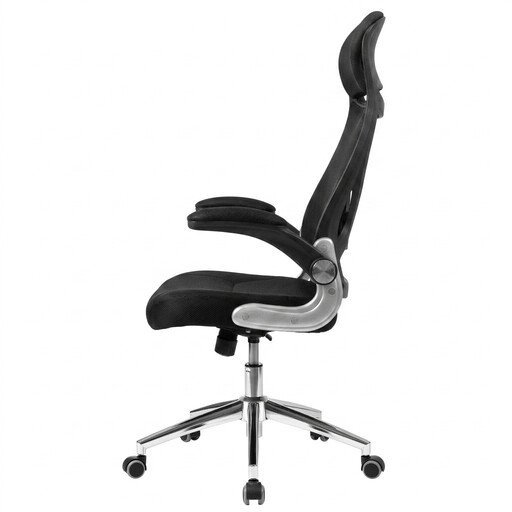
Why this model suits this profile: It brings together the essential features for setting up a first home workspace: adjustable height, reclining backrest and foldable armrests.
The product page details the available adjustments instead of just making a vague ergonomic claim: height, tilt and adjustable backrest. The armrests fold away so you can easily slide the chair under the desk.
Headrest and lumbar support stated, foam seat, rocking function and maximum static load of 150 kg.
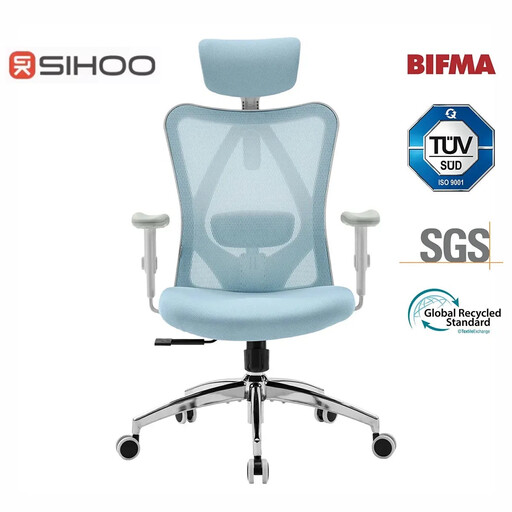
Why this model suits this profile: Its many adjustments, high backrest and Morandi Blue finish bring a more refined touch to the office, without sacrificing the adjustments that really matter.
The product page specifies the lockable recline up to 126°, the height adjustment range of 8 cm and the various adjustable elements, rather than just claiming ergonomics without explanation.
Adjustable headrest, polyurethane adjustable armrests, 360° rotation and BIFMA and SGS certifications stated on the product page.
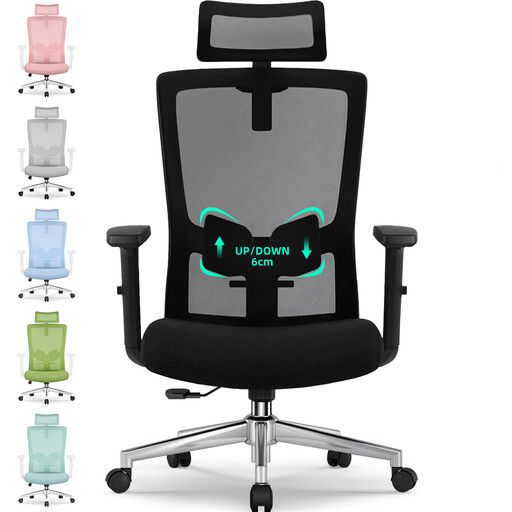
Why this model suits this profile: This chair is aimed at users who switch between focused work, reading and breaks, with a detailed recline and a 50 × 53 cm seat.
The lumbar support is stated as adjustable by 6 cm and the backrest can lock at 90° or recline up to 135°. These details let you compare the mechanism concretely.
Headrest adjustable by 11 cm, recline stated up to 120°, mesh backrest and maximum capacity of 150 kg.
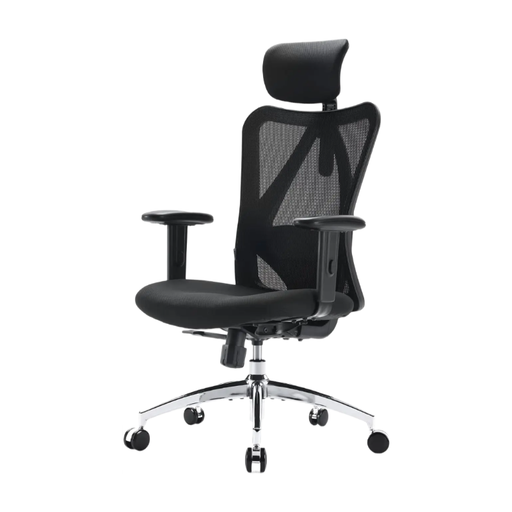
Why this model suits this profile: Its mesh backrest, padded W-shaped seat and five stated adjustments adapt to a workstation used for working, studying or attending meetings.
The product page details the adjustments for back support, headrest, height, recline and armrests. It also describes an eight-step assembly process.
Breathable backrest, high-density foam seat, 360° rotation, maximum capacity of 150 kg and a stated three-year warranty.
We’ve put together a complete selection, updated in real time, of products that meet these demanding criteria as well as European safety standards.
A well-adjusted chair should form a coherent whole with your desk. Start by placing your feet flat on the floor, then adjust the height so that your forearms are roughly horizontal. Next, position the lumbar support at the natural curve of your back and adjust the headrest without pushing your head forward.
To make your chair last:
Start by adjusting the height, then the seat depth if the model allows it. Your back should be supported without you having to arch or strain. Next, adjust the armrests to the height of your desk and choose a stable recline for typing. The headrest is mainly useful when the backrest is reclined or during a break.
Its lifespan depends on how often it’s used, the weight it supports, the quality of the mechanisms and how well it’s maintained. Regular inspection helps you spot a worn castor, a loose screw or a stiff adjustment. The stated certifications and warranties are useful to check, but they don’t replace following the instructions.
Not necessarily. A headrest can be useful if you alternate between work and a reclined position, especially for reading or attending meetings. For mainly typing-based use, seat height, lumbar support, armrests and seat depth are generally the priority.