
Livraison le jour même ou le lendemain

Qualité garantie

Débloquez vos offres de bienvenue: Livraison GRATUITE | Jusqu'à -80 % | 30 jours d'essai gratuits à JoyPlus
Téléchargez l'application
An ergonomic office chair can make a real difference to your comfort at work, while studying or during your downtime – but not every model suits every need. A fixed lumbar support, a seat that’s too shallow or a poorly positioned headrest can leave you feeling uncomfortable after just a few hours.
Before you choose an ergonomic office chair for working from home, it’s worth separating the marketing claims from the features you can actually verify.
A chair marketed as “multi-adjustable” isn’t necessarily right for your body shape. Check exactly what functions are offered: seat height and depth, backrest tilt, mechanism tension, lumbar support position and armrest adjustment.
A backrest that reclines to 125° isn’t the same as one that adjusts to 135° or 170°. It all depends on your habits – focused work at a screen, reading, relaxing in a reclined position or gaming.
A bulky cushion isn’t necessarily well placed. The lumbar support should match the height of your lower back without pushing you too far forward. Some models offer adjustable or dynamic lumbar support, but you also need to check the overall height of the backrest and whether the headrest can be adjusted.
A breathable mesh office chair generally promotes air circulation, which can be a real plus in a heated room or during long sessions. On the other hand, a padded seat will suit those who prefer a more enveloping feel.
Also remember to measure the space under your desk. Foldable armrests make storage easier, but their height and width still need to be compatible with your work surface.
An adjustable office chair should let you keep your feet flat on the floor with your knees close to a right angle. When seated, your shoulders should stay relaxed and your forearms should be able to rest on the desk without you having to lift them.
Check the advertised height range. For example, the JOYFURNOS Ink Black Mesh model offers an adjustable seat height of 46 to 54 cm, while some listings only mention the total chair height – a less useful figure for judging the actual fit.
A reclining office chair is designed to let you vary your position, not to stay constantly leaning back. Look carefully at the angles stated: 110°, 123° and 135° each correspond to different positions, while a range of 90° to 170° covers a wider variety of uses, including relaxation time.
The lumbar support, headrest and armrests should all work together. An adjustable headrest can be useful during breaks, but it shouldn’t push your head forward when you’re using the keyboard.
Check the maximum recommended weight capacity as well as the design of the base. The models featured here state a capacity of 120 or 150 kg, depending on the reference. This figure doesn’t replace the manufacturer’s instructions and doesn’t mean the chair is suitable for every use.
The castors, gas lift and base should be suited to your floor type. A protective mat can help prevent marks on wooden or soft flooring. For maintenance, mesh and fabric can be dusted with a soft cloth, while faux leather should be cleaned with a non-abrasive product.
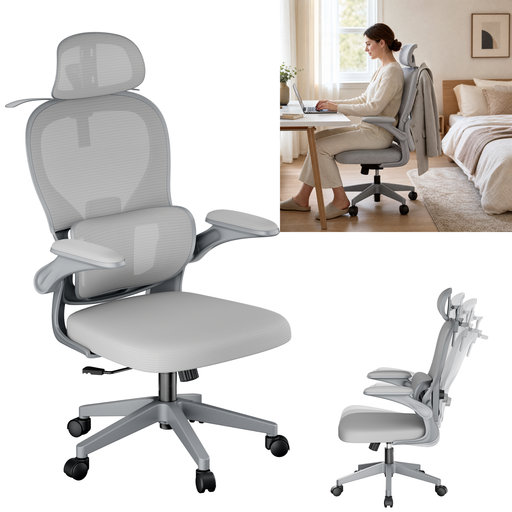
Why this choice suits this profile: Its adjustable height, headrest and 125° tilt bring together the essential features for setting up a first home office or study space.
The listed features are concrete – adjustable height, reclining backrest and foldable armrests – rather than a vague promise of comfort.
Headrest, 125° tilt, foldable armrests and a choice between grey or black finish.
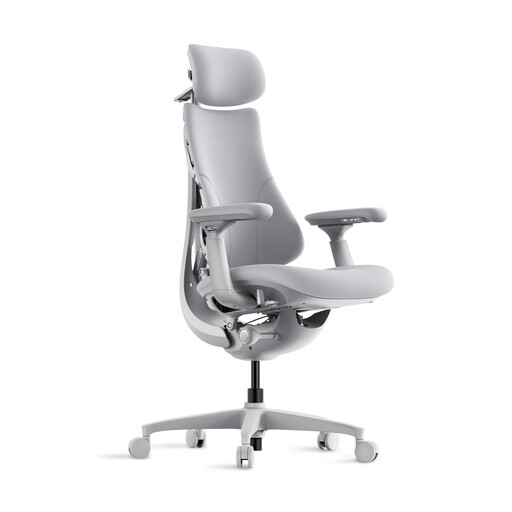
Why this choice suits this profile: With its stated 48 cm seat width, mesh backrest and height and tilt tension adjustments, this chair is designed for daily office use.
The product page details the dimensions, backrest material and adjustment controls, allowing a concrete comparison with other models.
48 cm seat, breathable mesh backrest and advertised monocoque construction.
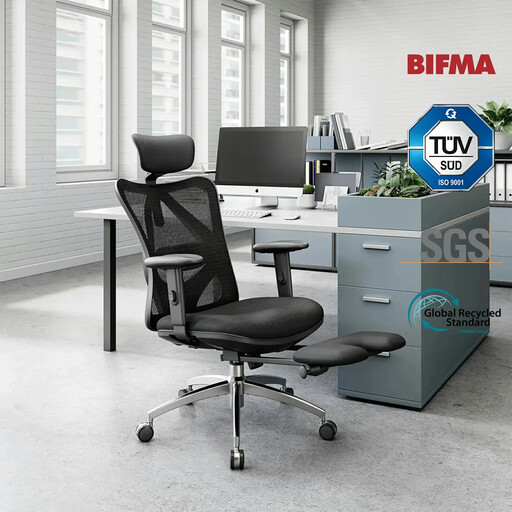
Why this choice suits this profile: With its footrest, five advertised adjustments and a maximum recommended weight capacity of 150 kg, this chair is aimed at long work, study or gaming sessions.
The footrest is clearly presented as a relaxation feature, not a substitute for proper seat and backrest adjustment.
High mesh backrest, adjustable headrest and lumbar support, adjustable footrest and advertised silent castors.
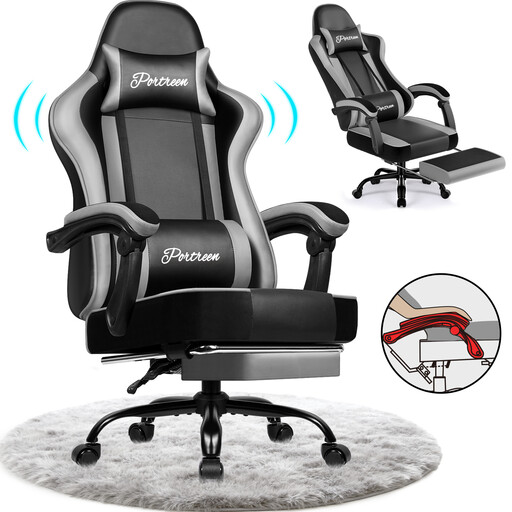
Why this choice suits this profile: This ergonomic gaming chair combines a padded seat, height-adjustable backrest and an advertised tilt range of 90° to 170° for gaming, reading or taking a break.
The product page specifies the tilt range, the 150 kg maximum weight capacity and the precautions related to the footrest – all points to check before use.
90° to 170° tilt, headrest, lumbar support, telescopic footrest and advertised water-repellent faux leather upholstery.
We’ve put together a comprehensive, real-time updated selection of products that meet these demanding criteria and European safety standards.
Start by adjusting the height so your feet are flat on the floor. Then adjust the seat depth so the front edge doesn’t press against the back of your knees. Position the lumbar support at the level of your lower back, then bring the armrests close to the desk without raising your shoulders.
The lifespan depends on the weight supported, frequency of use, the mechanism and how well it’s maintained. There’s no universal figure. For daily use, check the warranty terms, the availability of spare parts and the weight guidelines before you buy.
It can be handy during breaks or when the backrest is reclined. For typing and video calls, your working position needs to stay stable, with your feet properly placed and your back supported. The footrest should complement the chair’s adjustments, not replace them.