
Livraison le jour même ou le lendemain

Qualité garantie

Débloquez vos offres de bienvenue: Livraison GRATUITE | Jusqu'à -80 % | 30 jours d'essai gratuits à JoyPlus
Téléchargez l'application
Stuck in the wrong chair for eight hours a day? It's an ordeal many are discovering, especially with the rise of remote work. Lower back pain, a stiff neck, chronic fatigue... No, this isn't inevitable, but often the direct result of poor equipment. The ergonomic office chair market is a jungle of marketing promises, but be warned: not all chairs are created equal.
Before you pull out your credit card, it's crucial to know how to spot the pretenders. Here are the three most common pitfalls that turn a promising purchase into a costly disappointment.
To make the right choice, focus on objective and verifiable features. Two parameters are non-negotiable to guarantee both comfort and durability.
A chair is only truly ergonomic if it adapts to you, not the other way around. Scrutinise the chair for the following adjustments:
The lifespan of your investment is directly linked to the quality of its construction.
To help you see how these criteria apply in practice, here are a few models suited for different profiles.
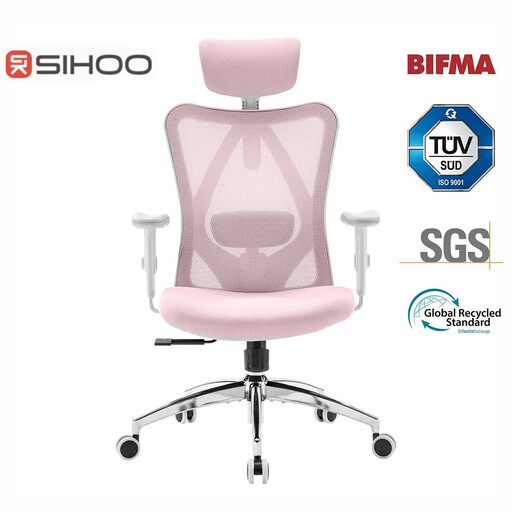
Why it's a match: Perfect for long workdays, this chair offers a full arsenal of adjustments. It's an excellent ergonomic chair for remote work that combines support and adaptability without compromise.
It bypasses the “gimmick” lumbar support trap with a fully adjustable system. Its mesh, advertised as high-quality, directly addresses the issue of material durability.
4-point ergonomic support (head, back, hips, hands) and a BIFMA-certified structure (static pressure tests). The lifetime warranty mentioned by the manufacturer is a real bonus.
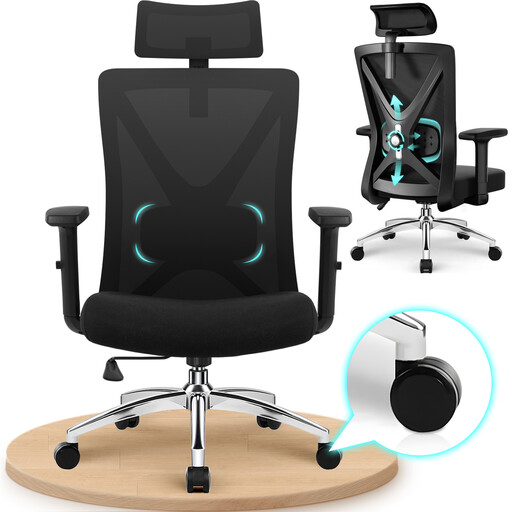
Why it's a match: Built for durability, this executive chair supports up to 150 kg. Its advanced adjustments, especially the lumbar support, make it a top-tier choice for intensive use or larger body types.
It tackles the “one-size-fits-all” trap by offering precise lumbar adjustment for both height (6 cm) and depth (3 cm), allowing for fine-tuned customisation. Its robust base and gas lift, tested for 150,000 cycles, check the box for durability.
High load capacity of 150 kg and an 8 cm natural foam seat cushion for lasting comfort. The depth-adjustable lumbar support is a real asset.
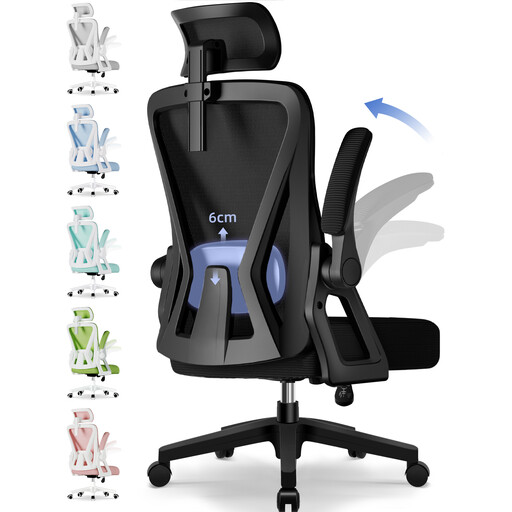
Why it's a match: Ideal for those who like to switch between focus and relaxation. Its recline of up to 135° and flip-up armrests give it impressive versatility, whether for working, reading, or taking a break.
This model focuses on functional adjustments, not gimmicks. The 90° flip-up armrests are a great feature for sliding the chair under a desk, and the wide recline range allows for true relaxation, going far beyond a simple tilt.
Generous recline (up to 135°) and flip-up armrests. The frame is also certified to support up to 150 kg, a guarantee of stability and safety.
We have curated a full range of products that meet our strict selection criteria and current safety standards.
It all depends on the quality of the materials and how you use it. A good model with a metal base, a certified gas lift, high-density foam, and durable mesh can easily last 7 to 10 years. The warranties offered by manufacturers are an excellent indicator. For example, a multi-year or even lifetime warranty on certain parts, as seen with the SIHOO model, speaks to the manufacturer's confidence in its product's longevity.
Yes, but on one condition: it must be well-designed. Good lumbar support helps maintain the natural "S" curve of the spine, which reduces pressure on the intervertebral discs and prevents back pain. The crucial point is that it must be height-adjustable to fit perfectly into the small of your back. A fixed, poorly positioned support would even be counterproductive.
Follow these simple steps to find your ideal posture: