
Livraison le jour même ou le lendemain

Qualité garantie

Débloquez vos offres de bienvenue: Livraison GRATUITE | Jusqu'à -80 % | 30 jours d'essai gratuits à JoyPlus
Téléchargez l'application
Whether you're in the office or working from home, spending hours glued to your chair eventually takes its toll. Back pain, neck tension, tight shoulders... it's an all-too-familiar story. Investing in an ergonomic office chair isn't a luxury; it's a necessity for protecting your health and staying focused.
But with an overwhelming number of options on the market, how do you navigate the choices? Our guide is here to decode the marketing jargon and give you the keys to making the right decision. We've analysed dozens of models to distil it down to the essentials: objective criteria and reliable recommendations to help you find the chair that will transform your workday.
Before diving into our top picks, let's review the crucial points that should guide your choice.
A good ergonomic chair should adapt to you, not the other way around. This means it needs to be fully adjustable. Look for the following settings:
Back pain is often the number one reason for buying an ergonomic chair. Good lumbar support is therefore non-negotiable. Prioritise a model where this support is adjustable in height and, ideally, in depth. The goal is to perfectly match the natural curve of your lower back to maintain a healthy posture, even after hours of work.
The materials determine both the comfort and the lifespan of your chair. Mesh backrests are highly sought after for their breathability—a real plus during long workdays, especially in the summer. For the seat, high-density foam is the key to lasting comfort that won't sag after a few months.
Finally, a detail that's anything but minor: check the maximum weight capacity of the chair. For peace of mind and rock-solid durability, an office chair with a 150 kg capacity provides a sturdy foundation suitable for most body types.
Here are the models that caught our eye for their excellent ergonomics-to-price ratio and user-centric design.
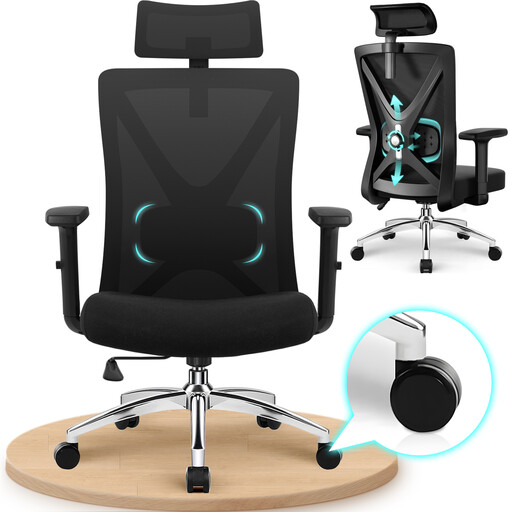
Why It Stands Out
This model goes further than most of its competitors in terms of ergonomics. Its seat, featuring a medium-firm 8 cm natural sponge cushion, is designed for ideal pressure distribution. Most importantly, its lumbar support is adjustable not only in height (by 6 cm) but also in depth (by 3 cm)—a 2D adjustment that is still rare in this price range.
Key Features
Who Is It For? For professionals who spend long days seated and demand maximum adjustability to find the perfect posture. Its sturdiness and 150 kg capacity also make it an excellent choice for larger individuals or anyone looking for a durable work-from-home chair built to last.

Why It Stands Out
Here, practicality is the priority. Its masterstroke? Flip-up armrests that allow the chair to slide completely under the desk—a huge space-saver for small rooms. Its wide 53 cm seat and thick foam cushion make it a comfortable office chair, even for long sessions.
Key Features
Who Is It For? The smart choice for students and remote workers who are short on space (studios, bedrooms, home office corners). Its functional design and solid comfort level make it a versatile and effective solution for daily use.
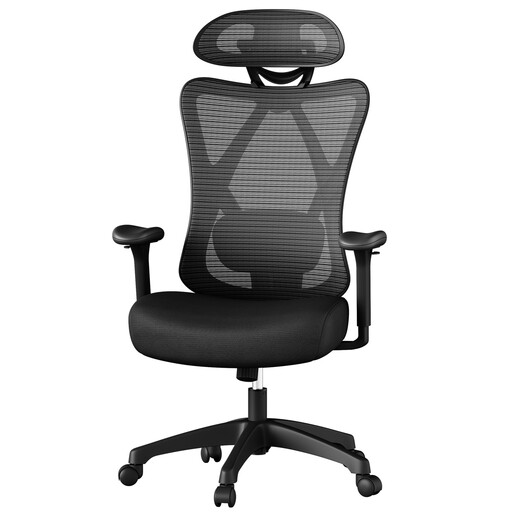
Why It Stands Out
This model focuses on the dual strengths of durability and versatility. With its 150 kg maximum load capacity and multiple tilt angles, it effortlessly transitions from focused work sessions to moments of rest. The adjustable lumbar pillow and headrest provide targeted support for the lower back and neck, which is essential for good posture.
Key Features
Who Is It For? For those looking for an all-rounder chair that is both versatile and highly durable. It's perfectly suited for heavier individuals or anyone who enjoys a deep recline for a relaxing break.
The models in our selection prioritise function over form, featuring a fairly classic office aesthetic. If your interior calls for a more distinctive design, such as grey chairs with black legs, feel free to explore our other collections to find that hidden gem that will match your decor.
1. What is the difference between a standard office chair and an ergonomic one? A standard chair simply provides a place to sit. An ergonomic office chair, on the other hand, is a tool designed to adapt to your body through a multitude of adjustments (height, armrests, lumbar support, tilt, etc.). Its purpose is to promote a healthy posture and prevent musculoskeletal disorders (MSDs) associated with prolonged sitting.
2. How do I properly adjust my office chair for working from home? The golden rule: start with the seat height to ensure your feet are flat on the floor. Next, adjust the lumbar support so it fills the curve of your lower back. Set the armrests so your forearms rest on them naturally with your shoulders relaxed. Finally, make sure the top of your monitor is at eye level to avoid straining your neck.
3. Is there an adjustment period for a new ergonomic chair? Yes, and that's completely normal. If your body has developed poor postural habits, a chair that encourages you to sit up straight might feel strange or even uncomfortable at first. Ease into it gradually: start by using it for a few hours a day, then increase the duration. This gives your muscles the time they need to gently readjust to proper support.