
Livraison le jour même ou le lendemain

Qualité garantie

Débloquez vos offres de bienvenue: Livraison GRATUITE | Jusqu'à -80 % | 30 jours d'essai gratuits à JoyPlus
Téléchargez l'application
Remote work, office life, gaming… long hours spent sitting put our bodies under serious strain. Neck tension, lower back pain, general fatigue?: if this sounds familiar, your chair is likely the main culprit. Far from being a luxury, a good ergonomic office chair is a true investment in your health and productivity.
But with an overwhelming number of options on the market, how do you find your way?? Our mission is simple: to guide you with clear criteria and practical advice to find THE ergonomic office chair that fits your body and your needs—all without the unnecessary marketing jargon.
Before diving into our selection, let's review the key features that will make all the difference in your daily comfort.
A good ergonomic office chair should conform to the natural curve of your spine, not the other way around. This is where lumbar support comes in: it's the central element that prevents lower back pain by maintaining a healthy posture. Whether it's fixed or, ideally, adjustable in height and depth, this is a non-negotiable feature if you spend more than two hours a day in front of a screen.
True ergonomics means the chair adapts to you, not the other way around. Make sure you can adjust the following elements:
The upholstery directly affects your comfort and the chair's durability. Mesh is the champion of breathability, perfect for long days or summer heat. Fabrics, like Sherpa, offer a cosier seat and a warm decorative touch.
Don't overlook the base: a metal frame is a guarantee of sturdiness compared to plastic. The casters should be suitable for your flooring (soft for hardwood/tile, hard for carpet) for smooth, scratch-free movement. After all, a designer office chair that complements your interior is also a key consideration, especially when working from home.
Here are three options that stand out for their features, design, and target audience.
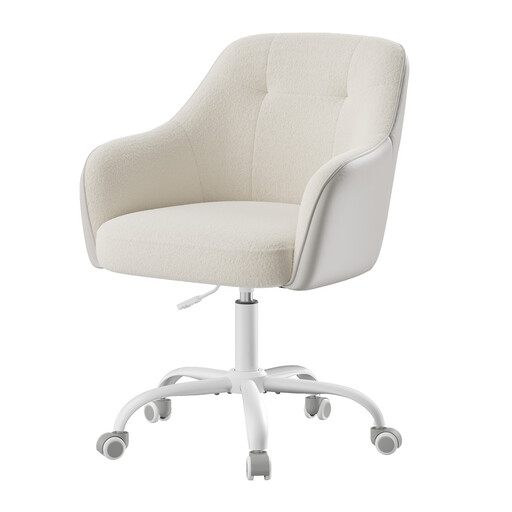
Why It Stands Out
This model proves that an office chair doesn't have to look austere. It goes all-in on a Scandinavian design and a cocoon-like seat thanks to its Sherpa fabric upholstery. Soft, warm, and elegant, its cappuccino beige colour and clean lines make it a statement piece of furniture, perfect for a home office corner that blends into the living room decor.
Key Strengths
Who Is It For?
For those who prioritise style and comfort for daily use (up to 4-5 hours a day) and want a chair that integrates harmoniously into their home, whether in an office, living room, or student dorm.
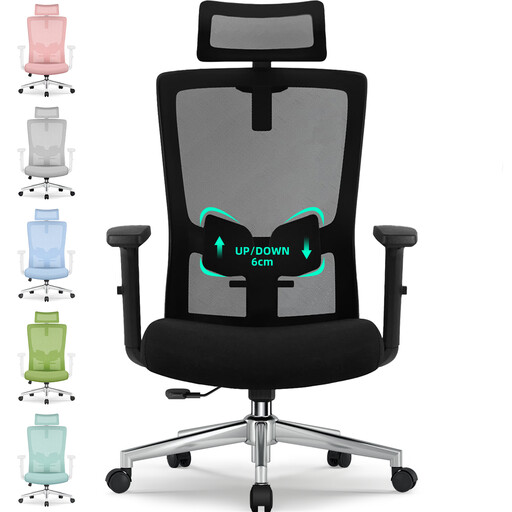
Why It Stands Out
Here, we're taking things up a notch. This office chair is built for long days and demanding users. Its main strength? Advanced ergonomics with a lumbar support adjustable by 6 cm and a fully adjustable headrest. The BIFMA and SGS certifications aren't just acronyms: they guarantee robustness and safety that have been tested and approved for intensive use.
Key Strengths
Who Is It For?
For professionals working intensively from home and anyone who spends more than 6 hours a day sitting. It's the logical choice for anyone looking to invest in active back pain prevention through precision adjustments.
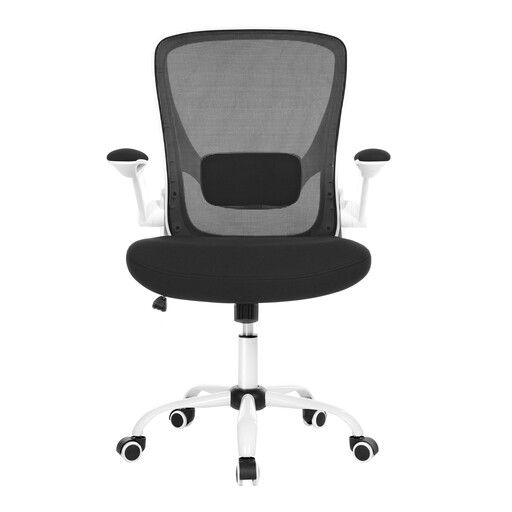
Why It Stands Out
This is the smart choice that combines essential ergonomics with a killer feature for small spaces: flip-up armrests. Once raised, they allow the chair to slide completely under the desk. No more chair getting in the way!
Key Strengths
Who Is It For?
For students and remote workers who need to optimise every square inch. It's the perfect solution for anyone looking for a functional, comfortable, and discreet remote work chair once the day is done.
Our mission is to help you find the chair that's right for you. If these three models don't check all your boxes, explore our complete collection to discover other styles, features, and price points.
? Discover our entire collection of Ergonomic Swivel Chairs
1. What's the difference between a standard office chair and an ergonomic one?
A standard chair simply gives you a place to sit. An ergonomic office chair is a tool designed for your well-being: thanks to its multiple adjustments (height, lumbar support, armrests…), it adapts to your body to actively support good posture, reduce fatigue, and prevent pain.
2. Is there an adjustment period for an ergonomic chair?
Yes, and that's a good sign! Expect it to take a few days, or even a week. If your old chair was unsuitable, your body likely compensated with poor posture. An ergonomic chair gently "retrains" you to maintain a proper position. The feeling might be strange at first, but it will quickly become natural and, most importantly, much more comfortable.
3. How do I properly adjust my ergonomic office chair?
It's a simple routine to adopt. 1. Height: Your feet should be flat on the floor, with your knees at a 90° angle. 2. Depth: Slide 2-3 fingers between the seat and the back of your knees. 3. Lumbar Support: Position it in the small of your back. 4. Armrests: Your forearms should rest on them naturally, without your shoulders shrugging. Don't hesitate to fine-tune these settings over the first few days to find your ideal position.