
Livraison le jour même ou le lendemain

Qualité garantie

Débloquez vos offres de bienvenue: Livraison GRATUITE | Jusqu'à -80 % | 30 jours d'essai gratuits à JoyPlus
Téléchargez l'application
Spending hours glued to your desk, whether at home or in the office, can quickly become an ordeal. Poor posture can lead to nagging back pain and fatigue. Choosing a true ergonomic office chair isn't a luxury; it's a genuine investment in your health and productivity. Faced with a jungle of marketing promises and technical jargon, it's easy to get lost. This guide is here to help you avoid the pitfalls and identify the features that truly matter to find the perfect comfortable office chair for you.
Before you even start comparing models, let's learn to spot the common misconceptions and gimmicky features that inflate the price for no reason.
The Purely Decorative "Lumbar Support": Many chairs feature some kind of lumbar reinforcement. The problem? If it's fixed, chances are it won't be in the right spot for your back. Poorly positioned support can do more harm than good. A true adjustable lumbar support (in height and ideally depth) isn't an option—it's a requirement.
Fabrics That Make You Sweat: Faux leather or certain low-end fabrics may be easy on the eyes, but they quickly turn into a furnace. After a few hours, heat and moisture build up, and discomfort is just around the corner. A mesh office chair or a high-quality technical fabric ensures unmatched air circulation to keep you cool, even during long work sessions.
Fixed or Overly Basic Armrests: Armrests that aren't height-adjustable force you to shrug your shoulders, which is a surefire way to cause neck strain. If they can't be retracted or adjusted for depth, they'll prevent you from tucking the chair under your desk. Demand 2D armrests (height-adjustable) at a minimum, and if possible, aim for 3D or 4D models for a perfect fit.
To avoid buyer's remorse, focus on the technical specifications that truly make a difference, especially if you want to put an end to back pain.
A good home office chair should adapt to your body, not the other way around. Beyond simple seat height adjustment, here are the essential adjustments:
The longevity of your chair depends on the quality of its construction. A metal base (steel or aluminum) will always be more robust than a plastic one. The density of the seat foam is also a crucial point: high-density foam won't sag after six months. For the backrest, the mesh office chair remains the star for its breathability and flexibility, which allow it to conform to the shape of your back.
Because every user is unique, here are a few models that caught our attention, each meeting a specific need.
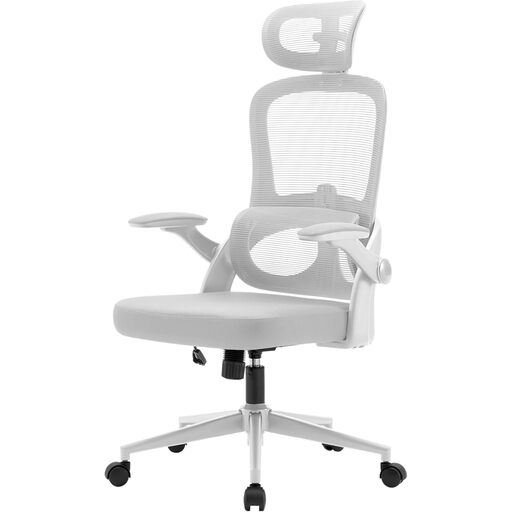
Why we love it: Perfect for the home office, this model is a true Swiss Army knife. Its flip-up 3D armrests allow it to slide under the desk to save space. With its modern design and light color, it will blend elegantly into your decor.
Its lumbar support is height-adjustable by 6 cm, allowing for a precise fit where competitors often impose a fixed support. Its armrests, both flip-up and multi-directional, prevent strain and never get in the way.
The perfect balance between comprehensive ergonomic adjustments (headrest, lumbar, 3D armrests) and practical details designed for the home, like the popular retractable armrests.
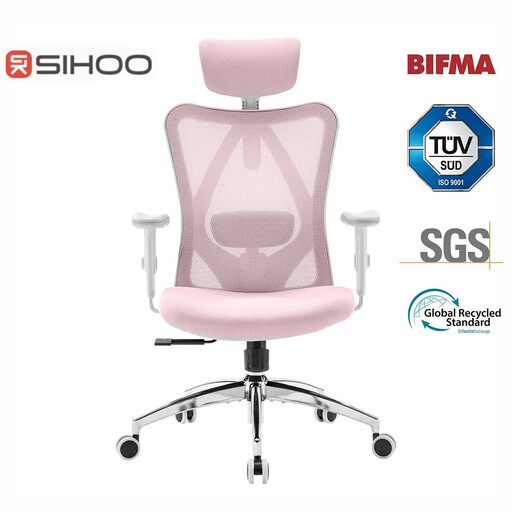
Why we love it: For those who refuse to choose between comfort and aesthetics, this Sihoo chair stands out with its bold color. It injects a dose of personality into an office, a student's room, or a living room, without ever sacrificing ergonomics.
Its breathable mesh back saves you from overheating, a deal-breaker on many stylish but impractical chairs. It includes an adjustable lumbar support and headrest for optimal support.
It combines full ergonomic support (head, back, lumbar, arms) with a look that's sure to turn heads. Its frame, tested to withstand high pressure (according to the manufacturer), supports up to 150 kg.
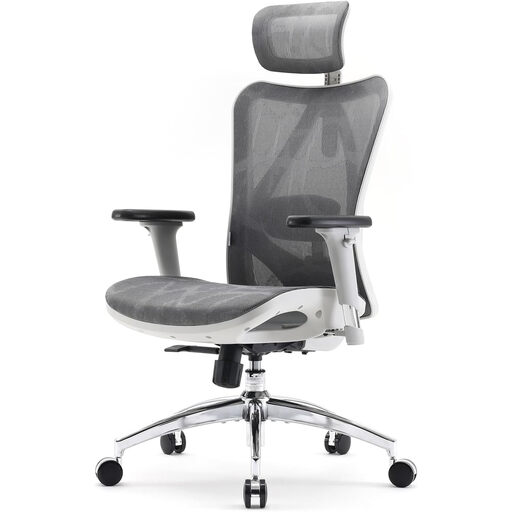
Why we love it: Built for office marathoners, this chair impresses with its sturdy steel frame and generous size, perfect for tall or larger individuals. Its certified maximum load of 150 kg is a guarantee of rock-solid stability.
Its 3D armrests (adjustable in height, depth, and angle) allow for a precision fit for your forearms. Say goodbye to shoulder tension caused by fixed armrests, a classic pitfall for anyone who spends hours at their desk.
Its steel frame and S-shaped high back, combined with an adjustable lumbar support, guarantee support and durability that can handle the most intensive use and larger body types.
Explore our full selection of chairs that meet our demanding selection criteria.
For the perfect posture, here's the checklist:
It all depends on the quality of the materials and how you use it. A model with a metal base, solid casters, and a certification (like the BIFMA standard) is built to last for many years. The manufacturer's warranty period (often 3 years or more) is also an excellent indicator of the product's reliability.
For many, the answer is a resounding yes, and for good reason! The number one advantage of a mesh office chair is its breathability: goodbye to a sweaty back after a long meeting. This fabric also offers flexible support that adapts to your body shape. While some may prefer the feel of a foam seat, the ventilation of mesh is a decisive advantage for long workdays.