
Livraison le jour même ou le lendemain

Qualité garantie

Débloquez vos offres de bienvenue: Livraison GRATUITE | Jusqu'à -80 % | 30 jours d'essai gratuits à JoyPlus
Téléchargez l'application
Whether you're working from home or in the office, spending hours sitting down has become the norm. The problem? The wrong chair can quickly turn a productive day into a nightmare for your back and a major source of fatigue. The market is flooded with chairs labelled "ergonomic," but how can you tell a genuine health solution from a mere marketing gimmick?
As the Head of Product Recommendations at Joybuy, I'm here to help you make sense of it all. Together, we'll break down the common pitfalls to avoid and the essential criteria for making an informed decision that's perfectly suited to your body and your needs.
Before diving into the technical details, let's debunk the most common mistakes that lead to a purchase you'll bitterly regret.
To make a smart investment, focus on the features that have a direct impact on your posture and daily well-being.
A good office chair for back pain must have adjustable lumbar support. A simple integrated cushion or a fixed curve in the backrest is far from sufficient. Look for a mechanism that allows you to adjust the support for height and, ideally, depth. This lets you position the support precisely in the small of your back, promoting a healthy posture and reducing strain.
The ability to recline your chair is fundamental for moving and varying your posture throughout the day. There are two main types of systems:
The lifespan of your chair depends directly on the quality of its components. Three points should be checked scrupulously:
To put theory into practice, here are a few models that suit different user profiles, all selected based on our criteria for adjustability, durability, and functionality.
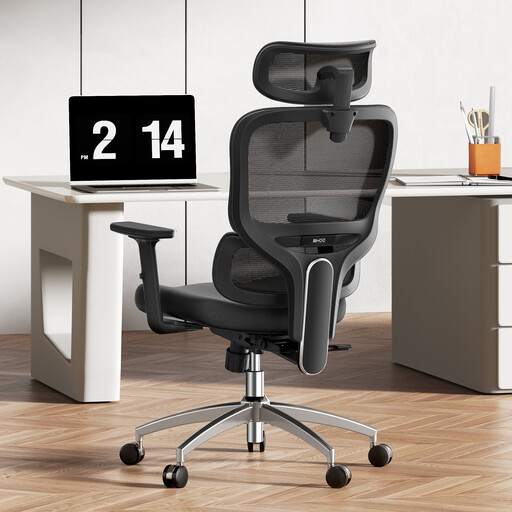
Ideal for: Perfect for those who work long hours and require fine-tuned adjustments to stay focused and comfortable all day long.
This model knocks out fake ergonomics with its 3D dynamic lumbar support, which not only adjusts for height but also follows your body's movements.
Its breathable mesh back prevents overheating during long work sessions. The multitude of adjustments (headrest, armrests, etc.) allows for a fully customised fit.
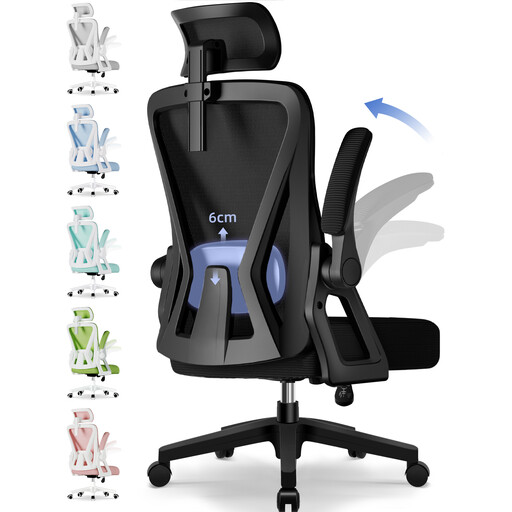
Ideal for: Designed for larger body types or anyone looking for an investment built to last for years.
There are no unpleasant surprises here: the 150 kg weight capacity is clearly stated and backed by a gas lift and base designed to handle the load.
Its standout feature: a recline of up to 135° for genuine relaxation breaks. With all its adjustments (lumbar, headrest, armrests), it's one of the most comprehensive chairs in its category.

Ideal for: The perfect solution for working from home, student dorms, or anywhere that every square inch counts, without breaking the bank.
It proves that an affordable price doesn't mean making compromises: it includes real adjustments (lumbar support, tilt) where competitors often just offer a fixed design.
Its clever feature: the flip-up armrests. When raised, the chair slides completely under the desk to free up precious space.
Explore our full selection of chairs that meet our quality criteria and safety standards.
A chair's lifespan depends primarily on the quality of its materials and the intensity of its use. An entry-level model will last between 2 and 5 years, while a high-quality chair with a Class 4 gas lift and a metal base can easily last more than 10 years. Regular maintenance, such as tightening the screws, also helps to extend its life.
Follow these 4 key steps:
A mesh backrest is highly valued for its breathability, a major advantage in warm rooms or during intensive use. It also offers support that is both firm and flexible. However, pay attention to the quality: low-end mesh can lose its shape over time. Fabric or leather backrests, which are more enveloping, tend to retain more heat. The final choice will therefore depend on your comfort preferences and the temperature of your workspace.