
Livraison le jour même ou le lendemain

Qualité garantie

Débloquez vos offres de bienvenue: Livraison GRATUITE | Jusqu'à -80 % | 30 jours d'essai gratuits à JoyPlus
Téléchargez l'application
Whether you're working from home, in the office, or gaming, spending hours glued to your chair can quickly become a nightmare for your back. Poor posture is the most common cause of tension build-up in the back, neck, and shoulders. Investing in an ergonomic office chair is no longer a luxury, but a necessity for maintaining daily comfort and focus.
This guide is here to help you navigate the options. We'll explain the essential criteria to consider and present a selection of models with diverse features to help you find the perfect computer chair for your body type and needs.
The market is flooded with options, from sleek, comfortable office chairs to gaming chairs packed with features. Here are the key points to guide your decision.
A truly ergonomic chair should adapt to you, not the other way around. Look for the following features:
Your primary activity will determine the most suitable type of chair.
The choice of material is a trade-off between comfort, durability, and maintenance. PU leather is durable and easy to clean; fabric is more breathable; and mesh offers unparalleled ventilation, a real bonus on hot summer days. As for the base, whether it's metal or reinforced nylon, it must provide rock-solid stability.
To help you make your choice, we've selected three models that cater to very different needs, each with its own unique strengths.
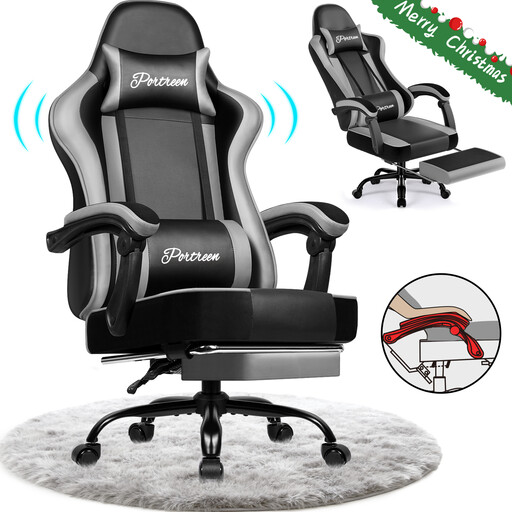
Why We Chose It
This GTIMEX chair blurs the line between an office chair and a gaming chair. Its standout feature: a telescopic footrest that, combined with a backrest recline of up to 170°, transforms the chair into a veritable lounger. The PU leather upholstery, advertised as water- and scratch-resistant, makes maintenance a breeze.
Key Features
Who Is It For?
Ideal for gamers and remote workers looking for a versatile chair that can switch from a focused work position to a fully relaxed posture for reading or napping.
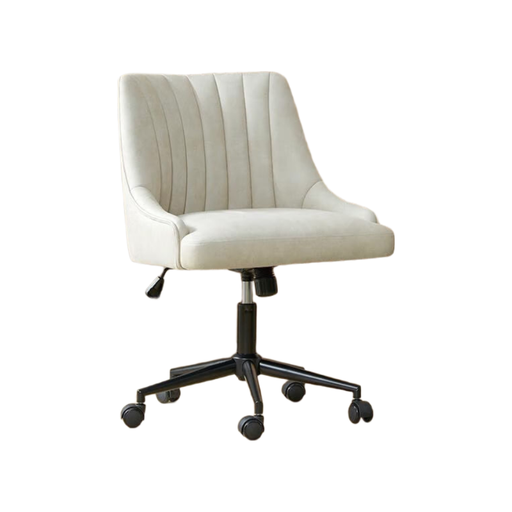
Why We Chose It
The designer office chair from HULALA HOME first captivates with its modern look and compact form factor. The absence of armrests allows for complete freedom of movement—a plus for those who play a musical instrument or simply prefer not to feel confined. Its channel-tufted backrest and thick seat promise solid comfort for the workday.
Key Features
Who Is It For?
Perfect for those who prioritise style and seamless integration into a contemporary decor, for smaller workspaces, or for any user who finds armrests more restrictive than helpful.
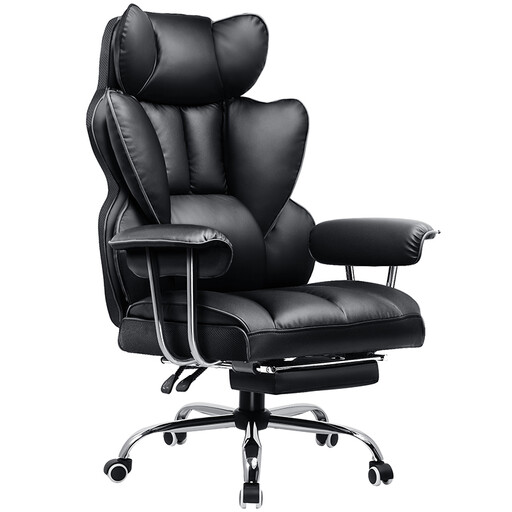
Why We Chose It
Here, the focus is on hyper-customisation. This GTPLAYER model is equipped with a height-adjustable lumbar support, an adjustable headrest, and 3D armrests. Its design, which follows the curve of the spine, is engineered to relieve pressure points—a claim certified by the Ergonomics Application Association. The 'waterfall' seat edge design aims to reduce pressure on the back of the thighs.
Key Features
Who Is It For?
Recommended for professionals who put in long hours at their desk and require maximum adjustability to tailor the chair to their body and prevent pain.
This selection is just a taste of the possibilities available. Every user has unique needs when it comes to comfort, design, and budget. If these models don't check all your boxes, other solutions are available.
To discover a wider range, including chairs with more traditional designs, we invite you to explore our full category of fixed office chairs.
While both promise long-term comfort, they take different approaches. A classic ergonomic office chair focuses on understated design and micro-adjustments (precise lumbar support, seat depth, etc.). A gaming chair adopts a more assertive style, with a high, wraparound backrest, support cushions, and often a more generous recline capability, sometimes even a lie-flat position with a footrest.
It all depends on the quality of the materials (frame, gas lift, upholstery) and the intensity of your use. An entry-level model will show its limits after 2 or 3 years, whereas a well-made chair with a metal frame and certified components can last you 5 to 10 years, or even longer, with proper care.
Absolutely, especially if you spend long hours sitting. Adjustable lumbar support is essential for maintaining the natural 'S' curve of your spine, which prevents slouching and creating excessive pressure on your intervertebral discs. Without this support, there's a tendency to slump, which is a recipe for long-term lower back pain.