
Livraison le jour même ou le lendemain

Qualité garantie

Débloquez vos offres de bienvenue: Livraison GRATUITE | Jusqu'à -80 % | 30 jours d'essai gratuits à JoyPlus
Téléchargez l'application
Whether for remote work, studying, or personal projects, spending hours glued to a desk puts a major strain on your body. Poor posture is a recipe for back, neck, and shoulder pain. Investing in an ergonomic office chair isn't a luxury—it's essential for your daily well-being and focus.
But with an overwhelming number of options, it's hard to know where to start. This guide is here to help you make sense of it all by breaking down the key criteria and presenting our selection of the best models available today.
Before we dive into our top picks, let's review the essential features to look for to make an informed choice that's perfectly suited to your body and your needs.
A good ergonomic office chair must follow the natural curve of your spine. The number one criterion is proper lumbar support. Ideally, it should be adjustable in height and depth to fit snugly in the small of your back.
If you're prone to neck strain, an office chair with an adjustable headrest is a game-changer. It allows you to rest your head during breaks or while thinking, relieving tension in your neck muscles.
Ergonomics is all about adjustability. Every body is unique, so the chair should adapt to you, not the other way around. Here are the features you absolutely must check:
The choice of upholstery is far from trivial. A breathable mesh office chair is a particularly smart choice: it promotes air circulation and prevents heat build-up, offering real relief during long summer days.
Finally, the star base and castors guarantee the chair's stability. A swivel office chair with smooth, quiet castors will make it easy to move around effortlessly while protecting your floors.
As a Joybuy product expert, I've vetted dozens of models to bring you a balanced selection that meets a variety of needs and budgets.

Why it stands out
This model is an excellent entry point for anyone looking to improve their comfort without breaking the bank. It ticks all the essential ergonomic boxes (lumbar support, adjustable headrest) with a clean and effective design. Its real asset? The flip-up armrests—a detail that makes all the difference in small spaces or for a remote work chair that needs to stay out of the way at the end of the day.
Key features
Who is it for?
Ideal for students and remote workers looking for a versatile and smart solution for daily use, especially if space is at a premium.
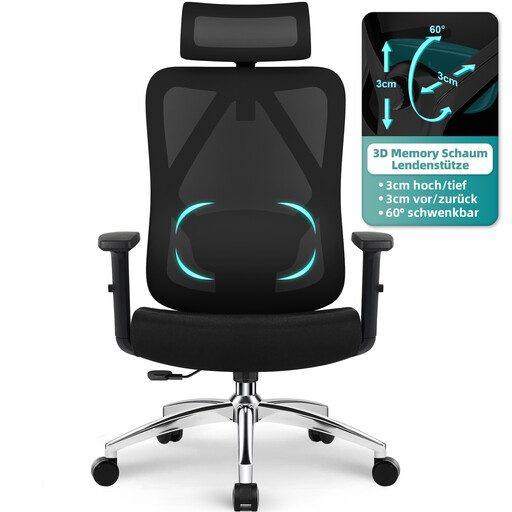
Why it stands out
The GTIMEX chair is a clear step up, going all-in on a particularly advanced lumbar support system. Its 3D memory foam lumbar support is not only adjustable in height and depth but also pivots to precisely follow your back's movements. Add an impressive weight capacity and a wide recline range, and you have a model for those who make no compromises on support.
Key features
Who is it for?
For professionals and demanding users who spend very long hours seated and require state-of-the-art back support and rock-solid durability.
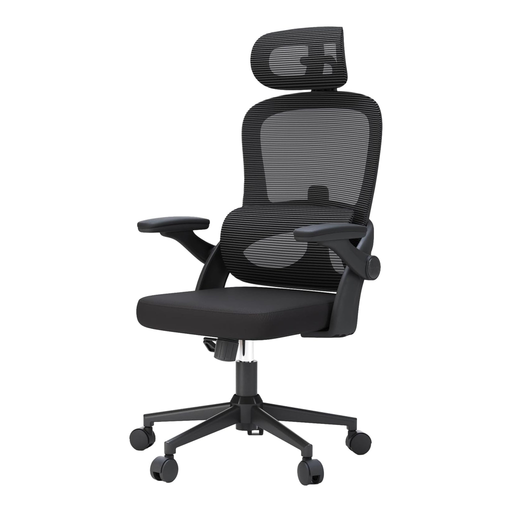
Why it stands out
SIHOO is a proven brand in the world of ergonomic seating. The M102C stands out for its 3D armrests (adjustable forwards/backwards, pivoting, and flip-up) and its particularly wide and generous seat. These features make it an excellent choice for users with larger frames, offering space and support rarely found in standard models.
Key features
Who is it for?
Recommended for taller users or anyone looking for a spacious chair. It's also the top choice for those who require fine-tuned adjustments, especially for the armrests, for intensive professional use.
This selection is just a glimpse of the solutions available to transform your workspace. Each model has its strengths, and the final choice will always depend on your priorities regarding adjustments, materials, and, of course, budget.
To discover a wider range, including our models with mesh lumbar support, feel free to explore our dedicated category.
A standard chair simply offers basic seating with few or no adjustments. In contrast, an ergonomic office chair is designed to actively support the body in a healthy posture. It offers a full suite of adjustments (height, lumbar support, armrests, recline) to adapt to your body and reduce the strain of prolonged sitting.
Here is a simple 4-step method:
It often takes a few days, or even a week, to get used to it. At first, the new posture might feel strange or even a little uncomfortable. This is completely normal! It's a sign that the chair is helping you correct poor postural habits. Be patient—your back will thank you.