
Livraison le jour même ou le lendemain

Qualité garantie

Débloquez vos offres de bienvenue: Livraison GRATUITE | Jusqu'à -80 % | 30 jours d'essai gratuits à JoyPlus
Téléchargez l'application
Spending hours at a desk, whether at home or in the office, has become a part of our daily lives. The problem? The wrong chair can quickly turn a productive day into an ordeal, complete with discomfort and back pain. The market for ergonomic office chairs is vast, but be warned: not all offers are created equal.
To avoid buyer's remorse, it's best to know the most common pitfalls. We've broken down the essential points to check to help you make an informed choice that prioritises comfort and durability.
The "ergonomic" label has become an all-too-common marketing buzzword. To avoid falling for the hype and seeing through empty promises, here are three things to watch out for.
To ensure you're investing in a model that will last, here are the technical specifications to scrutinise.
This is the core of a good ergonomic chair. The lumbar support must perfectly match the natural curve of your spine. Look for a model where the support can be adjusted in height to align precisely with the small of your back. Depth adjustment is a real bonus, as it allows you to control the intensity of the support.
A truly high-performance chair must adjust to you in every detail. Here is the checklist of essential adjustments:
The choice of material directly impacts comfort, durability, and maintenance.
Rather than an endless list, we've selected models tailored to specific profiles, helping you find the one that's made for you.
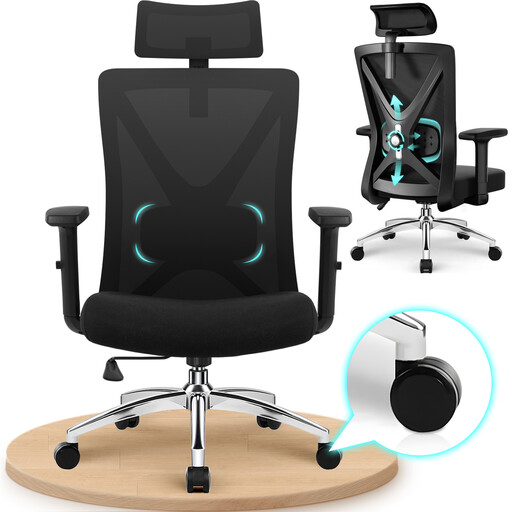
Why we chose it: Perfect for setting up your first home office on a budget. It provides the essentials for good posture without breaking the bank.
This model stands out from entry-level chairs with its lumbar cushion that's adjustable for height (6 cm) and depth (3 cm), whereas competitors offer fixed and often useless support.
It includes a full range of adjustments (armrests, height, recline up to 135°), features typically found on much more expensive models.
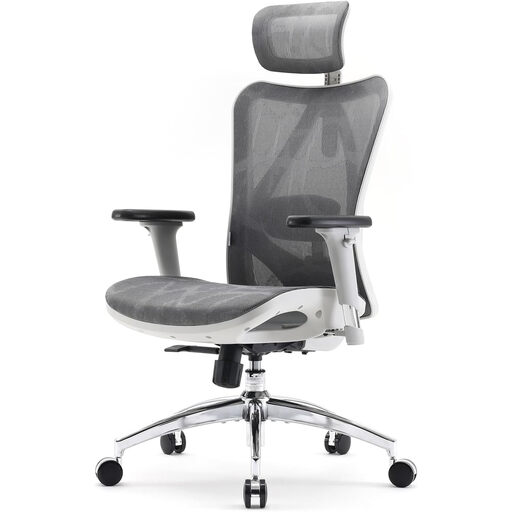
Why we chose it: Designed for those who spend more than 8 hours a day at their screen. Its advanced settings, especially the 3D armrests, allow for near-micrometric adjustments for tailored support.
It debunks the 'one-size-fits-all' myth with its 3D armrests (height, depth, pivot) and dynamic lumbar support. The result: it adapts to your body, not the other way around.
Its 3D armrests and high-elasticity polyester mesh provide first-class comfort and support, built to withstand heavy use.
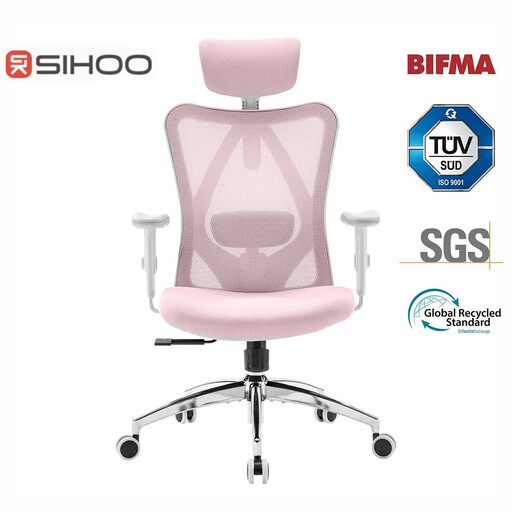
Why we chose it: For those who believe an office chair should be as beautiful as it is comfortable. This model brilliantly combines the fundamentals of a good ergonomic chair for remote work with a refined aesthetic that stands out from the crowd.
It proves that design and ergonomics aren't mutually exclusive. With its 4 support points (head, back, hips, hands) and essential adjustments, it avoids the trap of beautiful chairs that are actually uncomfortable.
Its Morandi Pink colour adds a touch of softness and modernity to any office, without sacrificing the essential ergonomic support needed for daily use.
For those who swear by the timeless elegance of leather, our selection of executive chairs combines prestige, comfort, and durability, without compromising on ergonomic requirements.
Start with the seat height: your feet should be flat on the floor and your knees at a 90° angle. Next, adjust the depth to leave a 2-to-3-finger gap between the seat and the back of your knees. Position the lumbar support to fit the curve of your lower back. Finally, set the armrests so your forearms can rest on them naturally with your shoulders relaxed.
It all depends on the quality of the materials and how you use it. An entry-level model will show signs of wear (flattened foam, failing gas lift) in 1 to 2 years. A quality chair with a solid frame and certified materials (e.g., BIFMA) is an investment designed to last 5 to 10 years, and often much longer.
Yes, as long as you choose high-quality mesh. It's an excellent option, especially if you sit for long hours or tend to get warm. The ventilation is unparalleled. The crucial point is the mesh tension: a well-made model will offer firm, lasting support, while low-quality mesh will lose its tension in record time.