
Livraison le jour même ou le lendemain

Qualité garantie

Débloquez vos offres de bienvenue: Livraison GRATUITE | Jusqu'à -80 % | 30 jours d'essai gratuits à JoyPlus
Téléchargez l'application
Whether you're working from home or in the office, long hours spent sitting can quickly take a toll: back pain, fatigue, muscle tension... Equipping yourself with an ergonomic office chair is not a luxury, but a crucial investment in your daily health and comfort. Faced with an overwhelming number of options and sometimes complex marketing claims, it can be difficult to know where to start.
Our mission: to help you cut through the noise. This buying guide breaks down the essential criteria and presents our selection of models to help you find the ergonomic office chair perfectly suited to your body type and needs.
Before diving into our selection, let's review the key points to check to make the right choice. Never forget the golden rule: a good chair should adapt to you, not the other way around.
When sitting, the lumbar region is put under significant strain. A good chair must therefore offer effective support to respect the natural curve of your spine. Prioritise adjustable lumbar support in height and, ideally, in depth. This allows you to position it perfectly in the small of your back to relieve tension. The gold standard? Dynamic supports that adjust to your slightest movements.
Ergonomics is, above all, a matter of personalisation. Here are the adjustments to examine closely:
The choice of materials affects both comfort and durability. Mesh fabric (a mesh office chair) is known for its excellent breathability—a major advantage for preventing overheating in the summer. Fabric is often seen as cosier, while leather (or faux leather) shines with its ease of maintenance. Also, check the density of the seat foam to ensure it won't sag prematurely. Finally, always check the maximum load supported by the chair, especially for heavier individuals. A capacity of 150 kg is often a sign of sturdiness.
We have selected three models that stand out for their features, catering to various needs and budgets.
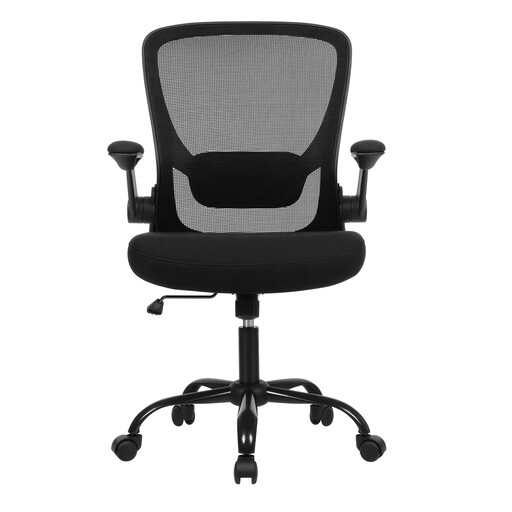
The Takeaway: Essentials and Flexibility
This Ochama model is an excellent entry point into the world of ergonomics. It gets straight to the point by focusing on essential features for daily use. Its curved backrest is complemented by a padded and adjustable lumbar support, while its flip-up armrests offer highly appreciated flexibility in small spaces.
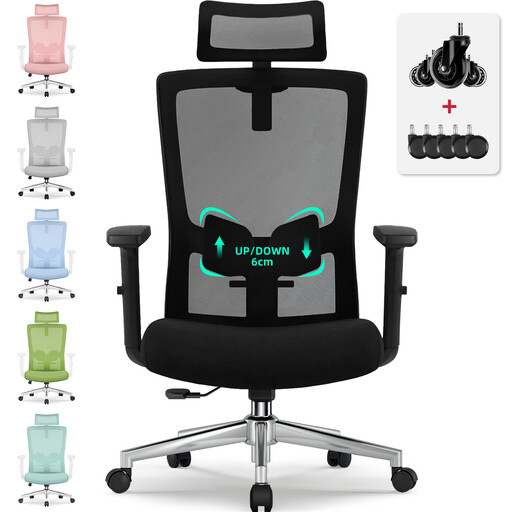
The Takeaway: Durability and Relaxation
The GTIMEX is a clear step up, offering more advanced adjustments and enhanced durability. Its maximum load of 150 kg and BIFMA/SGS certification make it a reliable choice. Its main advantage is its generous tilt function, allowing the backrest to recline up to 135°, perfect for true relaxation breaks between work sessions. The adjustable chair with a headrest and adjustable lumbar support complete its versatile profile.
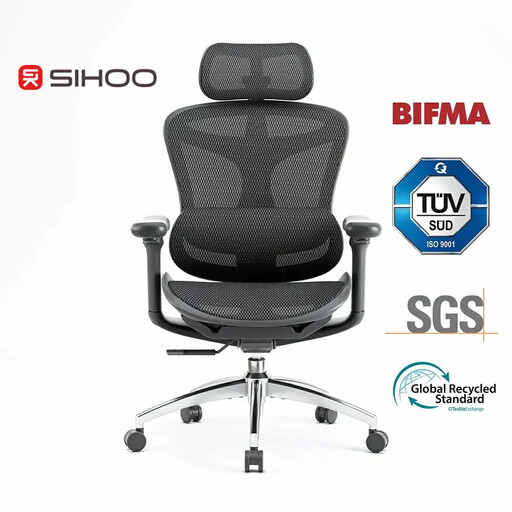
The Takeaway: Dynamic and Smart Ergonomics
The SIHOO Doro C300 is an advanced option for the most demanding users in terms of dynamic support and customisation. Its major innovation: a self-adapting lumbar support that follows the body's movements for flawless support. The 3D armrests synchronise with the backrest recline, maintaining optimal forearm support regardless of your position. The materials and certifications (T?V, EN1335) reflect a premium design, built to last.
If none of these models check all your boxes (design, features, budget), don't worry! There are plenty of other options available. Every body type and need is unique.
? Explore our full collection of back support chairs to discover other models and find the one that's perfect for you.
1. What is the difference between a standard office chair and an ergonomic chair? A standard chair offers only basic support. In contrast, an ergonomic office chair is a complete toolkit designed to adapt to your body through multiple adjustments (lumbar support, armrests, height, recline). Its goal is to promote a healthy posture, limit pressure points, and prevent musculoskeletal disorders (MSDs) related to prolonged sitting.
2. How long does a good ergonomic office chair last? The lifespan depends on the quality of the materials, construction, and intensity of use. An entry-level model might last 2 to 5 years, while a mid-range or high-end chair with a steel frame and durability certifications (like BIFMA or T?V) can easily last more than 7 to 10 years. Regular maintenance also plays an important role.
3. Is a mesh chair really more comfortable? While comfort is subjective, a mesh office chair has an undeniable advantage: its breathability. By allowing air to circulate, it prevents overheating in the summer or in a poorly ventilated office. Quality mesh also provides firm support that distributes pressure evenly. Of course, some people will always prefer the softer feel of a padded fabric seat.
By our Joybuy product expert