
Livraison le jour même ou le lendemain

Qualité garantie

Débloquez vos offres de bienvenue: Livraison GRATUITE | Jusqu'à -80 % | 30 jours d'essai gratuits à JoyPlus
Téléchargez l'application
Spending long hours in front of your screen, whether at home or in the office, can quickly become a nightmare for your back and neck. An ergonomic office chair is no longer a luxury, but a crucial investment in your health and productivity. The problem? The market is flooded with models making tempting marketing claims that often hide a much less impressive reality.
As a product expert at Joybuy, my mission is to help you navigate this jungle. Let's review the 3 pitfalls to avoid at all costs to make the right choice and ensure your investment is a good one.
Too many chairs use the word "ergonomic" as a mere marketing buzzword. However, a truly ergonomic chair must adapt to your body, not the other way around. A simple curved backrest isn't enough. If the chair offers no meaningful adjustments, it will never be suited to your height, weight, or posture, and may even worsen existing back pain.
This is one of the most common hidden flaws: poor quality, low-density seat foam. When you first buy it, the office seat seems perfectly comfortable. But after a few months of use, the foam collapses, loses all its support, and leaves you feeling like you're sitting on a wooden plank. So much for ergonomic benefits.
A faux-leather chair may look elegant, but it can quickly turn into a furnace during long workdays, especially in the summer. The lack of ventilation causes sweat and discomfort, forcing you to "peel" yourself off the seat. For intensive use, a quality technical mesh is often a much smarter choice.
To avoid these traps, rely on objective technical specifications. They are the true guarantors of the quality and versatility of your future work-from-home chair.
An excellent ergonomic chair must allow for fine-tuned adjustment. Check for the following settings:
Don't be fooled by appearances. A chair's durability depends on components that are often invisible:
Every user has specific needs. Here are a few options that meet the criteria for quality and adaptability for different uses.
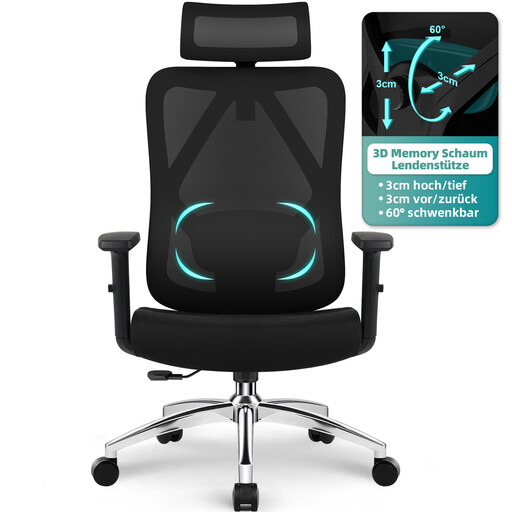
Best for: Professionals who spend 8+ hours a day at their desk. This chair offers an advanced level of adjustment for tailored support, actively preventing pain related to prolonged static posture.
It goes beyond the simple "ergonomic" label with its 3D lumbar support (adjustable for height/depth) and a backrest that reclines up to 135° with a lock. The customisation is total.
3D memory foam lumbar support, a very high maximum load capacity (200 kg), and an aluminium alloy base for rock-solid stability.
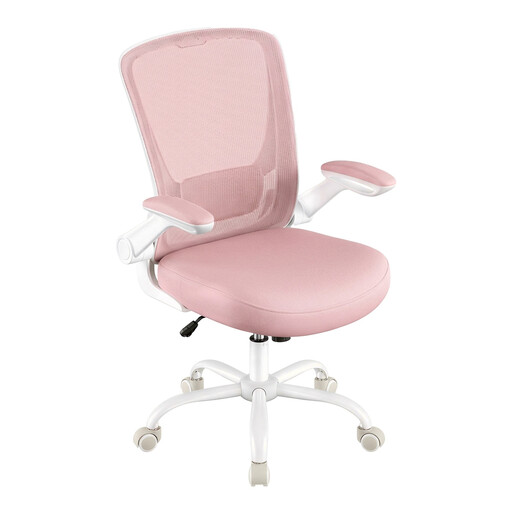
Best for: Perfect for home offices and multi-functional spaces. Its flip-up armrests allow the chair to slide completely under the desk, freeing up space when the workday is over.
It doesn't sacrifice ergonomics for space-saving. It retains essential adjustments (height, lumbar support) while offering the highly practical feature of flip-up armrests.
Flip-up armrests for optimised storage; thick, high-resilience foam seat for comfort that lasts.
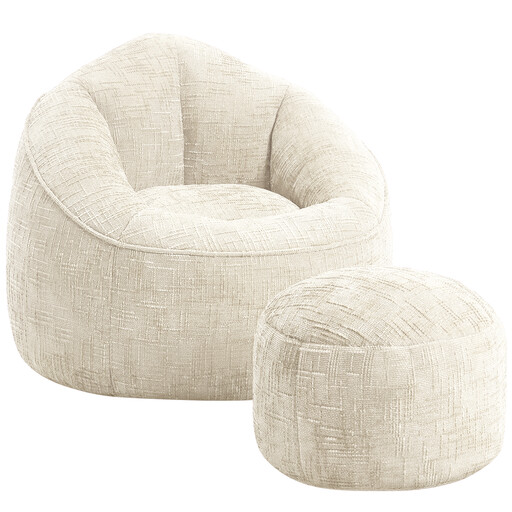
Best for: Those looking for an alternative to the classic office chair for breaks, reading, or gaming. It's not a workstation, but a true cocoon of comfort for disconnecting.
It doesn't pretend to be something it's not. Its sole purpose is clear: comfort and relaxation, thanks to its memory foam filling that conforms to the body's contours.
Shredded memory foam filling for adaptive support; soft and durable chenille fabric cover; comes with its own footrest for absolute relaxation.
Explore our full selection of products that meet these quality criteria.
It all depends on the quality of the materials and the intensity of use. An entry-level model will rarely last more than 1 to 2 years. Conversely, a quality chair with high-density foam, a metal frame, and a good mechanism can last for 5 to 10 years, or even longer. The first signs of wear to watch for are the seat sagging and looseness developing in the mechanisms.
Absolutely. For anyone who spends more than two hours a day sitting, adjustable lumbar support is not optional. It helps maintain the natural curve of the lower back (lumbar lordosis), thus reducing pressure on the intervertebral discs and preventing pain. Be aware that a fixed or poorly positioned support is counterproductive. This is why the ability to adjust it to your body is critically important.
A good setup is the key to enjoying all the benefits of your chair. Here is the 4-point checklist: