
Livraison le jour même ou le lendemain

Qualité garantie

Débloquez vos offres de bienvenue: Livraison GRATUITE | Jusqu'à -80 % | 30 jours d'essai gratuits à JoyPlus
Téléchargez l'application
Long hours spent working from home or in the office put a strain on your back and focus. Poor posture is the source of much of the tension and discomfort that builds up throughout the day. Choosing an ergonomic office chair is therefore not a luxury, but a crucial investment in your well-being and productivity.
This guide breaks down the essential features for you to make an informed choice, free from marketing jargon. We review objective criteria and a selection of proven models, designed for those seeking a comfortable office chair that is genuinely practical for daily use.
Before you take the plunge, it's crucial to understand what sets a good model apart from the rest. Here are the key points to inspect to ensure your future chair is up to the task.
This is the number one criterion. A good ergonomic chair must conform to and support the natural curve of your back. A chair with lumbar support is therefore essential. Favour models where this support is adjustable in height and depth, or at the very least, perfectly integrated into the backrest's shape. Effective support relieves pressure on the lumbar vertebrae, which are strained by hours of sitting.
Whether you're working from home or in a tight office space, every inch counts. An office chair with flip-up armrests offers incredible flexibility. Lift them up, and you can slide the chair completely under the desk to free up space. It's also a great feature for varying your posture and getting closer to your work surface without being obstructed.
Comfort starts with the seat. High-density foam is the best choice: it provides firm support that won't sag after a few months. A good thickness is also essential to properly distribute pressure on your thighs.
The upholstery also plays a role. Mesh backrests are praised for their excellent breathability. They allow air to circulate and prevent you from overheating during long workdays. Fabrics, on the other hand, offer a softer feel and a warmer touch.
To move from theory to practice, here are a few models that have caught our attention for their smart design and excellent value for money.
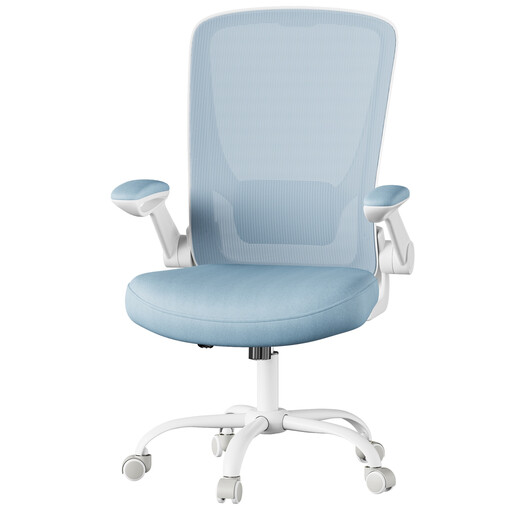
Why this model stands out?: This model checks all the boxes for an effective everyday ergonomic chair. Its breathable mesh back and adjustable lumbar support make it a great ally for long work sessions, while its blue colour adds a welcome touch of originality.
Key features?:
Who is it for?? The smart choice for remote workers and students who want a functional, breathable chair that won't look out of place in their home.
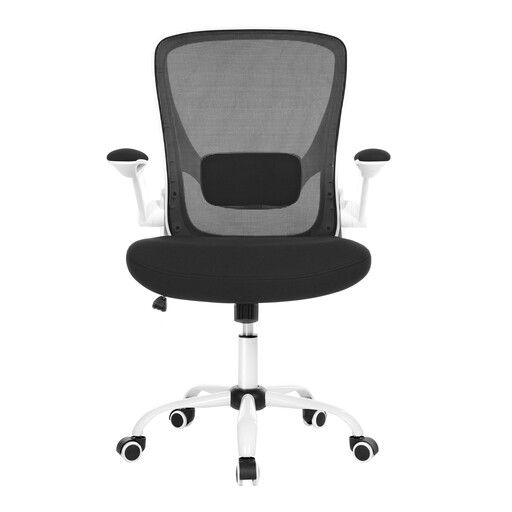
Why this model stands out?: With its modern two-tone design, this chair proves that you can combine style and functionality. It incorporates ergonomic fundamentals, like lumbar support and flip-up armrests, into a sleek and contemporary look.
Key features?:
Who is it for?? Perfect for those who care about their office decor but don't want to sacrifice comfort. It will find its place just as well in a dedicated office as in a student's room.
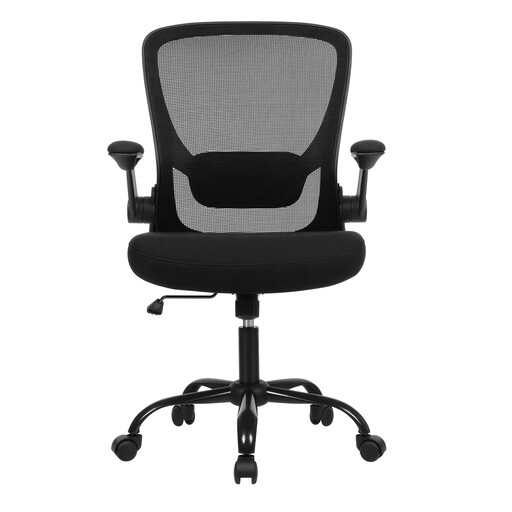
Why this model stands out?: This model is for those who prefer the softness of fabric to the more technical feel of mesh. It offers a warmer touch without compromising on essential ergonomic adjustments, such as padded lumbar support and flip-up armrests.
Key features?:
Who is it for?? For fans of the cosy comfort of fabric who are looking for a simple, sturdy, and 100% functional chair for their home office.
A good office chair is essential for work. But for unwinding, reading, or simply taking a break, another type of armchair is often more suitable. If you want to set up a relaxation corner, take a look at our other selections.
For example, discover our selection of beige rocking chairs for an extra touch of comfort in your home.
1. What is the difference between a standard office chair and an ergonomic one? A standard chair simply provides a place to sit. An ergonomic model is a tool designed to adapt to your body. Thanks to its multiple adjustments (height, lumbar support, armrests, tilt...), it promotes a healthy posture, reduces fatigue, and helps prevent musculoskeletal disorders (MSDs).
2. How do I properly adjust my ergonomic office chair? A good adjustment is essential and can be done in a few simple steps:
3. What is the average lifespan of an office chair? It all depends on the build quality, frequency of use, and maintenance. An entry-level model will last 2 to 3 years. A well-made chair with a steel frame and quality foam can easily last you 5 to 7 years, or even longer. Also, be sure to check the maximum weight capacity: it's a good indicator of sturdiness.