
Livraison le jour même ou le lendemain

Qualité garantie

Débloquez vos offres de bienvenue: Livraison GRATUITE | Jusqu'à -80 % | 30 jours d'essai gratuits à JoyPlus
Téléchargez l'application
Whether working from home or in an office, spending long hours sitting has become a daily reality for millions. This prolonged sedentary lifestyle isn't without consequences: tension, discomfort, and pain can quickly set in, especially in the back. A well-chosen ergonomic office chair is therefore not a luxury, but a genuine investment in your well-being and focus.
With an overwhelming number of options on the market, it's hard to know where to start. Our guide is here to provide clear benchmarks and practical advice to help you choose the right chair for you, without getting lost in marketing jargon.
Before comparing models, it's essential to understand what defines a good ergonomic chair. Here are the key points you shouldn't overlook to make the right choice.
The cornerstone of ergonomics is an adjustable office chair. The goal is for the chair to adapt to your body, not the other way around. Make sure the model you're considering offers at least the following adjustments:
The upholstery of your chair plays a crucial role in your daily comfort. The highly popular mesh office chair has established itself as a benchmark thanks to its breathability. It ensures excellent air circulation, a real advantage during long workdays or in the summer. While fabric and leather have their fans, mesh stands out by combining flexibility, support, and ventilation.
Your chair should fit harmoniously into your space and daily routine. A home office chair needs to be versatile, stylish, and sometimes compact. One detail that's more important than it seems is your floor type. Casters suitable for hard floors (hardwood, tile) or soft floors (carpet) are essential to protect your surfaces and ensure smooth, quiet movement.
To guide you, we have reviewed several models based on their technical specifications, adjustment capabilities, and material quality.
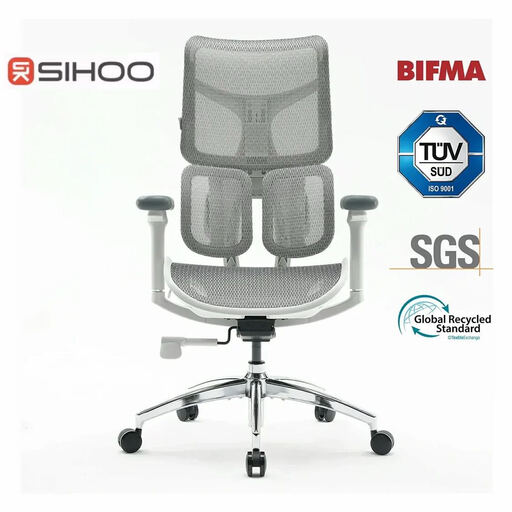
Its standout feature: Its dynamic dual lumbar support. Thanks to an adaptive four-spring mechanism, it provides enveloping support that adjusts in real-time to your body shape and posture for constant, tailored support.
Pros:
Who is it for?: Demanding users looking for a cutting-edge solution with adaptive lumbar support and extensive customisation. Ideal for intensive use, both in the office and at home.
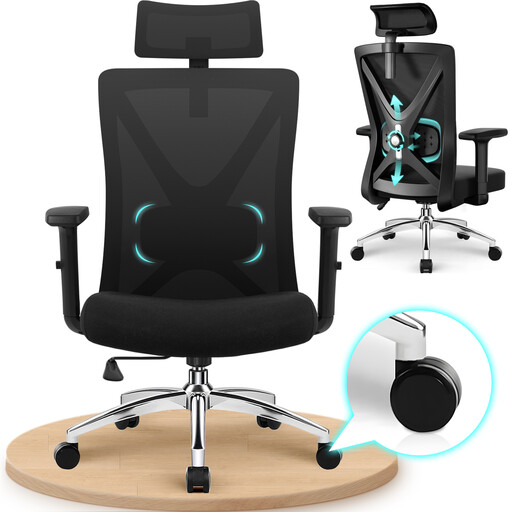
What sets it apart: This chair focuses on seat comfort with its 8?cm thick cushion made of medium-density natural foam. Its flexible lumbar support is also adjustable in height and depth for targeted support.
Pros:
Who is it for?: Those who prioritise the comfort of a thick seat and need a robust chair capable of supporting up to 150?kg, while still offering essential ergonomic adjustments.
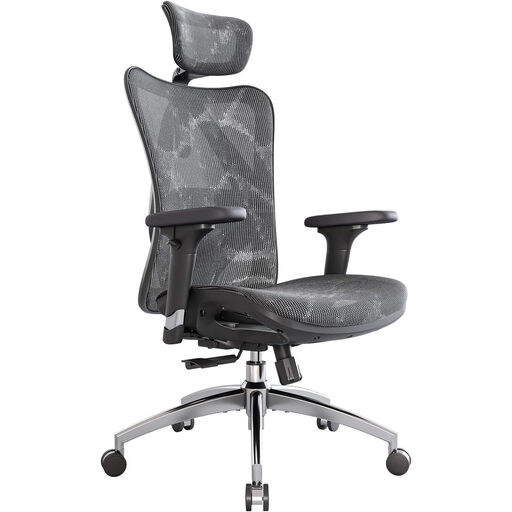
What sets it apart: The M57S offers an excellent feature-to-price ratio. It stands out with its 3D armrests and breathable mesh back, which provides firm support and good ventilation.
Pros:
Who is it for?: This is a very versatile option for work, study, or gaming. It will suit those looking for a complete ergonomic office chair with advanced adjustments, without breaking the bank.
Our selection is just a glimpse of the interesting options on the market. Because every user is unique, your ideal chair may not be on this list.
If you want to explore more models, especially those that excel in armrest customisation, take a look at our dedicated category.
? Explore our complete collection of office chairs with adjustable armrests to find the model that perfectly meets your needs.
It's not a chair's appearance that makes it ergonomic, but its ability to adapt to your body. The true markers of ergonomics are the multiple adjustment points: seat height and depth, armrest height and orientation, adjustable lumbar support, and a backrest tilt mechanism. The more customisable a chair is, the more likely it is to be truly ergonomic for you.
It all depends on the quality of its materials, its design, and, of course, how often it's used. An entry-level model might last a few years, while a high-quality chair with a metal frame and certified components (like BIFMA or SGS) can last for over a decade. Regular maintenance, such as tightening screws and cleaning surfaces, will also extend its lifespan.
Yes, a well-adjusted ergonomic office chair is a valuable ally in promoting good posture. By supporting the natural curve of your spine and reducing pressure points, it helps to decrease the tension associated with prolonged sitting. However, be aware: this is a preventive and comfort measure, and it is no substitute for a medical diagnosis or treatment for chronic pain.