
Livraison le jour même ou le lendemain

Qualité garantie

Débloquez vos offres de bienvenue: Livraison GRATUITE | Jusqu'à -80 % | 30 jours d'essai gratuits à JoyPlus
Téléchargez l'application
With the rise of remote work and long hours spent in front of a screen, the verdict is clear: a simple kitchen chair is no longer enough. An ergonomic office chair isn't a luxury; it's an essential investment in your comfort and productivity. Yet, the market is saturated with marketing promises that make choosing a daunting task.
How can you distinguish a true ally for your back from a mere gimmick? This guide separates fact from fiction and helps you identify the features that truly matter for your daily well-being.
Faced with an overwhelming number of options, it's easy to get lost. Many buyers regret their purchase after a few months, often due to flaws that could have been avoided. Here are the most common mistakes.
To make an informed decision, focus on the technical specifications that have a direct impact on your comfort and back health.
A good ergonomic office chair should adapt to you, not the other way around. Ensure it offers at least these three fundamental adjustments:
The material of your chair plays a crucial role in your daily comfort, especially for heavy use while working from home in an ergonomic chair.
The chair's structure guarantees its longevity and your safety. Certifications like BIFMA or SGS are true hallmarks of reliability. They certify that the product has passed a battery of resistance and durability tests (stability, maximum load, gas lift usage cycles, etc.). Always check the maximum weight capacity to ensure it is suitable for your body type.
Instead of a soulless catalogue, we've selected models tailored to typical user profiles to help you find the chair that's truly right for you.
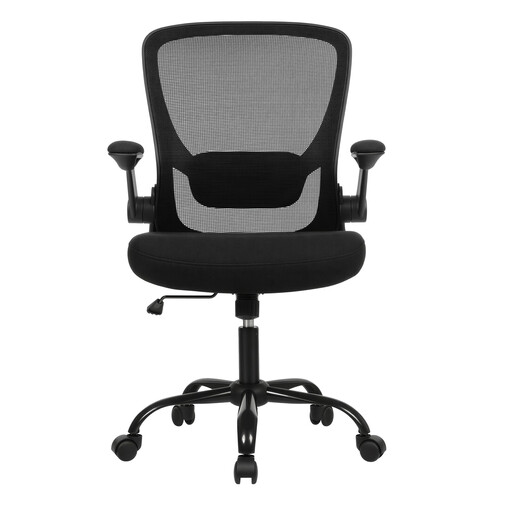
Why we chose it: Ideal for students or occasional remote workers looking for an effective solution without breaking the bank. It covers the essentials for work sessions of a few hours.
It includes an adjustable lumbar support and flip-up armrests—features often missing in entry-level models—thus avoiding the superficial ergonomics trap.
The flip-up armrests are a real bonus for small spaces, allowing the chair to slide under a desk. Its feature-to-price ratio is its main strength.
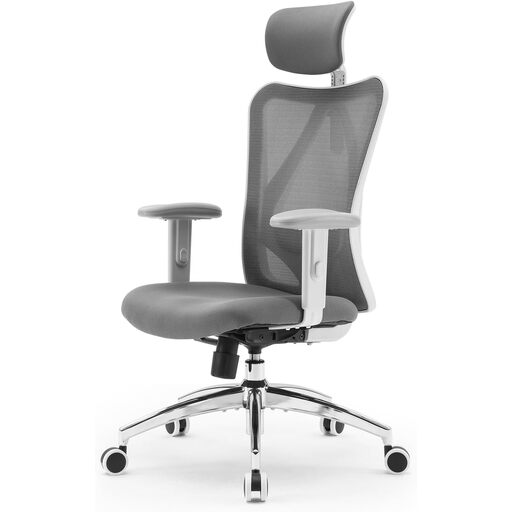
Why we chose it: Perfect for professionals who work from home regularly. It offers an excellent balance of comprehensive adjustments, durable comfort, and a price that remains accessible for daily use.
It sidesteps the fragile materials trap with its BIFMA certification, a quality mesh back, and a frame tested to support up to 150 kg, ensuring excellent longevity.
Its five adjustment points (back support, headrest, height, tilt, armrests) and its W-shaped seat make it a versatile and comfortable ally for long workdays.
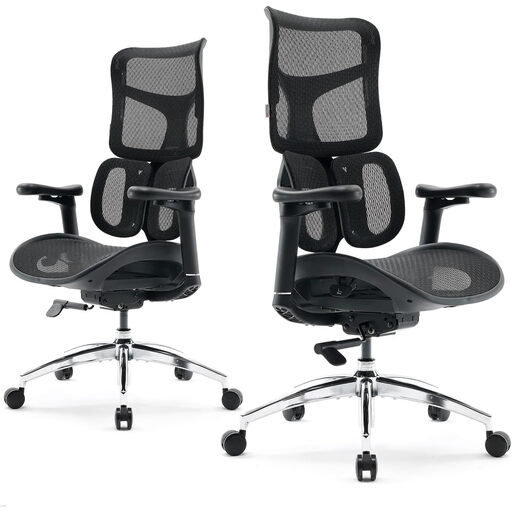
Why we chose it: Designed for those who spend over 8 hours a day at their desk (developers, creatives, demanding gamers...). It's a long-term investment in your back health.
It goes far beyond simple lumbar support with a dual dynamic support system that adjusts to your movements, providing constant, personalized support that standard models can't offer.
The coordinated 4D armrests that follow the backrest's recline and the dynamic lumbar support provide comprehensive, adaptive support, ideal for minimizing long-term fatigue.
We've compiled a complete, up-to-date list of products that meet our demanding selection criteria and safety standards.
The lifespan heavily depends on the quality of materials and the intensity of use. An entry-level model might show its first signs of weakness after 1 to 2 years. A mid-range chair, like those from the Sihoo brand, is generally designed to last between 3 and 7 years. High-end models with extended warranties can last over 10 years with proper maintenance.
It all depends on your preferences and usage. The mesh backrest is highly valued for its breathability, a major plus in a warm environment or during long sessions. Fabric can offer a plusher, cozier feel but retains more heat. For intensive use, high-quality mesh often proves to be a wiser choice.