
Livraison le jour même ou le lendemain

Qualité garantie

Débloquez vos offres de bienvenue: Livraison GRATUITE | Jusqu'à -80 % | 30 jours d'essai gratuits à JoyPlus
Téléchargez l'application
Spending hours sitting at a desk, whether at home or in the office, has become a part of our daily lives. Yet, comfort remains an elusive luxury. A poor seating arrangement often leads to back pain, chronic fatigue, and dwindling productivity. The market is flooded with models claiming to be "?ergonomic,?" but how can you distinguish an effective solution from a mere marketing buzzword?
As a Product Expert at Joybuy, my mission is to help you navigate this landscape. This guide breaks down the most common pitfalls and gives you the keys to choosing an ergonomic office chair that is truly suited to your needs, without falling for marketing promises that are too good to be true.
The word "?ergonomic?" is overused. To make an informed decision, it's crucial to learn how to spot the flaws hidden behind the sales pitch.
To avoid being misled, focus on objective, verifiable features. Here are the three non-negotiable points to check before you buy.
A genuine office chair designed for back pain must offer adjustable lumbar support. The key is being able to adjust it vertically (up and down) to position it precisely in the curve of your lower back. More advanced models add a depth adjustment. Remember: good support should adapt to you, not the other way around.
A chair's lifespan is directly dependent on its components.
A good ergonomic chair for remote work must be able to adapt to your different postures throughout the day.
To put theory into practice, here is a selection of models that cater to specific user profiles, all chosen according to the quality and adjustment criteria we've just detailed.
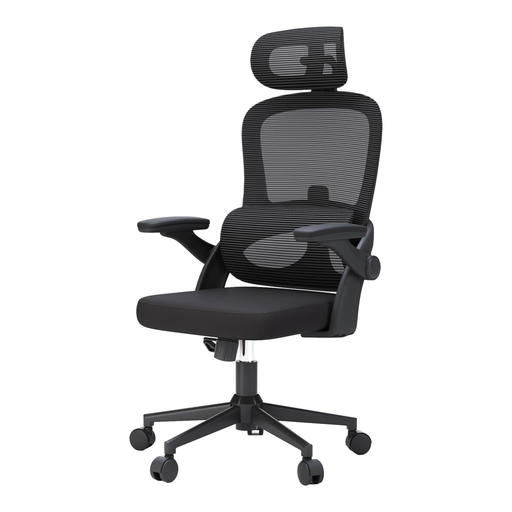
Why we recommend it: Perfect for home offices where versatility is key. It provides full support for long workdays, and its flip-up armrests allow it to slide under the desk. A welcome space-saver.
It includes truly adjustable lumbar support with 6 cm of range, offering precise customisation where a basic model would only have a fixed curve.
Its flip-up 3D armrests adapt to both the user and the workspace. A rare flexibility at this price point.
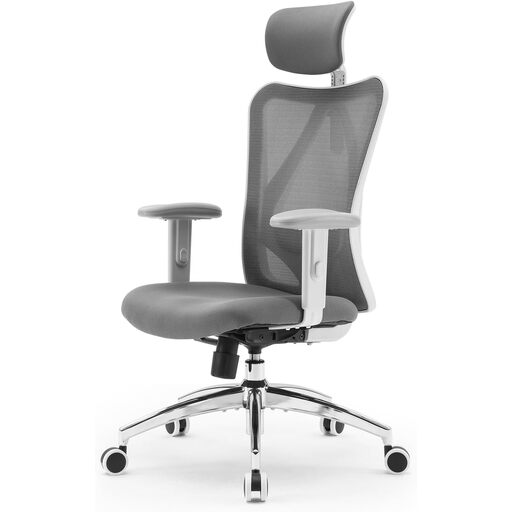
Why we recommend it: Built to last, this chair meets the needs of heavier or taller individuals with its reinforced structure and generous dimensions.
It shatters the 'one-size-fits-all' myth by offering a maximum weight capacity of 150 kg, certified by the BIFMA standard, where standard models top out at 110-120 kg.
Its W-shaped seat and 'waterfall' edge reduce pressure on the thighs and ensure optimal comfort, even after several hours.
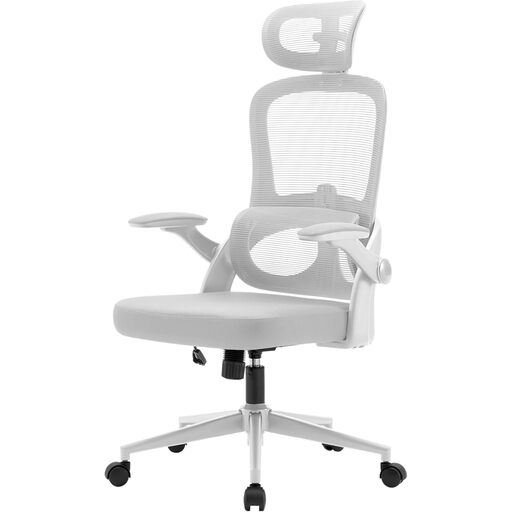
Why we recommend it: For those who refuse to compromise on style for ergonomics. This chair offers all the qualities of the M102C in a clean, light finish that's perfect for contemporary interiors.
It proves that ergonomics doesn't have to be the enemy of style. Its quality breathable mesh and robust frame are presented in an elegant colourway, a far cry from the 'plastic' look of some entry-level models.
Its polished design, with a white frame and light grey mesh, flawlessly marries comprehensive ergonomics with modern aesthetics.
Discover our full selection of chairs that meet our quality criteria and current safety standards.
Start with the seat height: your feet should be flat on the floor, and your knees should form an angle of about 90 degrees. Next, adjust the lumbar support so it perfectly matches the natural curve of your lower back. Finally, set the armrest height: your forearms should rest on them naturally, with your shoulders relaxed and your elbows forming a 90-degree angle.
It all depends on the quality of the materials and how you use it. An entry-level model will show its limits after 1 to 2 years. A well-made chair with a solid frame and certified materials can easily last you 5 to 10 years. The manufacturer's warranty (often 3 years or more on good models) is an excellent indicator of its longevity.
Yes, provided the mesh is of very high quality. Superior-quality mesh offers support that is both firm and flexible, distributing weight evenly and preventing pressure points. Its main advantage remains its breathability, which prevents the build-up of heat and moisture. This is a decisive advantage for staying comfortable during long hours, especially in the summer.