
Livraison le jour même ou le lendemain

Qualité garantie

Débloquez vos offres de bienvenue: Livraison GRATUITE | Jusqu'à -80 % | 30 jours d'essai gratuits à JoyPlus
Téléchargez l'application
Whether you're working from home or in the office, the reality is the same?: we spend hours glued to our chairs. While this new way of working has its perks, it also brings a host of issues?: back pain, a stiff neck, persistent fatigue... The culprit is often easy to spot?: an unsuitable chair.
Don't worry, this guide won't drown you in technical jargon. Our mission?: to give you simple, practical tips for finding the ergonomic office chair that will transform your daily routine. We're breaking down the essentials for a smart purchase focused on your comfort and long-term health.
The market is flooded with options, making it easy to get lost. To get a clearer picture, focus on three fundamental criteria that will make all the difference.
A good office chair with lumbar support isn't a luxury, but an absolute necessity to maintain the natural curve of your spine. Prioritise models with lumbar support that is adjustable in height and, ideally, in depth. This allows you to position it precisely where your back needs it most.
But good lumbar support isn't everything. Customisation is key for a truly comfortable office chair. Make sure to look for these essential adjustments?:
Often underestimated, armrests effectively relieve strain on the shoulders and neck. The problem?? They can quickly become cumbersome. A chair with flip-up armrests offers invaluable versatility. You can raise them to easily slide the chair under your desk to save space, or to get closer to your work surface without obstruction. The most advanced models even offer 3D adjustable armrests (height, forward/backward, and pivot) for a fine-tuned fit.
The choice of upholstery directly impacts your comfort, especially after several hours of sitting.
Enough theory, let's get practical. To help you make your choice, here is our selection of models that caught our eye for their design and value for money.

Why it stands out This model is an excellent entry point into the world of ergonomics. It checks all the boxes for an effective ergonomic chair for remote work: an S-shaped curved backrest, adjustable lumbar support, and a headrest to relieve neck strain. The breathable mesh design and flip-up armrests make it a practical and comfortable solution for daily use.
Pros
Who is it for? Ideal for remote workers and students who want to make their first real investment in comfort without sacrificing essential adjustments or breathability.
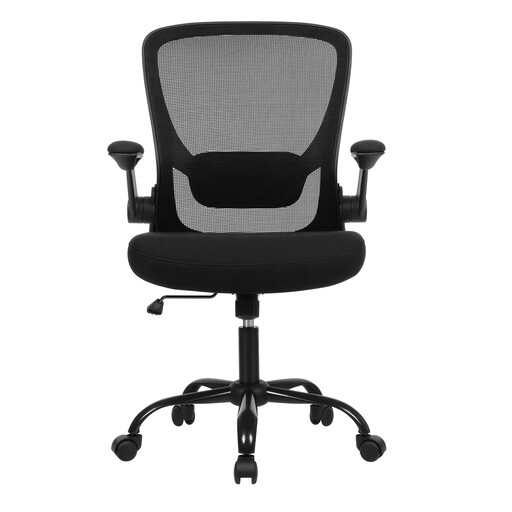
Why it stands out Here, the focus is on cosy comfort, with fabric upholstery and a seat cushion that is both thick and durable. It retains key ergonomic features, like the curved backrest and adjustable lumbar support, while adding a gentle rocking function for relaxing moments between tasks.
Pros
Who is it for? For those who prefer the feel of fabric and generous padding, without compromising on essential ergonomic adjustments and that nice little rocking feature.
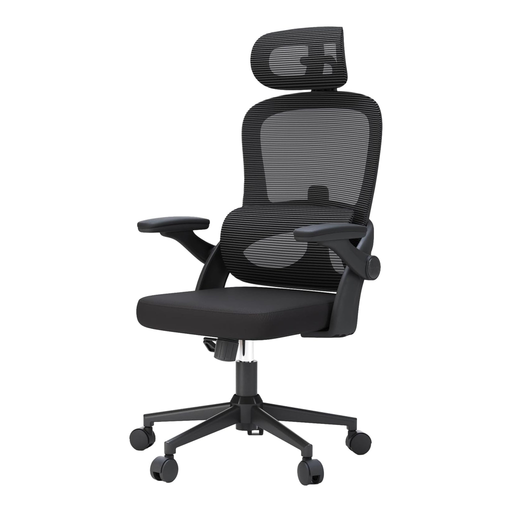
Why it stands out The SIHOO M102C is a step up, aimed at more demanding users, especially those with larger frames. It offers a much deeper level of customisation, with 3D armrests (adjustable forward/backward and pivot), separate lumbar support with a 6 cm vertical adjustment range, and a solid weight capacity of 136?kg. Its wide seat and high-density foam cushion are designed for optimal comfort, even for heavier builds.
Pros
Who is it for? Users who want maximum adjustability for a fine-tuned fit, as well as tall or heavy individuals who need a chair that is as sturdy as it is spacious.
Black is sleek and effective, but your office might deserve a splash of colour. For a softer or brighter atmosphere, why not try a different shade?? A beige office chair, for example, can completely transform the feel of your workspace.
Discover our selection of beige office chairs
A standard office chair simply gives you a place to sit. An ergonomic chair, however, is designed to adapt to your body. Thanks to its multiple adjustments (height, lumbar support, armrests, tilt...), it promotes good posture, reduces pressure on your back and joints, and boosts your comfort (and your productivity?!) in the long run.
It's simple—just follow these steps. First, the seat height?: your feet should be flat on the floor, with your knees at a 90° angle. Next, the lumbar support?: position it to perfectly match the curve of your lower back. Then, the armrests?: your forearms should rest on them naturally, without shrugging your shoulders. Finally, check the depth?: leave a gap of two to three fingers between the edge of the seat and the back of your knees.
It all depends on its build quality and how you use it. An entry-level model will hardly last more than 2 or 3 years. In contrast, a good ergonomic chair, with its steel frame and robust components, will easily last you 5 to 7 years, and often much longer. It's a real investment in your daily health.