
Livraison le jour même ou le lendemain

Qualité garantie

Débloquez vos offres de bienvenue: Livraison GRATUITE | Jusqu'à -80 % | 30 jours d'essai gratuits à JoyPlus
Téléchargez l'application
Whether you're working from home or in the office, spending hours glued to your chair has become a daily reality. This sedentary lifestyle often leads to discomfort and pain, especially in the back. Far from being a luxury, an ergonomic office chair is a true investment in your well-being and productivity.
But with an overwhelming number of options available, it's hard to know where to start. This guide is here to cut through the noise and help you identify the essential features to make an informed decision, without getting lost in marketing jargon.
Before diving into our top picks, let's review the fundamental criteria for finding the office chair that's truly right for you.
The number one cause of back pain in the office? Prolonged poor posture. A chair with lumbar support is therefore essential. Opt for models that offer adjustable support for height and, if possible, depth. The goal is to perfectly match the natural curve of your spine to relieve pressure on the lumbar vertebrae.
A good ergonomic chair should adapt to your body, not the other way around. Make sure it offers the following adjustments:
A comfortable office chair is also a breathable one. Mesh backs are popular for their excellent ventilation, a real plus for preventing overheating during long work sessions. For the seat, high-density foam is the key to lasting comfort that won't sag after a few months.
Our editorial team has vetted several models to bring you a balanced selection that meets different needs and budgets.
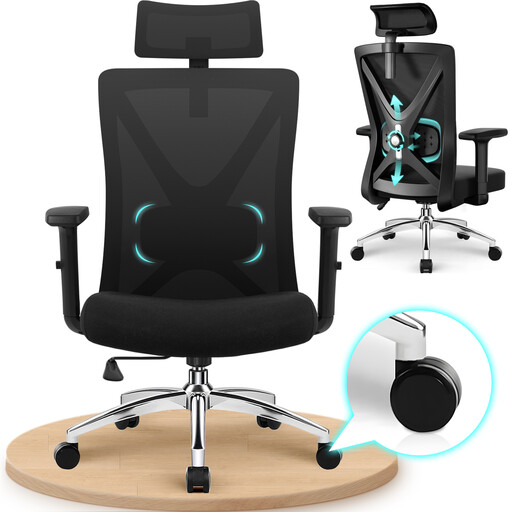
What sets it apart: The GTIMEX chair focuses entirely on ultra-customisable lumbar support. While many models settle for fixed or height-only adjustable support, this one adjusts by 6?cm in height and 3?cm in depth. This allows for precise lower back positioning, a decisive advantage for those with sensitive backs. Its robust frame and certified gas lift can easily handle up to 150?kg.
Key features:
Who is it for? For those who prioritise precise lumbar support and high durability. It's a highly relevant choice for larger individuals or anyone who spends more than 8 hours a day at their desk and wants to proactively prevent back pain.

What sets it apart: This Ochama model plays the versatility card, with a clever design conceived for remote work spaces. Its most practical feature? Flip-up armrests, which allow the chair to slide under any desk. This is a huge plus for optimising space in a bedroom or small office. Its wide 53?cm seat and thick cushion provide immediate comfort.
Key features:
Who is it for? For remote workers and students looking for a functional, comfortable chair that's easy to integrate into a living space. The flip-up armrests are a major selling point for anyone short on space.
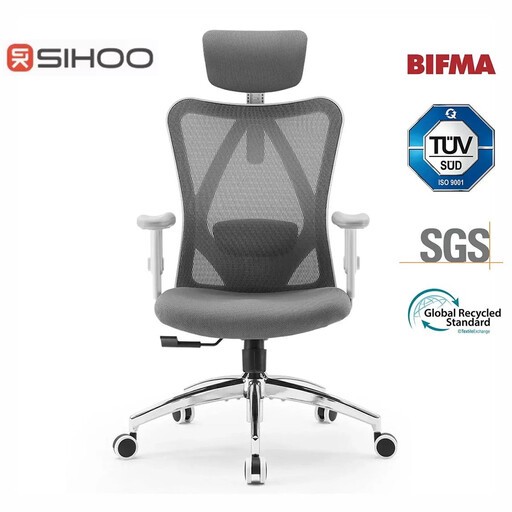
What sets it apart: The SIHOO M18 positions itself as an executive chair offering a comprehensive level of adjustment worthy of much more expensive models. With its five adjustment zones (headrest, backrest, height, armrests, recline), it allows for fine-tuned customisation. Its build quality is validated by BIFMA certification, a benchmark in the industry. The 3-year warranty offered by the brand also provides peace of mind.
Key features:
Who is it for? For demanding professionals seeking an ultra-customisable chair for intensive use. A wise choice for those who see their chair as a true work tool and are willing to invest in a durable, certified product.
Ergonomics doesn't have to mean an austere design. If you're looking to combine comfort with aesthetics, or simply want to add a splash of colour to your office, feel free to explore our collection of orange swivel chairs and many other models for inspiration.
A standard chair often offers the bare minimum: height adjustment. An ergonomic office chair, on the other hand, is designed to adapt to your body through a multitude of adjustments (lumbar support, armrests, seat depth, recline...) to promote a healthy posture and reduce long-term muscle strain.
Start with the seat height: your feet should be flat on the floor with your knees at a 90-degree angle. Next, adjust the lumbar support to match the natural curve of your back. Finally, set the armrests so your forearms can rest on them without your shoulders shrugging. The goal is to keep your spine in a natural, tension-free alignment.
It all depends on the quality of the materials, the design, and the intensity of use. An entry-level model might last 2-3 years, whereas a well-made chair with certified components (gas lift, base...) can easily last 5-7 years or more. An extended warranty, like the 3-year one on the SIHOO model, is often an excellent indicator of its longevity.